
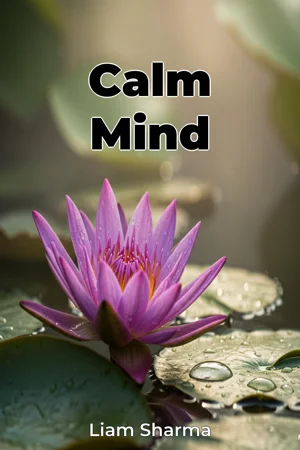
About This Book
Are you caught in an endless cycle of stress, desperately seeking a path to lasting tranquility? "Calm Mind" offers a comprehensive guide to cultivating inner peace and sustained relaxation through time-tested techniques. This book synthesizes ancient wisdom and modern research, providing practical strategies for managing stress and enhancing overall well-being. Central to "Calm Mind" are three interconnected concepts: deep breathing, meditation, and stress relief practices. Understanding and integrating these elements into daily life is crucial because chronic stress significantly impairs both physical and mental health. By mastering these skills, readers can regain control over their emotional state, improve focus, and foster a sense of calm amidst life's inevitable challenges. The book draws upon the rich history of meditative practices, tracing their origins from ancient Eastern traditions to their modern applications in Western psychology and medicine. It integrates scientific research on the physiological effects of deep breathing and meditation, including their impact on the nervous system, hormonal balance, and brain function. No prior experience with meditation or mindfulness is required; the book provides clear, step-by-step instructions suitable for beginners. The core argument of "Calm Mind" is that inner peace is not an elusive ideal but a skill that can be developed and honed through consistent practice. This book serves as a practical roadmap, empowering readers to take proactive steps toward reducing stress and cultivating a calmer, more centered state of mind. "Calm Mind" is structured to guide readers through a progressive learning experience. Part one introduces the fundamental principles of deep breathing and its immediate impact on stress reduction. Part two explores various meditation techniques, including mindfulness meditation, guided visualization, and movement-based meditation, offering practical guidance on how to establish a consistent meditation practice. Part three delves into broader stress relief strategies, such as mindful communication, time management techniques, and cultivating healthy lifestyle habits. The concluding chapter provides practical guidance on integrating these practices into daily life, ensuring lasting benefits. The book presents a range of evidence-based approaches, drawing from studies in neuroscience, psychology, and mindfulness research. It cites clinical trials demonstrating the effectiveness of meditation and deep breathing in reducing anxiety, improving sleep quality, and enhancing cognitive function. Case studies and personal anecdotes illustrate the transformative power of these practices in real-world settings. "Calm Mind" connects to several interdisciplinary fields. Its exploration of the nervous system and hormonal balance links it to the field of physiology. Its emphasis on cognitive function and emotional regulation aligns with psychology. Furthermore, its integration of mindfulness principles connects it to Eastern philosophy and contemplative traditions. These interdisciplinary connections enrich the book's argument, providing a holistic understanding of stress and well-being. The book presents an innovative approach by combining traditional mindfulness practices with contemporary stress management techniques. It offers a unique framework for self-assessment, allowing readers to identify their specific stressors and tailor their practice accordingly. Written in a conversational and accessible style, "Calm Mind" avoids technical jargon and presents information in a clear, engaging manner. The tone is encouraging and supportive, creating a safe space for readers to explore their inner landscape. The target audience includes individuals seeking to reduce stress, improve their mental and emotional well-being, and cultivate a greater sense of inner peace. It is valuable for professionals seeking to manage workplace stress, individuals coping with chronic illness, and anyone interested in exploring the benefits of meditation and mindfulness. As a self-help book, "Calm Mind" provides practical tools and actionable strategies that readers can implement immediately. It aims to empower readers to take control of their stress levels and create a more fulfilling life. The book focuses primarily on individual practices for stress reduction and inner peace, acknowledging that systemic issues also contribute to stress. While it addresses the importance of healthy relationships and social support, it does not delve deeply into complex social or political factors that contribute to stress. The techniques presented in "Calm Mind" can be applied in various real-world settings, including the workplace, home, and community. Readers can use these techniques to manage anxiety during public speaking, navigate challenging conversations, or cultivate greater presence and focus in their daily activities. While the benefits of meditation and deep breathing are widely recognized, there remain some debates about the optimal techniques and their long-term effects. "Calm Mind" acknowledges these debates and presents a balanced perspective, encouraging readers to experiment with different approaches and find what works best for them.
Are you caught in an endless cycle of stress, desperately seeking a path to lasting tranquility? "Calm Mind" offers a comprehensive guide to cultivating inner peace and sustained relaxation through time-tested techniques. This book synthesizes ancient wisdom and modern research, providing practical strategies for managing stress and enhancing overall well-being. Central to "Calm Mind" are three interconnected concepts: deep breathing, meditation, and stress relief practices. Understanding and integrating these elements into daily life is crucial because chronic stress significantly impairs both physical and mental health. By mastering these skills, readers can regain control over their emotional state, improve focus, and foster a sense of calm amidst life's inevitable challenges. The book draws upon the rich history of meditative practices, tracing their origins from ancient Eastern traditions to their modern applications in Western psychology and medicine. It integrates scientific research on the physiological effects of deep breathing and meditation, including their impact on the nervous system, hormonal balance, and brain function. No prior experience with meditation or mindfulness is required; the book provides clear, step-by-step instructions suitable for beginners. The core argument of "Calm Mind" is that inner peace is not an elusive ideal but a skill that can be developed and honed through consistent practice. This book serves as a practical roadmap, empowering readers to take proactive steps toward reducing stress and cultivating a calmer, more centered state of mind. "Calm Mind" is structured to guide readers through a progressive learning experience. Part one introduces the fundamental principles of deep breathing and its immediate impact on stress reduction. Part two explores various meditation techniques, including mindfulness meditation, guided visualization, and movement-based meditation, offering practical guidance on how to establish a consistent meditation practice. Part three delves into broader stress relief strategies, such as mindful communication, time management techniques, and cultivating healthy lifestyle habits. The concluding chapter provides practical guidance on integrating these practices into daily life, ensuring lasting benefits. The book presents a range of evidence-based approaches, drawing from studies in neuroscience, psychology, and mindfulness research. It cites clinical trials demonstrating the effectiveness of meditation and deep breathing in reducing anxiety, improving sleep quality, and enhancing cognitive function. Case studies and personal anecdotes illustrate the transformative power of these practices in real-world settings. "Calm Mind" connects to several interdisciplinary fields. Its exploration of the nervous system and hormonal balance links it to the field of physiology. Its emphasis on cognitive function and emotional regulation aligns with psychology. Furthermore, its integration of mindfulness principles connects it to Eastern philosophy and contemplative traditions. These interdisciplinary connections enrich the book's argument, providing a holistic understanding of stress and well-being. The book presents an innovative approach by combining traditional mindfulness practices with contemporary stress management techniques. It offers a unique framework for self-assessment, allowing readers to identify their specific stressors and tailor their practice accordingly. Written in a conversational and accessible style, "Calm Mind" avoids technical jargon and presents information in a clear, engaging manner. The tone is encouraging and supportive, creating a safe space for readers to explore their inner landscape. The target audience includes individuals seeking to reduce stress, improve their mental and emotional well-being, and cultivate a greater sense of inner peace. It is valuable for professionals seeking to manage workplace stress, individuals coping with chronic illness, and anyone interested in exploring the benefits of meditation and mindfulness. As a self-help book, "Calm Mind" provides practical tools and actionable strategies that readers can implement immediately. It aims to empower readers to take control of their stress levels and create a more fulfilling life. The book focuses primarily on individual practices for stress reduction and inner peace, acknowledging that systemic issues also contribute to stress. While it addresses the importance of healthy relationships and social support, it does not delve deeply into complex social or political factors that contribute to stress. The techniques presented in "Calm Mind" can be applied in various real-world settings, including the workplace, home, and community. Readers can use these techniques to manage anxiety during public speaking, navigate challenging conversations, or cultivate greater presence and focus in their daily activities. While the benefits of meditation and deep breathing are widely recognized, there remain some debates about the optimal techniques and their long-term effects. "Calm Mind" acknowledges these debates and presents a balanced perspective, encouraging readers to experiment with different approaches and find what works best for them.
"Calm Mind" offers a practical guide to achieving inner peace and managing stress through proven techniques like deep breathing, meditation, and mindfulness. The book emphasizes that cultivating a calm mind is an attainable skill, not just a fleeting feeling, providing actionable strategies for stress relief and enhanced well-being. Readers will discover how incorporating these practices can positively impact their nervous system, hormonal balance, and overall mental health, leading to improved focus and emotional regulation. The book uniquely blends ancient wisdom with modern research, presenting evidence-based approaches in an accessible manner. It explores the history of meditation and its applications in contemporary psychology, offering step-by-step instructions suitable for beginners. "Calm Mind" stresses the importance of consistent practice, empowering individuals to take proactive steps toward reducing anxiety and fostering a more centered state of mind. Structured as a progressive learning experience, the book initially focuses on the fundamentals of deep breathing, then transitions into various meditation techniques, and concludes with broader stress management strategies. Readers learn to integrate these practices into their daily lives, ensuring lasting benefits and a greater sense of inner peace.
Book Details
ISBN
9788235249937
Publisher
Publifye AS
Your Licenses
You don't own any licenses for this book
Purchase a license below to unlock this book and download the EPUB.
Purchase License
Select a tier to unlock this book
Need bulk licensing?
Contact us for enterprise agreements.