
About This Book
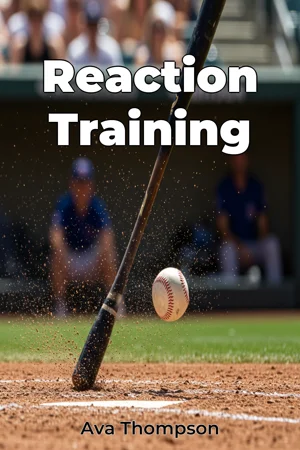
Can a fraction of a second truly separate victory from defeat? Reaction time, often an overlooked aspect of athletic prowess, is a pivotal factor in sports performance. This book, *Reaction Training*, delves into the science and practice of improving reaction time to enhance athletic capabilities. It is a comprehensive guide designed to equip athletes, coaches, and enthusiasts with the knowledge and drills necessary to sharpen reflexes and gain a competitive edge. This book focuses primarily on two main topics: the neuroscience of reaction time and the practical application of reaction-training drills. Understanding the neural pathways involved in processing stimuli and executing responses is crucial for targeted training. This book explains the complex interplay of sensory input, cognitive processing, and motor output that defines reaction time. Secondly, the book provides a detailed collection of drills and techniques to improve different aspects of reaction time, such as visual, auditory, and kinesthetic responses. These topics are important because they bridge the gap between theoretical understanding and practical improvement in sports performance. To provide context, the book explores the historical evolution of reaction time training methods and their integration into various sports disciplines. Relevant research from fields like sports psychology, neuroscience, and kinesiology is incorporated, assuming a basic understanding of athletic training principles. The central argument of *Reaction Training* is that reaction time is a trainable skill, and targeted training interventions can lead to significant improvements in athletic performance. This argument is substantiated by presenting scientific evidence demonstrating the brain's plasticity and ability to adapt to specific training stimuli. It emphasizes how improving reaction time can be a game-changer, allowing athletes to anticipate movements, make quicker decisions, and execute actions with greater precision. The book is structured to progressively build upon foundational knowledge and skills. It begins by introducing the basic concepts of reaction time, including its components, influencing factors, and measurement methods. It then delves into the neuroscience of sensory processing and motor control, explaining the physiological mechanisms underlying reaction time. The core of the book consists of a series of chapters dedicated to specific reaction-training drills, categorized by type (e.g., visual, auditory, sport-specific). Each drill is accompanied by detailed instructions, illustrations, and modifications for different skill levels. The book culminates with a discussion of how to integrate reaction-training drills into a comprehensive training program and monitor progress over time. Practical examples from different sports illustrate the application of the drills and concepts discussed in the book. The evidence presented in *Reaction Training* is drawn from scientific literature, including experimental studies, meta-analyses, and case studies of elite athletes. Unique methodologies such as eye-tracking analysis and electromyography (EMG) are discussed to demonstrate how reaction time is measured and analyzed in research settings. It connects to fields like sports psychology, biomechanics, and neuroscience, highlighting how these disciplines contribute to a holistic understanding of reaction time and its impact on athletic performance. This interdisciplinary approach enhances the book's argument by providing a comprehensive and nuanced perspective. A unique aspect of *Reaction Training* lies in its emphasis on individualized training programs. Rather than offering a one-size-fits-all approach, the book teaches readers how to assess their own strengths and weaknesses and tailor their training to address specific needs. This personalized approach maximizes the effectiveness of the training interventions and helps athletes achieve optimal results. The tone and writing style of this book are both informative and accessible. Complex scientific concepts are explained in plain language, and technical jargon is minimized. Numerous real-world examples and anecdotes are used to illustrate the concepts and make them more relatable to the reader. The target audience for *Reaction Training* includes athletes of all levels, coaches, sports trainers, and anyone interested in improving their reaction time and athletic performance. The book is particularly valuable for those involved in sports that require quick reflexes and decision-making, such as baseball, basketball, tennis, and martial arts. The book is presented with the conventions of a health-fitness non-fiction format, featuring clear chapter divisions, illustrative figures, summary points, and practical exercises. The scope of *Reaction Training* is limited to the improvement of reaction time in sports. While the principles and techniques discussed in the book may be applicable to other domains, such as driving or gaming, these applications are not explicitly addressed. The book does not delve into the pharmacological or surgical interventions that may affect reaction time. The information in *Reaction Training* can be applied practically by readers through the implementation of the drills and training programs outlined in the book. Athletes can use these techniques to improve their reflexes, agility, and overall performance in their respective sports. Coaches can use the book to design effective training programs for their athletes. *Reaction Training* acknowledges the ongoing debates within the sports science community regarding the relative importance of genetic factors versus training interventions in determining athletic performance. While acknowledging the role of genetics, the book emphasizes the significant potential for improvement through targeted training.
Can a fraction of a second truly separate victory from defeat? Reaction time, often an overlooked aspect of athletic prowess, is a pivotal factor in sports performance. This book, *Reaction Training*, delves into the science and practice of improving reaction time to enhance athletic capabilities. It is a comprehensive guide designed to equip athletes, coaches, and enthusiasts with the knowledge and drills necessary to sharpen reflexes and gain a competitive edge. This book focuses primarily on two main topics: the neuroscience of reaction time and the practical application of reaction-training drills. Understanding the neural pathways involved in processing stimuli and executing responses is crucial for targeted training. This book explains the complex interplay of sensory input, cognitive processing, and motor output that defines reaction time. Secondly, the book provides a detailed collection of drills and techniques to improve different aspects of reaction time, such as visual, auditory, and kinesthetic responses. These topics are important because they bridge the gap between theoretical understanding and practical improvement in sports performance. To provide context, the book explores the historical evolution of reaction time training methods and their integration into various sports disciplines. Relevant research from fields like sports psychology, neuroscience, and kinesiology is incorporated, assuming a basic understanding of athletic training principles. The central argument of *Reaction Training* is that reaction time is a trainable skill, and targeted training interventions can lead to significant improvements in athletic performance. This argument is substantiated by presenting scientific evidence demonstrating the brain's plasticity and ability to adapt to specific training stimuli. It emphasizes how improving reaction time can be a game-changer, allowing athletes to anticipate movements, make quicker decisions, and execute actions with greater precision. The book is structured to progressively build upon foundational knowledge and skills. It begins by introducing the basic concepts of reaction time, including its components, influencing factors, and measurement methods. It then delves into the neuroscience of sensory processing and motor control, explaining the physiological mechanisms underlying reaction time. The core of the book consists of a series of chapters dedicated to specific reaction-training drills, categorized by type (e.g., visual, auditory, sport-specific). Each drill is accompanied by detailed instructions, illustrations, and modifications for different skill levels. The book culminates with a discussion of how to integrate reaction-training drills into a comprehensive training program and monitor progress over time. Practical examples from different sports illustrate the application of the drills and concepts discussed in the book. The evidence presented in *Reaction Training* is drawn from scientific literature, including experimental studies, meta-analyses, and case studies of elite athletes. Unique methodologies such as eye-tracking analysis and electromyography (EMG) are discussed to demonstrate how reaction time is measured and analyzed in research settings. It connects to fields like sports psychology, biomechanics, and neuroscience, highlighting how these disciplines contribute to a holistic understanding of reaction time and its impact on athletic performance. This interdisciplinary approach enhances the book's argument by providing a comprehensive and nuanced perspective. A unique aspect of *Reaction Training* lies in its emphasis on individualized training programs. Rather than offering a one-size-fits-all approach, the book teaches readers how to assess their own strengths and weaknesses and tailor their training to address specific needs. This personalized approach maximizes the effectiveness of the training interventions and helps athletes achieve optimal results. The tone and writing style of this book are both informative and accessible. Complex scientific concepts are explained in plain language, and technical jargon is minimized. Numerous real-world examples and anecdotes are used to illustrate the concepts and make them more relatable to the reader. The target audience for *Reaction Training* includes athletes of all levels, coaches, sports trainers, and anyone interested in improving their reaction time and athletic performance. The book is particularly valuable for those involved in sports that require quick reflexes and decision-making, such as baseball, basketball, tennis, and martial arts. The book is presented with the conventions of a health-fitness non-fiction format, featuring clear chapter divisions, illustrative figures, summary points, and practical exercises. The scope of *Reaction Training* is limited to the improvement of reaction time in sports. While the principles and techniques discussed in the book may be applicable to other domains, such as driving or gaming, these applications are not explicitly addressed. The book does not delve into the pharmacological or surgical interventions that may affect reaction time. The information in *Reaction Training* can be applied practically by readers through the implementation of the drills and training programs outlined in the book. Athletes can use these techniques to improve their reflexes, agility, and overall performance in their respective sports. Coaches can use the book to design effective training programs for their athletes. *Reaction Training* acknowledges the ongoing debates within the sports science community regarding the relative importance of genetic factors versus training interventions in determining athletic performance. While acknowledging the role of genetics, the book emphasizes the significant potential for improvement through targeted training.
*Reaction Training* explores a crucial yet often overlooked aspect of sports performance: reaction time. It argues that enhancing reaction time is a trainable skill that can provide athletes with a significant competitive advantage. The book bridges the gap between neuroscience and practical application, explaining the complex neural pathways involved in processing stimuli and executing responses, while also providing detailed drills to improve visual, auditory, and kinesthetic responses. Did you know that understanding the neuroscience of reaction time can allow for more targeted training? Or that reaction time training can lead to improvements in anticipation, decision-making, and precision? This comprehensive guide takes a progressive approach, beginning with foundational knowledge and culminating in the integration of reaction-training drills into personalized training programs. Each drill comes with detailed instructions and modifications for different skill levels. By emphasizing individualized programs, the book teaches readers how to assess their strengths and tailor their training, making it a valuable resource for athletes and coaches seeking to optimize athletic performance through improved reflexes and agility.
Book Details
ISBN
9788235249852
Publisher
Publifye AS
Your Licenses
You don't own any licenses for this book
Purchase a license below to unlock this book and download the EPUB.
Purchase License
Select a tier to unlock this book
Need bulk licensing?
Contact us for enterprise agreements.