
About This Book
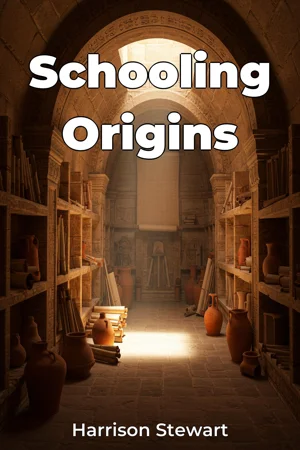
How did humanity transition from informal knowledge sharing to formal institutions of learning? "Schooling Origins" delves into this fundamental question, tracing the evolution of education from its earliest roots to the structured systems we recognize today. This exploration is vital to understanding not only the history of education but also the cultural, social, and political forces that have shaped our societies. The book examines three key areas: the philosophical underpinnings of early education, the development of structured curricula, and the influence of societal changes on educational practices. The book provides essential context by exploring ancient societies and their approaches to learning. Before formal schools existed, knowledge was transmitted through families, apprenticeships, and religious institutions. Early philosophical ideas about education, particularly from ancient Greece and Rome, laid the groundwork for later pedagogical theories. Understanding these foundations is crucial for grasping the trajectory of educational development. The central argument of "Schooling Origins" is that formal education is not a static entity but rather a continuously evolving reflection of societal values and needs. As societies became more complex, the need for standardized knowledge and skills led to the creation of formal schooling systems. This book investigates how different cultures and historical periods responded to this need, shaping the diverse educational landscape we see today. "Schooling Origins" begins by establishing the pre-formal education landscape, examining knowledge transmission methods and philosophical influences. The book then moves into the development of structured curricula, analyzing the emergence of subjects like mathematics, rhetoric, and literature, and how they were standardized and taught. A significant portion of the book is devoted to the influence of social and political changes. The rise of nation-states, industrialization, and modern technology profoundly shaped educational goals and practices. The closing chapters explore the implications of these historical trends for contemporary education, offering insights into current challenges and future directions. The arguments presented in "Schooling Origins" are substantiated by a range of historical sources, including ancient texts, early school records, and educational treatises. The book draws upon comparative analyses of different educational systems across cultures and time periods, demonstrating the diversity of approaches to schooling. Statistical data on literacy rates and educational attainment are also employed to illustrate the impact of formal education on societies. The topic connects to other disciplines such as sociology, anthropology, and political science. Sociology helps in understanding the social structures that influenced educational systems. Anthropology provides insights into cultural variations in learning practices. Political science sheds light on the role of governments in shaping educational policies. These interdisciplinary connections enrich the analysis and provide a more holistic understanding of the evolution of schooling. "Schooling Origins" offers a comprehensive historical overview of education, highlighting the dynamic relationship between schooling and society. The book maintains an academic tone, presenting information in a clear, objective, and well-researched manner. The intended audience includes students of education, history, and sociology, as well as educators, policymakers, and anyone interested in the history of learning. The book provides valuable insights into the origins of our current educational systems and the forces that continue to shape them. As a history textbook, "Schooling Origins" follows established conventions of historical research, including rigorous source citation, balanced analysis, and clear chronological organization. The scope of the book is broad, covering major developments in education from ancient times to the present day, but it does not delve into the specific teaching methods of individual schools or the biographies of prominent educators. The information presented in "Schooling Origins" can be applied practically by educators seeking to understand the historical context of their profession, policymakers aiming to implement evidence-based educational reforms, and anyone interested in the social and cultural impact of schooling. The book also addresses ongoing debates in the field of education, such as the balance between standardized curricula and individualized learning, and the role of technology in the classroom.
How did humanity transition from informal knowledge sharing to formal institutions of learning? "Schooling Origins" delves into this fundamental question, tracing the evolution of education from its earliest roots to the structured systems we recognize today. This exploration is vital to understanding not only the history of education but also the cultural, social, and political forces that have shaped our societies. The book examines three key areas: the philosophical underpinnings of early education, the development of structured curricula, and the influence of societal changes on educational practices. The book provides essential context by exploring ancient societies and their approaches to learning. Before formal schools existed, knowledge was transmitted through families, apprenticeships, and religious institutions. Early philosophical ideas about education, particularly from ancient Greece and Rome, laid the groundwork for later pedagogical theories. Understanding these foundations is crucial for grasping the trajectory of educational development. The central argument of "Schooling Origins" is that formal education is not a static entity but rather a continuously evolving reflection of societal values and needs. As societies became more complex, the need for standardized knowledge and skills led to the creation of formal schooling systems. This book investigates how different cultures and historical periods responded to this need, shaping the diverse educational landscape we see today. "Schooling Origins" begins by establishing the pre-formal education landscape, examining knowledge transmission methods and philosophical influences. The book then moves into the development of structured curricula, analyzing the emergence of subjects like mathematics, rhetoric, and literature, and how they were standardized and taught. A significant portion of the book is devoted to the influence of social and political changes. The rise of nation-states, industrialization, and modern technology profoundly shaped educational goals and practices. The closing chapters explore the implications of these historical trends for contemporary education, offering insights into current challenges and future directions. The arguments presented in "Schooling Origins" are substantiated by a range of historical sources, including ancient texts, early school records, and educational treatises. The book draws upon comparative analyses of different educational systems across cultures and time periods, demonstrating the diversity of approaches to schooling. Statistical data on literacy rates and educational attainment are also employed to illustrate the impact of formal education on societies. The topic connects to other disciplines such as sociology, anthropology, and political science. Sociology helps in understanding the social structures that influenced educational systems. Anthropology provides insights into cultural variations in learning practices. Political science sheds light on the role of governments in shaping educational policies. These interdisciplinary connections enrich the analysis and provide a more holistic understanding of the evolution of schooling. "Schooling Origins" offers a comprehensive historical overview of education, highlighting the dynamic relationship between schooling and society. The book maintains an academic tone, presenting information in a clear, objective, and well-researched manner. The intended audience includes students of education, history, and sociology, as well as educators, policymakers, and anyone interested in the history of learning. The book provides valuable insights into the origins of our current educational systems and the forces that continue to shape them. As a history textbook, "Schooling Origins" follows established conventions of historical research, including rigorous source citation, balanced analysis, and clear chronological organization. The scope of the book is broad, covering major developments in education from ancient times to the present day, but it does not delve into the specific teaching methods of individual schools or the biographies of prominent educators. The information presented in "Schooling Origins" can be applied practically by educators seeking to understand the historical context of their profession, policymakers aiming to implement evidence-based educational reforms, and anyone interested in the social and cultural impact of schooling. The book also addresses ongoing debates in the field of education, such as the balance between standardized curricula and individualized learning, and the role of technology in the classroom.
"Schooling Origins" examines the history of education, tracing its path from informal knowledge transmission to formal educational systems. It highlights the cultural, social, and political forces that have shaped how we learn. The book explores how ancient societies approached learning, noting that before formal schools, knowledge was passed down through families, apprenticeships, and religious institutions. Early philosophical ideas, particularly from ancient Greece and Rome, laid the foundation for later educational theories. The book emphasizes that formal education is not static but evolves with societal values and needs. As societies grew complex, the need for standardized knowledge led to formal schooling. "Schooling Origins" explores the development of structured curricula, analyzing the emergence of subjects like mathematics, rhetoric, and literature, and how they were standardized. The book also examines how social and political changes, such as the rise of nation-states and industrialization, have shaped educational goals and practices. The book begins by exploring pre-formal education and then progresses into the development of structured curricula and the influence of social and political changes, providing a comprehensive historical overview and making it valuable for students of education, history, and sociology, as well as educators and policymakers.
Book Details
ISBN
9788235249661
Publisher
Publifye AS
Your Licenses
You don't own any licenses for this book
Purchase a license below to unlock this book and download the EPUB.
Purchase License
Select a tier to unlock this book
Need bulk licensing?
Contact us for enterprise agreements.