
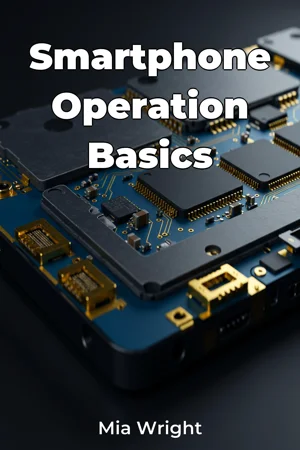
About This Book
Ever wondered how the sleek device in your pocket manages to connect you to the world, process complex data, and serve as a camera, music player, and personal assistant all in one? "Smartphone Operation Basics" demystifies the intricate workings of these ubiquitous tools, exploring their technical foundations and their profound impact on contemporary life. This book delves into the core components of smartphone technology, providing a comprehensive understanding of their operation and significance in the 21st century. The book focuses on three key areas: firstly, the hardware and software architecture that enables smartphone functionality; secondly, the network technologies that facilitate communication and data transfer; and thirdly, the practical applications and implications of smartphone use in various aspects of modern society. Understanding these elements is crucial for anyone seeking to navigate the increasingly digital landscape and fully appreciate the capabilities and limitations of these powerful devices. We will start with a foundational overview of the historical context, tracing the evolution of mobile phones from bulky communication devices to the sophisticated smartphones we know today. While no prior technical expertise is strictly required, a basic familiarity with computer concepts will be helpful. The central argument of "Smartphone Operation Basics" is that a clear understanding of the underlying technology empowers users to make informed decisions about their smartphone use, optimize device performance, and critically evaluate the social and ethical implications of this technology. This knowledge is particularly important in an era where smartphones have become indispensable tools for communication, commerce, and information access. The book is structured in a logical progression. It begins by introducing the fundamental concepts of smartphone hardware, including processors, memory, display technologies, and sensors. The discussion then moves to the operating system, exploring the software architecture and the role of various apps and services. Next, it examines network technologies such as cellular networks (4G, 5G), Wi-Fi, and Bluetooth, detailing how these technologies enable seamless connectivity. Finally, the book investigates the applications of smartphones in various sectors, including communication, entertainment, education, healthcare, and business, while also addressing security concerns and potential privacy risks. To support its arguments, "Smartphone Operation Basics" draws on a wealth of sources, including technical specifications from leading smartphone manufacturers, academic research on mobile communication, industry reports from technology analysis firms, and case studies of smartphone applications in diverse settings. The book also presents original data analysis of smartphone usage patterns, providing readers with insights into current trends and future developments. The book connects to several other disciplines, including electrical engineering (in its discussion of hardware components), computer science (in its analysis of operating systems and software), and sociology (in its exploration of social and cultural impacts). By integrating perspectives from these fields, "Smartphone Operation Basics" offers a holistic understanding of smartphone technology. What sets this book apart is its emphasis on providing practical knowledge and actionable insights. Rather than simply presenting abstract concepts, the book explains how these concepts relate to everyday smartphone use, offering tips and tricks for optimizing device performance, troubleshooting common problems, and protecting user privacy. The tone of the book is informative and accessible, aiming to bridge the gap between technical jargon and everyday understanding. The writing style is clear and concise, avoiding overly technical language and providing ample examples and illustrations to clarify complex concepts. "Smartphone Operation Basics" is aimed at a broad audience, including students, educators, technology enthusiasts, and anyone seeking to deepen their understanding of smartphone technology. It provides valuable insights for those interested in pursuing careers in mobile technology, as well as for consumers who want to make informed decisions about their smartphone use. This book adheres to the conventions of the technology genre, providing accurate and up-to-date information, clear explanations of technical concepts, and practical guidance for readers. The scope of the book is intentionally limited to the fundamental principles of smartphone operation, focusing on core hardware, software, and network technologies. It does not delve into highly specialized topics such as advanced programming or circuit design. This focus allows the book to provide a thorough and accessible overview of the essential concepts. The information presented in "Smartphone Operation Basics" can be applied in a variety of real-world settings. Readers can use the knowledge gained to troubleshoot smartphone problems, optimize device performance, make informed purchasing decisions, and protect their privacy and security. The book also provides a valuable resource for educators seeking to integrate smartphone technology into their curricula. While smartphones have revolutionized communication and information access, their use also raises ethical considerations related to privacy, security, and social impact. The book addresses these controversies, encouraging readers to critically evaluate the implications of smartphone technology and advocate for responsible use.
Ever wondered how the sleek device in your pocket manages to connect you to the world, process complex data, and serve as a camera, music player, and personal assistant all in one? "Smartphone Operation Basics" demystifies the intricate workings of these ubiquitous tools, exploring their technical foundations and their profound impact on contemporary life. This book delves into the core components of smartphone technology, providing a comprehensive understanding of their operation and significance in the 21st century. The book focuses on three key areas: firstly, the hardware and software architecture that enables smartphone functionality; secondly, the network technologies that facilitate communication and data transfer; and thirdly, the practical applications and implications of smartphone use in various aspects of modern society. Understanding these elements is crucial for anyone seeking to navigate the increasingly digital landscape and fully appreciate the capabilities and limitations of these powerful devices. We will start with a foundational overview of the historical context, tracing the evolution of mobile phones from bulky communication devices to the sophisticated smartphones we know today. While no prior technical expertise is strictly required, a basic familiarity with computer concepts will be helpful. The central argument of "Smartphone Operation Basics" is that a clear understanding of the underlying technology empowers users to make informed decisions about their smartphone use, optimize device performance, and critically evaluate the social and ethical implications of this technology. This knowledge is particularly important in an era where smartphones have become indispensable tools for communication, commerce, and information access. The book is structured in a logical progression. It begins by introducing the fundamental concepts of smartphone hardware, including processors, memory, display technologies, and sensors. The discussion then moves to the operating system, exploring the software architecture and the role of various apps and services. Next, it examines network technologies such as cellular networks (4G, 5G), Wi-Fi, and Bluetooth, detailing how these technologies enable seamless connectivity. Finally, the book investigates the applications of smartphones in various sectors, including communication, entertainment, education, healthcare, and business, while also addressing security concerns and potential privacy risks. To support its arguments, "Smartphone Operation Basics" draws on a wealth of sources, including technical specifications from leading smartphone manufacturers, academic research on mobile communication, industry reports from technology analysis firms, and case studies of smartphone applications in diverse settings. The book also presents original data analysis of smartphone usage patterns, providing readers with insights into current trends and future developments. The book connects to several other disciplines, including electrical engineering (in its discussion of hardware components), computer science (in its analysis of operating systems and software), and sociology (in its exploration of social and cultural impacts). By integrating perspectives from these fields, "Smartphone Operation Basics" offers a holistic understanding of smartphone technology. What sets this book apart is its emphasis on providing practical knowledge and actionable insights. Rather than simply presenting abstract concepts, the book explains how these concepts relate to everyday smartphone use, offering tips and tricks for optimizing device performance, troubleshooting common problems, and protecting user privacy. The tone of the book is informative and accessible, aiming to bridge the gap between technical jargon and everyday understanding. The writing style is clear and concise, avoiding overly technical language and providing ample examples and illustrations to clarify complex concepts. "Smartphone Operation Basics" is aimed at a broad audience, including students, educators, technology enthusiasts, and anyone seeking to deepen their understanding of smartphone technology. It provides valuable insights for those interested in pursuing careers in mobile technology, as well as for consumers who want to make informed decisions about their smartphone use. This book adheres to the conventions of the technology genre, providing accurate and up-to-date information, clear explanations of technical concepts, and practical guidance for readers. The scope of the book is intentionally limited to the fundamental principles of smartphone operation, focusing on core hardware, software, and network technologies. It does not delve into highly specialized topics such as advanced programming or circuit design. This focus allows the book to provide a thorough and accessible overview of the essential concepts. The information presented in "Smartphone Operation Basics" can be applied in a variety of real-world settings. Readers can use the knowledge gained to troubleshoot smartphone problems, optimize device performance, make informed purchasing decisions, and protect their privacy and security. The book also provides a valuable resource for educators seeking to integrate smartphone technology into their curricula. While smartphones have revolutionized communication and information access, their use also raises ethical considerations related to privacy, security, and social impact. The book addresses these controversies, encouraging readers to critically evaluate the implications of smartphone technology and advocate for responsible use.
"Smartphone Operation Basics" demystifies the technology behind the devices we use daily, offering a comprehensive look into their inner workings. It explores how these complex tools connect us, process data, and function as multifaceted devices. The book emphasizes understanding the core components of smartphones, from hardware and software architecture to network technologies, empowering users to navigate the digital landscape effectively. The book begins with a historical overview, tracing the evolution of mobile phones, and progresses logically through hardware (processors, memory), software (operating systems, apps), and network technologies (4G, 5G, Wi-Fi). It highlights how smartphones have become indispensable for communication, commerce, and information, while also delving into security concerns and privacy risks. Readers will gain insights into optimizing device performance and making informed decisions about their smartphone use. What sets this book apart is its practical approach, translating technical concepts into actionable insights for everyday users. It provides tips for troubleshooting, enhancing performance, and protecting privacy, making it a valuable resource for anyone seeking to understand and maximize the potential of their smartphone.
Book Details
ISBN
9788235249265
Publisher
Publifye AS
Your Licenses
You don't own any licenses for this book
Purchase a license below to unlock this book and download the EPUB.
Purchase License
Select a tier to unlock this book
Need bulk licensing?
Contact us for enterprise agreements.