
About This Book
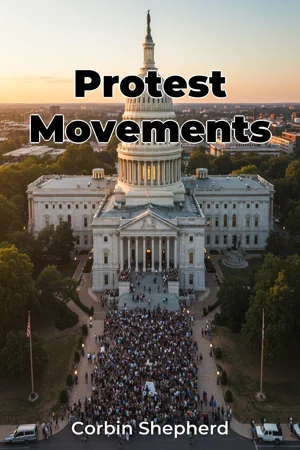
How have protest movements shaped the trajectory of American democracy, and what lessons can we learn from their successes and failures? "Protest Movements" delves into the heart of American civic engagement, exploring key factual protest movements in the U.S., the underlying causes that ignited them, and the lasting legislative outcomes they achieved. This book examines how collective action has historically influenced policy and societal norms, providing crucial context for understanding contemporary social and political landscapes. The book centers on three key topics: the anatomy of a successful protest, the socio-economic factors that precipitate widespread dissent, and the legislative consequences of organized movements. These topics are vital because they offer a framework for understanding how citizens can effect change within a democratic system, the conditions that make such action necessary, and the tangible results of these efforts. To fully appreciate the impact of these movements, the book provides essential historical and social context, including an overview of constitutional rights related to assembly and petition, as well as a discussion of the evolving social contract between citizens and their government. No prior specialized knowledge is required, but a foundational understanding of American history and civics will enhance the reader’s experience. The central argument posits that protest movements, while often disruptive, are integral to a functioning democracy, serving as critical mechanisms for addressing systemic inequalities and holding power accountable. The book maintains that while not all protests achieve their immediate goals, they invariably contribute to the ongoing renegotiation of social norms and legal frameworks. "Protest Movements" is structured to provide a cohesive narrative, beginning with an introduction to the theoretical underpinnings of protest and social movements. The book then develops its argument through in-depth case studies of several major U.S. protest movements, analyzing their origins, strategies, and impacts. These case studies span a range of issues, from civil rights and labor rights to environmental protection and anti-war activism. The culmination of the argument synthesizes the lessons learned from these movements, offering insights into the conditions under which protests are most likely to succeed and the potential pitfalls to avoid. Finally, the book explores the practical applications of these insights, suggesting strategies for effective civic engagement in the 21st century. The analysis is supported by a diverse range of evidence, including primary source documents such as protest manifestos, legislative records, and personal accounts from activists, as well as secondary source analysis from leading scholars in the fields of history, political science, and sociology. Quantitative data on protest participation and public opinion is also incorporated to provide a comprehensive and nuanced understanding of each movement’s impact. "Protest Movements" connects to other fields of study, including sociology by considering group dynamics and social stratification, economics by analyzing wealth inequality and labor market issues, and law by investigating constitutional rights and legislative processes. These interdisciplinary connections enrich the analysis and provide a more holistic understanding of the forces shaping protest movements. This book stands out by offering a balanced and data-informed perspective on protest movements, moving beyond simplistic narratives to examine the complex interplay of factors that contribute to their success or failure. It employs a rigorous analytical framework to compare and contrast different movements, identifying patterns and drawing meaningful conclusions about the role of protest in American society. Written in an accessible and engaging style, "Protest Movements" aims to inform and empower readers, regardless of their prior knowledge of the subject. The book is intended for students, educators, policymakers, and anyone interested in understanding the dynamics of social change and the power of collective action. It will appeal to those seeking a deeper understanding of American history, political science, and the ongoing struggle for social justice. As a work of history and politics, the book adheres to the conventions of academic rigor and objectivity, while also striving to make complex ideas accessible to a broad audience. The scope of the book is limited to protest movements within the United States, with a focus on movements that have had a significant impact on legislative outcomes. The book acknowledges that there are many other forms of civic engagement and social activism, but its primary focus is on organized protest as a means of influencing policy. The information presented in "Protest Movements" can be applied in various practical ways, from informing strategies for contemporary social movements to providing insights for policymakers seeking to address the root causes of social unrest. By understanding the historical precedents and the underlying dynamics of protest, readers can become more effective advocates for change and more informed participants in democratic processes. The book also addresses ongoing debates surrounding the legitimacy and effectiveness of protest movements, acknowledging the diverse perspectives on the role of dissent in a democratic society. By presenting a balanced and data-driven analysis, it aims to foster a more informed and nuanced discussion about the power and limitations of protest as a tool for social and political change.
How have protest movements shaped the trajectory of American democracy, and what lessons can we learn from their successes and failures? "Protest Movements" delves into the heart of American civic engagement, exploring key factual protest movements in the U.S., the underlying causes that ignited them, and the lasting legislative outcomes they achieved. This book examines how collective action has historically influenced policy and societal norms, providing crucial context for understanding contemporary social and political landscapes. The book centers on three key topics: the anatomy of a successful protest, the socio-economic factors that precipitate widespread dissent, and the legislative consequences of organized movements. These topics are vital because they offer a framework for understanding how citizens can effect change within a democratic system, the conditions that make such action necessary, and the tangible results of these efforts. To fully appreciate the impact of these movements, the book provides essential historical and social context, including an overview of constitutional rights related to assembly and petition, as well as a discussion of the evolving social contract between citizens and their government. No prior specialized knowledge is required, but a foundational understanding of American history and civics will enhance the reader’s experience. The central argument posits that protest movements, while often disruptive, are integral to a functioning democracy, serving as critical mechanisms for addressing systemic inequalities and holding power accountable. The book maintains that while not all protests achieve their immediate goals, they invariably contribute to the ongoing renegotiation of social norms and legal frameworks. "Protest Movements" is structured to provide a cohesive narrative, beginning with an introduction to the theoretical underpinnings of protest and social movements. The book then develops its argument through in-depth case studies of several major U.S. protest movements, analyzing their origins, strategies, and impacts. These case studies span a range of issues, from civil rights and labor rights to environmental protection and anti-war activism. The culmination of the argument synthesizes the lessons learned from these movements, offering insights into the conditions under which protests are most likely to succeed and the potential pitfalls to avoid. Finally, the book explores the practical applications of these insights, suggesting strategies for effective civic engagement in the 21st century. The analysis is supported by a diverse range of evidence, including primary source documents such as protest manifestos, legislative records, and personal accounts from activists, as well as secondary source analysis from leading scholars in the fields of history, political science, and sociology. Quantitative data on protest participation and public opinion is also incorporated to provide a comprehensive and nuanced understanding of each movement’s impact. "Protest Movements" connects to other fields of study, including sociology by considering group dynamics and social stratification, economics by analyzing wealth inequality and labor market issues, and law by investigating constitutional rights and legislative processes. These interdisciplinary connections enrich the analysis and provide a more holistic understanding of the forces shaping protest movements. This book stands out by offering a balanced and data-informed perspective on protest movements, moving beyond simplistic narratives to examine the complex interplay of factors that contribute to their success or failure. It employs a rigorous analytical framework to compare and contrast different movements, identifying patterns and drawing meaningful conclusions about the role of protest in American society. Written in an accessible and engaging style, "Protest Movements" aims to inform and empower readers, regardless of their prior knowledge of the subject. The book is intended for students, educators, policymakers, and anyone interested in understanding the dynamics of social change and the power of collective action. It will appeal to those seeking a deeper understanding of American history, political science, and the ongoing struggle for social justice. As a work of history and politics, the book adheres to the conventions of academic rigor and objectivity, while also striving to make complex ideas accessible to a broad audience. The scope of the book is limited to protest movements within the United States, with a focus on movements that have had a significant impact on legislative outcomes. The book acknowledges that there are many other forms of civic engagement and social activism, but its primary focus is on organized protest as a means of influencing policy. The information presented in "Protest Movements" can be applied in various practical ways, from informing strategies for contemporary social movements to providing insights for policymakers seeking to address the root causes of social unrest. By understanding the historical precedents and the underlying dynamics of protest, readers can become more effective advocates for change and more informed participants in democratic processes. The book also addresses ongoing debates surrounding the legitimacy and effectiveness of protest movements, acknowledging the diverse perspectives on the role of dissent in a democratic society. By presenting a balanced and data-driven analysis, it aims to foster a more informed and nuanced discussion about the power and limitations of protest as a tool for social and political change.
"Protest Movements" explores the crucial role of social movements and political activism in shaping American democracy and legislative outcomes. It examines the anatomy of successful protests, the socio-economic factors driving dissent, and the tangible legislative consequences achieved through collective action. The book highlights how protest movements, while sometimes disruptive, are integral to a functioning democracy, serving as mechanisms for addressing systemic inequalities and holding power accountable. For example, the book analyzes how movements related to civil rights and labor rights have influenced policy. The book progresses from theoretical underpinnings to in-depth case studies of major U.S. protest movements, spanning civil rights, labor rights, environmental protection, and anti-war activism. It employs a rigorous analytical framework to compare different movements, drawing conclusions about protest's role in American society. By incorporating primary sources and quantitative data, "Protest Movements" offers a balanced, data-informed perspective, making it valuable for anyone interested in American history, political science, and the ongoing struggle for social justice.
Book Details
ISBN
9788235249142
Publisher
Publifye AS
Your Licenses
You don't own any licenses for this book
Purchase a license below to unlock this book and download the EPUB.
Purchase License
Select a tier to unlock this book
Need bulk licensing?
Contact us for enterprise agreements.