
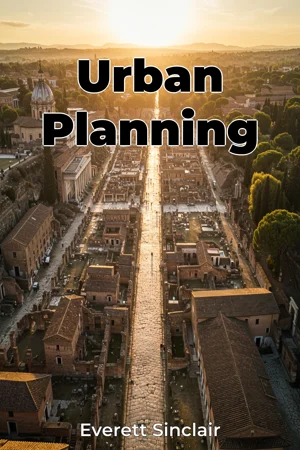
About This Book
Have you ever wondered why modern cities are designed the way they are? This book, *Urban Planning*, delves into the captivating history of urban design, revealing how the planning principles of ancient civilizations continue to shape our contemporary urban landscapes and architectural practices. We explore not just the aesthetic aspects of city design but also the underlying functional and societal considerations that have driven urban development for millennia. This book focuses on two key topics: the evolution of street layouts and the development of urban infrastructure systems in ancient cities. Understanding these elements is crucial because they demonstrate how early societies addressed fundamental challenges of population density, resource management, and public health – issues that remain relevant to urban planners today. By examining the successes and failures of past urban designs, we can gain valuable insights into creating more sustainable, efficient, and livable cities in the future. Historically, factors such as geographical constraints, technological limitations, and socio-political structures profoundly influenced urban design. A basic understanding of ancient history, architectural principles, and a general awareness of urban studies will enhance the reading experience, but the book is written to be accessible to any interested reader. The central argument of this book is that the foundational principles of urban planning, developed in ancient cities, have a direct and measurable impact on modern urban development. We demonstrate that seemingly modern innovations often have their roots in ancient practices, adapted and refined over centuries. Showing this continuity is important because it highlights the enduring relevance of historical knowledge in addressing contemporary urban challenges. The book is structured to provide a comprehensive understanding of this topic: We begin by introducing the core concepts of urban planning and its historical context, examining case studies of early urban centers in Mesopotamia, Egypt, Greece, and Rome. From there, we delve into specific aspects of ancient urban design, dedicating chapters to: 1) Street Layouts: Analyzing the evolution of grid systems, radial designs, and organic street patterns, considering their impact on traffic flow, social interactions, and public spaces. 2) Infrastructure: Investigating ancient water management systems, sanitation practices, and transportation networks, revealing the ingenuity and resourcefulness of early engineers and planners. 3) Public Spaces and Buildings: Examining the design and function of forums, temples, markets, and residential areas, illustrating how these spaces shaped civic life and cultural identity. The book culminates the argument by drawing direct parallels between ancient planning principles and contemporary urban challenges, discussing practical applications for modern urban planners and policymakers. The evidence presented in this book is based on a wide range of sources, including archaeological findings, architectural plans, historical texts, and comparative analyses of different ancient cities. We also incorporate insights from recent excavations and scholarly research to provide the most up-to-date information available. This book connects to various other fields of study, including archaeology, sociology, and environmental science. These interdisciplinary connections enrich the analysis by providing a more holistic understanding of the social, cultural, and environmental factors that shaped ancient urban development. A unique aspect of this book is its comparative approach, analyzing cities from different regions and time periods to identify common themes and variations in urban planning practices. This comparative perspective provides a broader and more nuanced understanding of the evolution of urban design. The tone of the book is informative and analytical, presenting complex information in a clear and accessible manner. While fact-based, the writing style is designed to engage the reader and foster a deeper appreciation for the history of urban planning. The target audience includes students of architecture, urban planning, and history, as well as professionals in related fields and anyone with a general interest in the history of cities. This book provides valuable insights into the origins of urban design and its continuing relevance to contemporary urban challenges. As a work of history and architecture, this book adheres to the conventions of scholarly research, providing detailed citations and thorough analyses of primary and secondary sources. The scope of this book is limited to the study of ancient urban planning practices, focusing primarily on cities in the Near East, Mediterranean, and Europe. While acknowledging the contributions of other ancient civilizations, such as those in Asia and the Americas, the book’s primary focus remains on the Western urban tradition. The information presented in this book can be applied practically by modern urban planners and policymakers seeking to create more sustainable, resilient, and livable cities. By understanding the successes and failures of past urban designs, we can make more informed decisions about the future of our urban environments. While there is general agreement on the importance of ancient urban planning, there are ongoing debates about the specific influences and interpretations of certain design elements. This book addresses these debates by presenting multiple perspectives and encouraging critical thinking about the evidence.
Have you ever wondered why modern cities are designed the way they are? This book, *Urban Planning*, delves into the captivating history of urban design, revealing how the planning principles of ancient civilizations continue to shape our contemporary urban landscapes and architectural practices. We explore not just the aesthetic aspects of city design but also the underlying functional and societal considerations that have driven urban development for millennia. This book focuses on two key topics: the evolution of street layouts and the development of urban infrastructure systems in ancient cities. Understanding these elements is crucial because they demonstrate how early societies addressed fundamental challenges of population density, resource management, and public health – issues that remain relevant to urban planners today. By examining the successes and failures of past urban designs, we can gain valuable insights into creating more sustainable, efficient, and livable cities in the future. Historically, factors such as geographical constraints, technological limitations, and socio-political structures profoundly influenced urban design. A basic understanding of ancient history, architectural principles, and a general awareness of urban studies will enhance the reading experience, but the book is written to be accessible to any interested reader. The central argument of this book is that the foundational principles of urban planning, developed in ancient cities, have a direct and measurable impact on modern urban development. We demonstrate that seemingly modern innovations often have their roots in ancient practices, adapted and refined over centuries. Showing this continuity is important because it highlights the enduring relevance of historical knowledge in addressing contemporary urban challenges. The book is structured to provide a comprehensive understanding of this topic: We begin by introducing the core concepts of urban planning and its historical context, examining case studies of early urban centers in Mesopotamia, Egypt, Greece, and Rome. From there, we delve into specific aspects of ancient urban design, dedicating chapters to: 1) Street Layouts: Analyzing the evolution of grid systems, radial designs, and organic street patterns, considering their impact on traffic flow, social interactions, and public spaces. 2) Infrastructure: Investigating ancient water management systems, sanitation practices, and transportation networks, revealing the ingenuity and resourcefulness of early engineers and planners. 3) Public Spaces and Buildings: Examining the design and function of forums, temples, markets, and residential areas, illustrating how these spaces shaped civic life and cultural identity. The book culminates the argument by drawing direct parallels between ancient planning principles and contemporary urban challenges, discussing practical applications for modern urban planners and policymakers. The evidence presented in this book is based on a wide range of sources, including archaeological findings, architectural plans, historical texts, and comparative analyses of different ancient cities. We also incorporate insights from recent excavations and scholarly research to provide the most up-to-date information available. This book connects to various other fields of study, including archaeology, sociology, and environmental science. These interdisciplinary connections enrich the analysis by providing a more holistic understanding of the social, cultural, and environmental factors that shaped ancient urban development. A unique aspect of this book is its comparative approach, analyzing cities from different regions and time periods to identify common themes and variations in urban planning practices. This comparative perspective provides a broader and more nuanced understanding of the evolution of urban design. The tone of the book is informative and analytical, presenting complex information in a clear and accessible manner. While fact-based, the writing style is designed to engage the reader and foster a deeper appreciation for the history of urban planning. The target audience includes students of architecture, urban planning, and history, as well as professionals in related fields and anyone with a general interest in the history of cities. This book provides valuable insights into the origins of urban design and its continuing relevance to contemporary urban challenges. As a work of history and architecture, this book adheres to the conventions of scholarly research, providing detailed citations and thorough analyses of primary and secondary sources. The scope of this book is limited to the study of ancient urban planning practices, focusing primarily on cities in the Near East, Mediterranean, and Europe. While acknowledging the contributions of other ancient civilizations, such as those in Asia and the Americas, the book’s primary focus remains on the Western urban tradition. The information presented in this book can be applied practically by modern urban planners and policymakers seeking to create more sustainable, resilient, and livable cities. By understanding the successes and failures of past urban designs, we can make more informed decisions about the future of our urban environments. While there is general agreement on the importance of ancient urban planning, there are ongoing debates about the specific influences and interpretations of certain design elements. This book addresses these debates by presenting multiple perspectives and encouraging critical thinking about the evidence.
*Urban Planning* explores the historical roots of modern urban design by examining the architectural principles and urban infrastructure of ancient cities. It reveals how ancient civilizations tackled issues like population density and resource management, challenges still pertinent today. The book uniquely highlights the enduring influence of ancient planning on contemporary urban landscapes. For instance, the grid street layouts, found in many modern cities, were first implemented in ancient Mesopotamia. The book progresses from introducing core urban planning concepts, through case studies of Mesopotamia, Egypt, Greece, and Rome, to analyzing specific aspects of ancient urban design. Chapters delve into street layouts, examining grid systems and their impact on traffic flow, and infrastructure, investigating ancient water management. By drawing parallels between ancient practices and modern challenges, the book provides valuable insights for creating sustainable and livable cities. It demonstrates that many contemporary urban innovations have their origins in ancient solutions, adapted over time.
Book Details
ISBN
9788235248831
Publisher
Publifye AS
Your Licenses
You don't own any licenses for this book
Purchase a license below to unlock this book and download the EPUB.
Purchase License
Select a tier to unlock this book
Need bulk licensing?
Contact us for enterprise agreements.