
About This Book
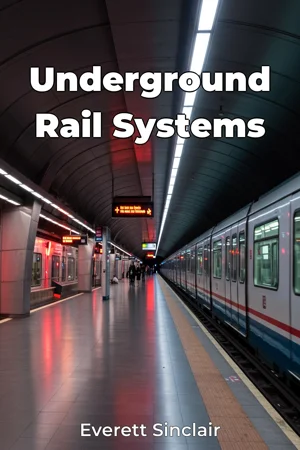
Have you ever considered the intricate engineering and planning required to move millions of people beneath our cities daily? "Underground Rail Systems" delves into the multifaceted world of subway systems, exploring their design, construction, operation, and impact on urban environments. This book addresses the critical aspects of urban transport solutions necessary for contemporary city infrastructures. The book focuses on three key areas: architectural design, technological advancements, and operational logistics. Architectural design covers the construction and spatial planning of subway stations, tunnels, and related infrastructure. Technological advancements analyzes mechanical, electrical, and computerized systems vital for a subway's safe and efficient function. Operational logistics examines scheduling, maintenance, and safety protocols that keep these complex systems running smoothly. The importance of these themes lies in the growing demand for sustainable and efficient urban transport solutions, coupled with the challenges of aging infrastructure and increasing urbanization. "Underground Rail Systems" places these systems within the broader context of urban planning, technological history, and societal needs. Readers should possess a general understanding of engineering principles and urban development concepts to fully grasp the material, although introductory chapters will provide essential background information. The central argument of this book emphasizes that thriving underground rail systems are not merely transportation solutions but are integral components of successful, sustainable urban ecosystems. Their effective design and operation impact everything from economic growth and environmental sustainability to social equity and quality of life. The book begins by introducing the basic principles of subway design and engineering, tracing their evolution from early prototypes to modern automated systems. Development of ideas occur in the subsequent chapters, beginning with examining tunnel construction techniques, ventilation systems, electrical power distribution, automated train control, and passenger safety systems. Further chapters delve into case studies of subway systems from around the world, from New York City to Tokyo, comparing their approaches to design challenges and operational efficiencies. Culminating chapters integrate the themes of sustainability, scalability, and future innovation, proposing new design philosophies, technological improvements, and management strategies. Practical applications and implications are explored through discussions of real-world examples, addressing topics such as accessibility standards, emergency response protocols, and infrastructure resilience in the face of climate change. The book will present evidence from a variety of sources, including engineering reports, architectural blueprints, statistical data on ridership and operational performance, and case studies of successful and unsuccessful subway projects. Methodologies from civil engineering, urban planning, and systems analysis are used to support the main arguments. "Underground Rail Systems" establishes interdisciplinary connections with several fields. Firstly, its intersection with urban planning highlights how subway systems shape land use, development patterns, and community growth. Secondly, its connection to environmental science focuses on the impact of subway construction and operation on air quality, noise pollution, and energy consumption. Thirdly, its relationship to sociology examines the social equity implications of subway access and affordability. These connections broaden the book's argument, underscoring the need for a holistic approach to urban transport planning. This book distinguishes itself through its comprehensive, multidisciplinary approach. Unlike many existing books that focus on specific technical aspects or individual case studies, "Underground Rail Systems" integrates architectural, technological, and operational perspectives to provide a holistic understanding of these intricate systems. It adopts a balanced tone, blending technical precision with accessible language to appeal to a diverse audience. The target audience includes students and professionals in architecture, engineering, urban planning, and transportation management, offering valuable insights for policymakers and anyone interested in sustainable urban development. The book presents its information in a fact-based, analytical manner, conforming to the standards expected of academic and professional texts. The book's scope encompasses a wide range of subway systems across different geographical contexts, while limiting its focus to underground rail transport specifically, excluding broader discussions of other mass transit options. The information in the book can be practically applied by readers involved in the design, construction, operation, and management of urban transport systems. Current debates in the field, such as balancing security concerns with passenger convenience and improving accessibility for individuals with disabilities, are also addressed. "Underground Rail Systems" offers insight and analysis to promote informed decision-making in the ongoing development of urban transportation infrastructure.
Have you ever considered the intricate engineering and planning required to move millions of people beneath our cities daily? "Underground Rail Systems" delves into the multifaceted world of subway systems, exploring their design, construction, operation, and impact on urban environments. This book addresses the critical aspects of urban transport solutions necessary for contemporary city infrastructures. The book focuses on three key areas: architectural design, technological advancements, and operational logistics. Architectural design covers the construction and spatial planning of subway stations, tunnels, and related infrastructure. Technological advancements analyzes mechanical, electrical, and computerized systems vital for a subway's safe and efficient function. Operational logistics examines scheduling, maintenance, and safety protocols that keep these complex systems running smoothly. The importance of these themes lies in the growing demand for sustainable and efficient urban transport solutions, coupled with the challenges of aging infrastructure and increasing urbanization. "Underground Rail Systems" places these systems within the broader context of urban planning, technological history, and societal needs. Readers should possess a general understanding of engineering principles and urban development concepts to fully grasp the material, although introductory chapters will provide essential background information. The central argument of this book emphasizes that thriving underground rail systems are not merely transportation solutions but are integral components of successful, sustainable urban ecosystems. Their effective design and operation impact everything from economic growth and environmental sustainability to social equity and quality of life. The book begins by introducing the basic principles of subway design and engineering, tracing their evolution from early prototypes to modern automated systems. Development of ideas occur in the subsequent chapters, beginning with examining tunnel construction techniques, ventilation systems, electrical power distribution, automated train control, and passenger safety systems. Further chapters delve into case studies of subway systems from around the world, from New York City to Tokyo, comparing their approaches to design challenges and operational efficiencies. Culminating chapters integrate the themes of sustainability, scalability, and future innovation, proposing new design philosophies, technological improvements, and management strategies. Practical applications and implications are explored through discussions of real-world examples, addressing topics such as accessibility standards, emergency response protocols, and infrastructure resilience in the face of climate change. The book will present evidence from a variety of sources, including engineering reports, architectural blueprints, statistical data on ridership and operational performance, and case studies of successful and unsuccessful subway projects. Methodologies from civil engineering, urban planning, and systems analysis are used to support the main arguments. "Underground Rail Systems" establishes interdisciplinary connections with several fields. Firstly, its intersection with urban planning highlights how subway systems shape land use, development patterns, and community growth. Secondly, its connection to environmental science focuses on the impact of subway construction and operation on air quality, noise pollution, and energy consumption. Thirdly, its relationship to sociology examines the social equity implications of subway access and affordability. These connections broaden the book's argument, underscoring the need for a holistic approach to urban transport planning. This book distinguishes itself through its comprehensive, multidisciplinary approach. Unlike many existing books that focus on specific technical aspects or individual case studies, "Underground Rail Systems" integrates architectural, technological, and operational perspectives to provide a holistic understanding of these intricate systems. It adopts a balanced tone, blending technical precision with accessible language to appeal to a diverse audience. The target audience includes students and professionals in architecture, engineering, urban planning, and transportation management, offering valuable insights for policymakers and anyone interested in sustainable urban development. The book presents its information in a fact-based, analytical manner, conforming to the standards expected of academic and professional texts. The book's scope encompasses a wide range of subway systems across different geographical contexts, while limiting its focus to underground rail transport specifically, excluding broader discussions of other mass transit options. The information in the book can be practically applied by readers involved in the design, construction, operation, and management of urban transport systems. Current debates in the field, such as balancing security concerns with passenger convenience and improving accessibility for individuals with disabilities, are also addressed. "Underground Rail Systems" offers insight and analysis to promote informed decision-making in the ongoing development of urban transportation infrastructure.
"Underground Rail Systems" explores the complex world beneath our cities, examining the architectural design, technological advancements, and operational logistics of subway systems. It highlights how these systems are not just about transportation but are vital components of sustainable urban ecosystems. Did you know that efficient subway systems can significantly impact economic growth and environmental sustainability? Or that the design of these systems directly affects social equity and quality of life? The book begins by introducing the basic principles of subway design and engineering, tracing their evolution to modern automated systems. Subsequent chapters delve into tunnel construction, ventilation, power distribution, and safety protocols. Case studies from cities worldwide, such as New York and Tokyo, provide comparative insights. This book distinguishes itself by integrating architectural, technological, and operational perspectives, offering a holistic understanding of underground rail systems. The book emphasizes the importance of sustainable urban development and addresses current debates like balancing security with passenger convenience. It showcases how thriving underground rail impacts urban planning, environmental science, and sociology. The final chapters integrate sustainability, scalability, and future innovation, proposing new design philosophies and technological improvements.
Book Details
ISBN
9788235248701
Publisher
Publifye AS
Your Licenses
You don't own any licenses for this book
Purchase a license below to unlock this book and download the EPUB.
Purchase License
Select a tier to unlock this book
Need bulk licensing?
Contact us for enterprise agreements.