
About This Book
Imagine a world where urban congestion is alleviated by a network of personal air vehicles (PAVs) seamlessly integrated into the cityscape. *Personal Air Vehicles* explores this potential future, examining the architectural, technological, and societal implications of introducing small, autonomous aircraft into our daily lives. This book delves into the confluence of evolving technologies and architectural innovation required to make personal air travel a viable reality. The core focus revolves around three pivotal concepts: the technological feasibility of PAVs, the architectural adaptations necessary to accommodate them, and the regulatory and societal challenges that must be addressed. The significance of these intertwined concepts lies in their potential to reshape urban landscapes, transform transportation systems, and redefine our understanding of personal mobility. The current strain on existing infrastructure, coupled with increasing urbanization, necessitates innovative solutions, making the exploration of PAVs increasingly relevant. To understand the potential of PAVs, this book first establishes a historical context, examining past attempts at personal air travel and the technological limitations that hindered their success. It outlines the recent advancements in electric propulsion, autonomous navigation, and lightweight materials that are driving the current resurgence of interest in this field. No prior knowledge is strictly necessary, though a basic understanding of aviation principles and urban planning concepts will be beneficial. The central argument of *Personal Air Vehicles* is that the successful integration of PAVs into urban environments requires a holistic, interdisciplinary approach encompassing technological innovation, architectural adaptation, and proactive regulatory frameworks. This argument is critical because it moves beyond the technological ‘can we?’ to address the equally important ‘how should we?’ and ‘what are the potential consequences?’ questions. The book begins by introducing the fundamental concepts of PAV technology, including vehicle design, propulsion systems, and autonomous flight control. It then delves into the architectural considerations, exploring the design of vertiports (vertical takeoff and landing facilities), the integration of PAV infrastructure into existing buildings, and the potential impact on urban density and land use. The book then considers the regulatory and societal implications, examining air traffic management systems, safety standards, noise pollution concerns, and the ethical considerations surrounding autonomous flight. The final sections synthesize these elements, proposing design guidelines for future PAV-ready cities and evaluating the practical applications and potential benefits of widespread PAV adoption. The arguments presented are supported by a range of evidence, including engineering studies, architectural designs, urban planning models, and policy analyses. Unique data sources, such as simulations of PAV traffic patterns and surveys of public perception regarding autonomous air travel, may also be included. This book connects to several other fields, including aerospace engineering, urban planning, and public policy. The connection to aerospace engineering is evident in the analysis of PAV technology and flight dynamics. The link to urban planning is crucial for understanding how PAV infrastructure can be integrated into cities. The connection to public policy is essential for addressing safety regulations, environmental concerns, and societal acceptance. A unique aspect of this book is its emphasis on the architectural implications of PAVs, moving beyond the purely technological aspects to consider how these vehicles will reshape the built environment. This perspective offers a fresh and innovative approach to the topic. The tone is factual and analytical, providing a comprehensive overview of the subject matter while avoiding excessive technical jargon. The writing style is accessible to a broad audience with an interest in the future of transportation and urban development. The target audience includes architects, urban planners, engineers, policymakers, and anyone interested in the future of transportation and urban innovation. It will be valuable to them by providing a comprehensive overview of the challenges and opportunities associated with personal air vehicles, offering insights into the technological, architectural, and societal implications of this emerging technology. As a book in the areas of architecture and technology, it adheres to the conventions of presenting well-researched information, supported by evidence and examples, with clarity and precision. The scope of the book encompasses the technological, architectural, and regulatory aspects of PAVs, focusing primarily on their potential integration into urban environments. The book avoids delving into highly specific technical details of aircraft design or air traffic control systems, instead providing a broader overview of these topics. The information presented can be applied by architects and urban planners to design PAV-ready buildings and cities. Engineers can use the insights to develop more efficient and sustainable PAV technologies. Policymakers can leverage the book's analysis to develop effective regulations and guidelines for the safe and responsible integration of PAVs into society. The book addresses potential controversies surrounding PAVs, such as concerns about safety, noise pollution, and equitable access to this technology. It explores these debates by presenting different perspectives and offering potential solutions to mitigate these concerns.
Imagine a world where urban congestion is alleviated by a network of personal air vehicles (PAVs) seamlessly integrated into the cityscape. *Personal Air Vehicles* explores this potential future, examining the architectural, technological, and societal implications of introducing small, autonomous aircraft into our daily lives. This book delves into the confluence of evolving technologies and architectural innovation required to make personal air travel a viable reality. The core focus revolves around three pivotal concepts: the technological feasibility of PAVs, the architectural adaptations necessary to accommodate them, and the regulatory and societal challenges that must be addressed. The significance of these intertwined concepts lies in their potential to reshape urban landscapes, transform transportation systems, and redefine our understanding of personal mobility. The current strain on existing infrastructure, coupled with increasing urbanization, necessitates innovative solutions, making the exploration of PAVs increasingly relevant. To understand the potential of PAVs, this book first establishes a historical context, examining past attempts at personal air travel and the technological limitations that hindered their success. It outlines the recent advancements in electric propulsion, autonomous navigation, and lightweight materials that are driving the current resurgence of interest in this field. No prior knowledge is strictly necessary, though a basic understanding of aviation principles and urban planning concepts will be beneficial. The central argument of *Personal Air Vehicles* is that the successful integration of PAVs into urban environments requires a holistic, interdisciplinary approach encompassing technological innovation, architectural adaptation, and proactive regulatory frameworks. This argument is critical because it moves beyond the technological ‘can we?’ to address the equally important ‘how should we?’ and ‘what are the potential consequences?’ questions. The book begins by introducing the fundamental concepts of PAV technology, including vehicle design, propulsion systems, and autonomous flight control. It then delves into the architectural considerations, exploring the design of vertiports (vertical takeoff and landing facilities), the integration of PAV infrastructure into existing buildings, and the potential impact on urban density and land use. The book then considers the regulatory and societal implications, examining air traffic management systems, safety standards, noise pollution concerns, and the ethical considerations surrounding autonomous flight. The final sections synthesize these elements, proposing design guidelines for future PAV-ready cities and evaluating the practical applications and potential benefits of widespread PAV adoption. The arguments presented are supported by a range of evidence, including engineering studies, architectural designs, urban planning models, and policy analyses. Unique data sources, such as simulations of PAV traffic patterns and surveys of public perception regarding autonomous air travel, may also be included. This book connects to several other fields, including aerospace engineering, urban planning, and public policy. The connection to aerospace engineering is evident in the analysis of PAV technology and flight dynamics. The link to urban planning is crucial for understanding how PAV infrastructure can be integrated into cities. The connection to public policy is essential for addressing safety regulations, environmental concerns, and societal acceptance. A unique aspect of this book is its emphasis on the architectural implications of PAVs, moving beyond the purely technological aspects to consider how these vehicles will reshape the built environment. This perspective offers a fresh and innovative approach to the topic. The tone is factual and analytical, providing a comprehensive overview of the subject matter while avoiding excessive technical jargon. The writing style is accessible to a broad audience with an interest in the future of transportation and urban development. The target audience includes architects, urban planners, engineers, policymakers, and anyone interested in the future of transportation and urban innovation. It will be valuable to them by providing a comprehensive overview of the challenges and opportunities associated with personal air vehicles, offering insights into the technological, architectural, and societal implications of this emerging technology. As a book in the areas of architecture and technology, it adheres to the conventions of presenting well-researched information, supported by evidence and examples, with clarity and precision. The scope of the book encompasses the technological, architectural, and regulatory aspects of PAVs, focusing primarily on their potential integration into urban environments. The book avoids delving into highly specific technical details of aircraft design or air traffic control systems, instead providing a broader overview of these topics. The information presented can be applied by architects and urban planners to design PAV-ready buildings and cities. Engineers can use the insights to develop more efficient and sustainable PAV technologies. Policymakers can leverage the book's analysis to develop effective regulations and guidelines for the safe and responsible integration of PAVs into society. The book addresses potential controversies surrounding PAVs, such as concerns about safety, noise pollution, and equitable access to this technology. It explores these debates by presenting different perspectives and offering potential solutions to mitigate these concerns.
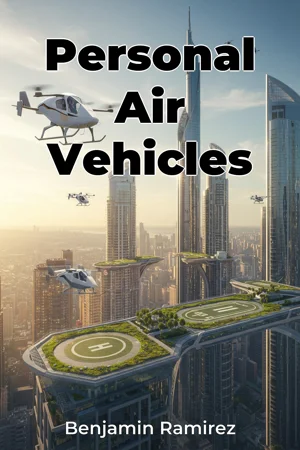
"Personal Air Vehicles" envisions a future where autonomous aircraft alleviate urban congestion, exploring the intersection of technology, architecture, and societal impact. It examines the feasibility of integrating Personal Air Vehicles (PAVs) into our daily lives, highlighting advancements in electric propulsion and autonomous navigation that are driving renewed interest in air transportation. The book uniquely emphasizes the architectural adaptations necessary, such as designing vertiports and integrating PAV infrastructure into existing buildings, reshaping urban landscapes. The book argues for a holistic approach, addressing technological innovation, architectural adaptation, and regulatory frameworks. It begins by establishing a historical context and introducing fundamental PAV technology. Progressing through architectural considerations like urban density impact, it culminates in proposed design guidelines for future PAV-ready cities. This approach offers valuable insights for architects, urban planners, and policymakers interested in the potential and challenges of Urban Air Mobility.
Book Details
ISBN
9788235248657
Publisher
Publifye AS
Your Licenses
You don't own any licenses for this book
Purchase a license below to unlock this book and download the EPUB.
Purchase License
Select a tier to unlock this book
Need bulk licensing?
Contact us for enterprise agreements.