
About This Book
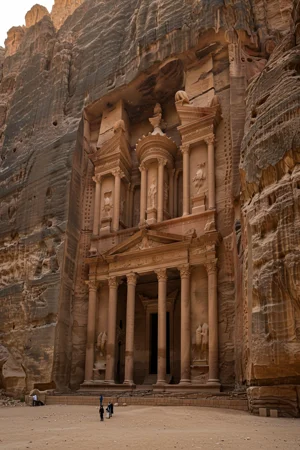
How did a nomadic Arab tribe transform sheer rock cliffs into a thriving metropolis, leaving behind architectural wonders that continue to captivate the world? "Petra Rock Carving" unveils the secrets of Petra, the lost city of the Nabataeans, focusing on their unparalleled skill in carving monumental structures directly into sandstone cliffs, their ingenious water management systems, and their complex network of trade routes that enabled their rise to power and influence. These key elements – architectural innovation, hydrological engineering, and strategic trade – are not merely isolated achievements but rather interconnected facets of a sophisticated civilization that adapted and thrived in a challenging desert environment. Understanding them provides insight into the Nabataean ingenuity and resourcefulness. To fully appreciate Petra’s marvels, it’s essential to understand the region’s geological history and the Nabataeans’ place within the broader tapestry of the ancient Near East. The book provides historical context, detailing the Nabataeans’ origins as a nomadic tribe, their gradual sedentarization, and their interactions with neighboring empires such as the Romans and Egyptians. No specific prior knowledge is needed to follow the book. "Petra Rock Carving" posits that the Nabataeans’ success stemmed from their ability to leverage their unique geographic location and adapt existing technologies to create a sustainable and economically viable urban center. This argument is significant because it challenges conventional views of desert civilizations as resource-poor and technologically limited, highlighting the Nabataeans' innovative spirit. The book is structured to provide a comprehensive exploration of Petra. It begins by introducing the geological formation of the Siq, the narrow gorge that serves as the main entrance to Petra, and discusses the properties of the sandstone that made it ideal for carving. Following that are detailed analyses of Petra's major architectural monuments, including the Treasury (Al-Khazneh), the Monastery (Ad Deir), and the Royal Tombs. These chapters explore the carving techniques employed by the Nabataeans, the influences of Hellenistic and Roman architectural styles, and the symbolic meanings embedded within these structures. Subsequent sections delve into the Nabataeans' water management systems, including dams, cisterns, and aqueducts, explaining how these systems enabled the city to support a large population in an arid environment. The final act is a detailed examination of the Nabataean’s trade networks, highlighting their role as intermediaries between the East and West, and how their control of caravan routes contributed to their wealth and power. The book concludes by discussing the Nabataeans’ eventual decline and the rediscovery of Petra in the 19th century. The book relies on a diverse range of evidence, including archaeological excavations, architectural surveys, inscriptions, and historical texts. Ground-penetrating radar and 3D modeling enhance our understanding of the city's layout and infrastructure. The exploration of Petra’s architecture connects to fields such as art history, archaeology, and civil engineering. For example, the discussion of carving techniques benefits from insights into stone masonry and structural engineering, while the analysis of trade routes draws upon economic history and geography. Furthermore, the study of Nabataean water management contributes to our understanding of sustainable urban planning in arid regions. "Petra Rock Carving" offers a unique perspective by emphasizing the interconnectedness of the Nabataeans’ architectural achievements, hydrological engineering, and trade networks. Rather than treating these elements as isolated phenomena, it explores how they worked together to create a resilient and prosperous civilization. The book adopts a fact-based approach, presenting information in a clear and accessible manner, without sensationalism. The book is intended for general readers interested in ancient history, archaeology, and architecture, as well as students and scholars in these fields. The book’s value lies in its detailed examination of Petra’s architectural and engineering marvels, its exploration of the Nabataeans’ cultural and economic achievements, and its insights into the challenges and opportunities of living in a desert environment. As a work of architectural history, "Petra Rock Carving" adheres to the conventions of the genre by providing detailed descriptions of architectural features, historical context, and scholarly analysis. As a general history book, it presents factual information, based on sources that can be verified via careful research. While the book focuses on Petra, it does not provide an exhaustive account of all aspects of Nabataean culture or history. Instead, it concentrates on the key elements that contributed to the city’s unique character and enduring legacy. The insights from "Petra Rock Carving" can be applied to contemporary challenges such as sustainable urban development, water resource management, and the preservation of cultural heritage sites. By studying the Nabataeans’ ingenuity, we can gain valuable lessons for addressing similar challenges in the 21st century. While there are ongoing debates among scholars regarding the precise dating of certain structures and the interpretation of specific inscriptions, the book presents a balanced and nuanced view of these controversies, acknowledging the complexity of the evidence and the diversity of scholarly opinions.
How did a nomadic Arab tribe transform sheer rock cliffs into a thriving metropolis, leaving behind architectural wonders that continue to captivate the world? "Petra Rock Carving" unveils the secrets of Petra, the lost city of the Nabataeans, focusing on their unparalleled skill in carving monumental structures directly into sandstone cliffs, their ingenious water management systems, and their complex network of trade routes that enabled their rise to power and influence. These key elements – architectural innovation, hydrological engineering, and strategic trade – are not merely isolated achievements but rather interconnected facets of a sophisticated civilization that adapted and thrived in a challenging desert environment. Understanding them provides insight into the Nabataean ingenuity and resourcefulness. To fully appreciate Petra’s marvels, it’s essential to understand the region’s geological history and the Nabataeans’ place within the broader tapestry of the ancient Near East. The book provides historical context, detailing the Nabataeans’ origins as a nomadic tribe, their gradual sedentarization, and their interactions with neighboring empires such as the Romans and Egyptians. No specific prior knowledge is needed to follow the book. "Petra Rock Carving" posits that the Nabataeans’ success stemmed from their ability to leverage their unique geographic location and adapt existing technologies to create a sustainable and economically viable urban center. This argument is significant because it challenges conventional views of desert civilizations as resource-poor and technologically limited, highlighting the Nabataeans' innovative spirit. The book is structured to provide a comprehensive exploration of Petra. It begins by introducing the geological formation of the Siq, the narrow gorge that serves as the main entrance to Petra, and discusses the properties of the sandstone that made it ideal for carving. Following that are detailed analyses of Petra's major architectural monuments, including the Treasury (Al-Khazneh), the Monastery (Ad Deir), and the Royal Tombs. These chapters explore the carving techniques employed by the Nabataeans, the influences of Hellenistic and Roman architectural styles, and the symbolic meanings embedded within these structures. Subsequent sections delve into the Nabataeans' water management systems, including dams, cisterns, and aqueducts, explaining how these systems enabled the city to support a large population in an arid environment. The final act is a detailed examination of the Nabataean’s trade networks, highlighting their role as intermediaries between the East and West, and how their control of caravan routes contributed to their wealth and power. The book concludes by discussing the Nabataeans’ eventual decline and the rediscovery of Petra in the 19th century. The book relies on a diverse range of evidence, including archaeological excavations, architectural surveys, inscriptions, and historical texts. Ground-penetrating radar and 3D modeling enhance our understanding of the city's layout and infrastructure. The exploration of Petra’s architecture connects to fields such as art history, archaeology, and civil engineering. For example, the discussion of carving techniques benefits from insights into stone masonry and structural engineering, while the analysis of trade routes draws upon economic history and geography. Furthermore, the study of Nabataean water management contributes to our understanding of sustainable urban planning in arid regions. "Petra Rock Carving" offers a unique perspective by emphasizing the interconnectedness of the Nabataeans’ architectural achievements, hydrological engineering, and trade networks. Rather than treating these elements as isolated phenomena, it explores how they worked together to create a resilient and prosperous civilization. The book adopts a fact-based approach, presenting information in a clear and accessible manner, without sensationalism. The book is intended for general readers interested in ancient history, archaeology, and architecture, as well as students and scholars in these fields. The book’s value lies in its detailed examination of Petra’s architectural and engineering marvels, its exploration of the Nabataeans’ cultural and economic achievements, and its insights into the challenges and opportunities of living in a desert environment. As a work of architectural history, "Petra Rock Carving" adheres to the conventions of the genre by providing detailed descriptions of architectural features, historical context, and scholarly analysis. As a general history book, it presents factual information, based on sources that can be verified via careful research. While the book focuses on Petra, it does not provide an exhaustive account of all aspects of Nabataean culture or history. Instead, it concentrates on the key elements that contributed to the city’s unique character and enduring legacy. The insights from "Petra Rock Carving" can be applied to contemporary challenges such as sustainable urban development, water resource management, and the preservation of cultural heritage sites. By studying the Nabataeans’ ingenuity, we can gain valuable lessons for addressing similar challenges in the 21st century. While there are ongoing debates among scholars regarding the precise dating of certain structures and the interpretation of specific inscriptions, the book presents a balanced and nuanced view of these controversies, acknowledging the complexity of the evidence and the diversity of scholarly opinions.
"Petra Rock Carving" explores how the Nabataeans transformed a rugged desert landscape into the magnificent city of Petra through innovative rock carving, sophisticated water management, and strategic trade networks. This ancient city, carved directly into sandstone cliffs, showcases the architectural prowess of a civilization that thrived in a challenging environment. The book reveals how the Nabataeans managed to not only carve elaborate structures like the Treasury (Al-Khazneh) and the Monastery (Ad Deir) but also engineered complex hydrological systems to sustain a large population. The book begins by detailing the geological formation of the Siq and the properties of sandstone that made it ideal for carving, then progresses through detailed analyses of Petra's major monuments, including the Royal Tombs. It examines the Nabataeans' water management systems and trade networks, highlighting their role as intermediaries between East and West and concluding with their decline and Petra's rediscovery. This approach emphasizes the interconnectedness of architectural innovation, hydrological engineering, and trade, challenging conventional views of desert civilizations. The book stands out by connecting Petra's architecture with fields like archaeology and civil engineering, offering insights into sustainable urban planning in arid regions. Through archaeological excavations, architectural surveys, and historical texts, "Petra Rock Carving" highlights the ingenuity of the Nabataeans and their lasting legacy of the lost city within ancient history.
Book Details
ISBN
9788235248633
Publisher
Publifye AS
Your Licenses
You don't own any licenses for this book
Purchase a license below to unlock this book and download the EPUB.
Purchase License
Select a tier to unlock this book
Need bulk licensing?
Contact us for enterprise agreements.