
About This Book
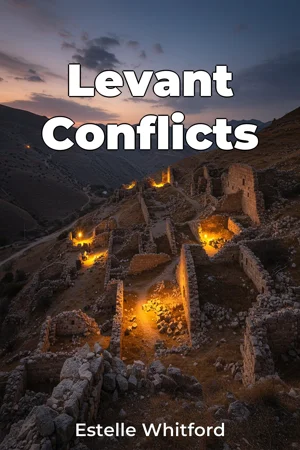
Can the intricate tapestry of conflicts in the Levant reveal persistent patterns shaping its modern geopolitics? "Levant Conflicts" undertakes a comprehensive examination of the historical wars and disputes that have plagued this vital region, focusing on their underlying causes and lasting repercussions on borders and political alliances. Understanding these historical dynamics is crucial for comprehending the contemporary challenges and potential future trajectories of the Middle East. This book delves into three key areas: the persistent drivers of conflict, focusing on resource competition, sectarian divisions, and the influence of external powers; the evolution of territorial boundaries as a direct consequence of these conflicts, charting the shifts in power and control; and the ever-changing landscape of political alliances, exploring how historical enmities and shared interests have forged and fractured coalitions throughout the region's history. The Levant, positioned at the crossroads of civilizations, has been a theater of war for millennia. Its strategic importance, coupled with its diverse ethnic and religious makeup, has made it a focal point for regional and global powers. This book traces the history of conflicts from the late Ottoman Empire through the post-colonial era, providing the historical and social context essential for understanding the complexities of the region. No prior expert knowledge is assumed, but the work does build upon foundational historical understandings. The central argument of "Levant Conflicts" posits that the long-term effects of even seemingly isolated conflicts have created a self-reinforcing cycle of instability and mistrust. We argue that analyzing these effects over extended periods reveals repetitive patterns in the emergence, escalation, and resolution of conflicts, which, in turn, continue to shape political realities. The book's structure unfolds in three principal parts. First, we introduce the key concepts and the historical background of the Levant, examining its diverse populations, religious influences, and strategic significance. Second, we analyze specific conflicts, such as the Arab-Israeli wars, Lebanese Civil War, and Syrian Civil War, dissecting their origins, key events, and immediate consequences. Third, we focus on the long-term impact of these conflicts, meticulously mapping the subsequent border changes, shifts in political power, and the realignment of regional alliances. This analysis is supported by a wealth of primary and secondary sources, including archival documents, diplomatic correspondence, military reports, and scholarly research. The book draws on diverse perspectives, incorporating insights from political science, sociology, and international relations to provide a holistic understanding. Specifically, previously untranslated Ottoman-era sources offer a fresh perspective on early 20th-century conflicts. This book integrates insights from history, political science, and international relations to understand the dynamics of the Levant. Understanding the interplay between these fields provides a more nuanced understanding of the region's complex challenges. What sets "Levant Conflicts" apart is its longitudinal approach, tracing the ripple effects of specific conflicts over decades and even centuries. This contrasts with analyses that tend to focus on individual conflicts in isolation. The writing style is analytical and fact-based, designed to inform and engage both academic and general readers interested in the history and politics of the Middle East. The target audience includes students of history, political science, and Middle Eastern studies, as well as policymakers, journalists, and anyone seeking a deeper understanding of the region's conflicts. This book adheres to the conventions of military history and political science, providing a detailed and rigorously researched account of events. The scope of the book is limited to conflicts within the geographical area traditionally considered the Levant – encompassing modern-day Syria, Lebanon, Jordan, Israel, and Palestine – and their direct impact within and among these states. It does not delve extensively into conflicts unrelated to Levant countries, even if they occurred within the broader Middle East. The book offers practical value by providing a framework for understanding the underlying causes of conflict in the Levant, which can inform policy decisions aimed at promoting stability and peace. By understanding the historical roots of current events, policymakers and other stakeholders can craft more effective strategies for conflict resolution and regional cooperation. The book addresses ongoing debates surrounding the role of sectarianism, the influence of external powers, and the legacy of colonialism in shaping the conflicts of the Levant. By presenting a balanced and evidence-based analysis, it seeks to contribute to a more nuanced understanding of these complex issues.
Can the intricate tapestry of conflicts in the Levant reveal persistent patterns shaping its modern geopolitics? "Levant Conflicts" undertakes a comprehensive examination of the historical wars and disputes that have plagued this vital region, focusing on their underlying causes and lasting repercussions on borders and political alliances. Understanding these historical dynamics is crucial for comprehending the contemporary challenges and potential future trajectories of the Middle East. This book delves into three key areas: the persistent drivers of conflict, focusing on resource competition, sectarian divisions, and the influence of external powers; the evolution of territorial boundaries as a direct consequence of these conflicts, charting the shifts in power and control; and the ever-changing landscape of political alliances, exploring how historical enmities and shared interests have forged and fractured coalitions throughout the region's history. The Levant, positioned at the crossroads of civilizations, has been a theater of war for millennia. Its strategic importance, coupled with its diverse ethnic and religious makeup, has made it a focal point for regional and global powers. This book traces the history of conflicts from the late Ottoman Empire through the post-colonial era, providing the historical and social context essential for understanding the complexities of the region. No prior expert knowledge is assumed, but the work does build upon foundational historical understandings. The central argument of "Levant Conflicts" posits that the long-term effects of even seemingly isolated conflicts have created a self-reinforcing cycle of instability and mistrust. We argue that analyzing these effects over extended periods reveals repetitive patterns in the emergence, escalation, and resolution of conflicts, which, in turn, continue to shape political realities. The book's structure unfolds in three principal parts. First, we introduce the key concepts and the historical background of the Levant, examining its diverse populations, religious influences, and strategic significance. Second, we analyze specific conflicts, such as the Arab-Israeli wars, Lebanese Civil War, and Syrian Civil War, dissecting their origins, key events, and immediate consequences. Third, we focus on the long-term impact of these conflicts, meticulously mapping the subsequent border changes, shifts in political power, and the realignment of regional alliances. This analysis is supported by a wealth of primary and secondary sources, including archival documents, diplomatic correspondence, military reports, and scholarly research. The book draws on diverse perspectives, incorporating insights from political science, sociology, and international relations to provide a holistic understanding. Specifically, previously untranslated Ottoman-era sources offer a fresh perspective on early 20th-century conflicts. This book integrates insights from history, political science, and international relations to understand the dynamics of the Levant. Understanding the interplay between these fields provides a more nuanced understanding of the region's complex challenges. What sets "Levant Conflicts" apart is its longitudinal approach, tracing the ripple effects of specific conflicts over decades and even centuries. This contrasts with analyses that tend to focus on individual conflicts in isolation. The writing style is analytical and fact-based, designed to inform and engage both academic and general readers interested in the history and politics of the Middle East. The target audience includes students of history, political science, and Middle Eastern studies, as well as policymakers, journalists, and anyone seeking a deeper understanding of the region's conflicts. This book adheres to the conventions of military history and political science, providing a detailed and rigorously researched account of events. The scope of the book is limited to conflicts within the geographical area traditionally considered the Levant – encompassing modern-day Syria, Lebanon, Jordan, Israel, and Palestine – and their direct impact within and among these states. It does not delve extensively into conflicts unrelated to Levant countries, even if they occurred within the broader Middle East. The book offers practical value by providing a framework for understanding the underlying causes of conflict in the Levant, which can inform policy decisions aimed at promoting stability and peace. By understanding the historical roots of current events, policymakers and other stakeholders can craft more effective strategies for conflict resolution and regional cooperation. The book addresses ongoing debates surrounding the role of sectarianism, the influence of external powers, and the legacy of colonialism in shaping the conflicts of the Levant. By presenting a balanced and evidence-based analysis, it seeks to contribute to a more nuanced understanding of these complex issues.
"Levant Conflicts" examines the historical roots and enduring impact of conflicts in the Levant, a region vital to understanding Middle East geopolitics. It argues that these conflicts, fueled by resource competition and sectarian divisions, create a self-reinforcing cycle of instability. The book traces how these conflicts have repeatedly reshaped borders and political alliances, highlighting the long-term consequences of even seemingly isolated events, such as shifts in power dynamics after major wars. The book adopts a longitudinal approach, tracing the ripple effects of conflicts across decades and centuries, unlike analyses that focus on isolated events. It begins by introducing the Levant's historical background and key concepts, then it analyzes specific conflicts like the Arab-Israeli wars and the Syrian Civil War. The analysis progresses to the long-term impacts, meticulously mapping border changes and the realignment of regional alliances. By integrating insights from history, political science, and international relations, "Levant Conflicts" provides a framework for understanding the underlying causes of conflict in the Levant. This understanding can inform policy decisions aimed at promoting stability and peace, offering valuable insights for policymakers, students, and anyone interested in the region's complex challenges.
Book Details
ISBN
9788235248565
Publisher
Publifye AS
Your Licenses
You don't own any licenses for this book
Purchase a license below to unlock this book and download the EPUB.
Purchase License
Select a tier to unlock this book
Need bulk licensing?
Contact us for enterprise agreements.