
About This Book
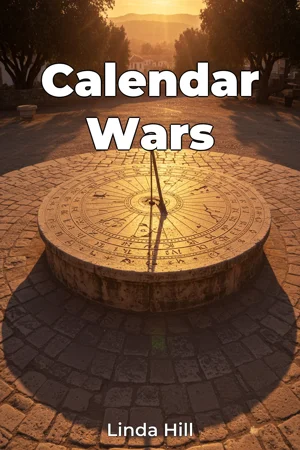
What if something as seemingly fixed as the calendar has been a battleground for centuries, shaped by religious fervor, political maneuvering, and the relentless human desire to impose order on the chaos of time? "Calendar Wars" delves into the surprisingly turbulent history of calendar reform, revealing how struggles over time measurement have ignited conflicts that reverberate even today. This book explores three central themes: the religious underpinnings of calendar systems, the impact of scientific advancements on timekeeping, and the global pursuit of a unified calendar. Each of these areas represents a significant, and often contentious, chapter in the story of how humanity has attempted to synchronize its activities. By examining these themes, "Calendar Wars" reveals the complexities of cultural identity, power struggles, and scientific progress that are embedded within something we often take for granted. Understanding the history outlined requires appreciating the deep-seated significance of calendars in different cultures. Calendars have served not merely as tools to organize days, months, and years, but also as expressions of belief systems, assertions of authority, and frameworks for coordinating social and economic activities. The central argument of "Calendar Wars" posits that calendar reform is never solely about practical efficiency; rather, it is a complex negotiation of power, tradition, and worldviews. This argument underscores the impact of calendar disputes on various aspects of society and highlights how these conflicts have shaped the modern world. The book's structure unfolds as follows: first, an introduction establishes the foundational role of calendars in human societies, exploring their origins in ancient civilizations. Second, it examines the evolution of calendars through the lens of religious conflict, focusing on the Gregorian calendar reform and the resistance it encountered from various religious factions. Third, the book analyzes the scientific and technological advancements that have influenced calendar development, tracing the transition from lunar and solar observations to atomic clocks and coordinated universal time. Fourth, "Calendar Wars" investigates attempts to establish a universal calendar, detailing the political and cultural challenges that have stymied such efforts. Finally, the book concludes by exploring contemporary calendar-related issues, such as the debate over daylight saving time and the emergence of alternative calendar proposals. The evidence presented will encompass a wide range of historical sources, including papal bulls, scientific treatises, government documents, and personal correspondence. The book also draws upon ethnographic studies and cultural analyses to provide insights into how different societies perceive and use calendars. "Calendar Wars" connects to several interdisciplinary fields, including religious studies, political science, and sociology. By exploring the intersection of science, religion, and politics in the context of calendar reform, the book offers a multifaceted perspective on the dynamics of cultural change. The book's approach provides a fresh perspective by examining calendar reform as a lens through which to understand broader historical trends. This approach sets it apart from traditional histories of timekeeping, which often focus primarily on scientific or technical aspects. Written in a clear and accessible style, "Calendar Wars" aims to engage a broad readership. It will appeal to anyone interested in history, science, religion, or the cultural forces that shape our world. As a work of world history, "Calendar Wars" adheres to the conventions of historical scholarship, presenting well-researched and documented evidence. While the book aims to provide a comprehensive overview of calendar reform, it intentionally limits its scope to major historical episodes and themes, focusing on those that have had the most significant global impact. The insights from "Calendar Wars" will allow readers to understand the social and political implications of calendar choices, as well as to critically evaluate contemporary debates. The book addresses ongoing debates surrounding calendar reform, such as the challenges of synchronizing diverse cultural traditions.
What if something as seemingly fixed as the calendar has been a battleground for centuries, shaped by religious fervor, political maneuvering, and the relentless human desire to impose order on the chaos of time? "Calendar Wars" delves into the surprisingly turbulent history of calendar reform, revealing how struggles over time measurement have ignited conflicts that reverberate even today. This book explores three central themes: the religious underpinnings of calendar systems, the impact of scientific advancements on timekeeping, and the global pursuit of a unified calendar. Each of these areas represents a significant, and often contentious, chapter in the story of how humanity has attempted to synchronize its activities. By examining these themes, "Calendar Wars" reveals the complexities of cultural identity, power struggles, and scientific progress that are embedded within something we often take for granted. Understanding the history outlined requires appreciating the deep-seated significance of calendars in different cultures. Calendars have served not merely as tools to organize days, months, and years, but also as expressions of belief systems, assertions of authority, and frameworks for coordinating social and economic activities. The central argument of "Calendar Wars" posits that calendar reform is never solely about practical efficiency; rather, it is a complex negotiation of power, tradition, and worldviews. This argument underscores the impact of calendar disputes on various aspects of society and highlights how these conflicts have shaped the modern world. The book's structure unfolds as follows: first, an introduction establishes the foundational role of calendars in human societies, exploring their origins in ancient civilizations. Second, it examines the evolution of calendars through the lens of religious conflict, focusing on the Gregorian calendar reform and the resistance it encountered from various religious factions. Third, the book analyzes the scientific and technological advancements that have influenced calendar development, tracing the transition from lunar and solar observations to atomic clocks and coordinated universal time. Fourth, "Calendar Wars" investigates attempts to establish a universal calendar, detailing the political and cultural challenges that have stymied such efforts. Finally, the book concludes by exploring contemporary calendar-related issues, such as the debate over daylight saving time and the emergence of alternative calendar proposals. The evidence presented will encompass a wide range of historical sources, including papal bulls, scientific treatises, government documents, and personal correspondence. The book also draws upon ethnographic studies and cultural analyses to provide insights into how different societies perceive and use calendars. "Calendar Wars" connects to several interdisciplinary fields, including religious studies, political science, and sociology. By exploring the intersection of science, religion, and politics in the context of calendar reform, the book offers a multifaceted perspective on the dynamics of cultural change. The book's approach provides a fresh perspective by examining calendar reform as a lens through which to understand broader historical trends. This approach sets it apart from traditional histories of timekeeping, which often focus primarily on scientific or technical aspects. Written in a clear and accessible style, "Calendar Wars" aims to engage a broad readership. It will appeal to anyone interested in history, science, religion, or the cultural forces that shape our world. As a work of world history, "Calendar Wars" adheres to the conventions of historical scholarship, presenting well-researched and documented evidence. While the book aims to provide a comprehensive overview of calendar reform, it intentionally limits its scope to major historical episodes and themes, focusing on those that have had the most significant global impact. The insights from "Calendar Wars" will allow readers to understand the social and political implications of calendar choices, as well as to critically evaluate contemporary debates. The book addresses ongoing debates surrounding calendar reform, such as the challenges of synchronizing diverse cultural traditions.
"Calendar Wars" reveals that calendars, seemingly fixed, have been battlegrounds shaped by religion, politics, and the desire for order. The book explores how calendar reform ignited conflicts, highlighting the religious underpinnings of calendar systems, the impact of science on timekeeping, and the pursuit of a unified calendar. Calendars are not just tools; they reflect belief systems and power assertions, influencing social and economic activities. For instance, the adoption of the Gregorian calendar faced resistance from various religious factions, illustrating deep-seated cultural and religious attachments to existing timekeeping methods. The book argues that calendar reform is a negotiation of power, tradition, and worldviews, impacting society and shaping the modern world. It begins by establishing calendars' foundational role in ancient civilizations, then examines their evolution through religious conflict, scientific advancements, and attempts at universal standardization. "Calendar Wars" progresses to explore contemporary issues like daylight saving time and alternative calendar proposals, offering a fresh perspective on understanding broader historical trends through the lens of calendar reform.
Book Details
ISBN
9788235248503
Publisher
Publifye AS
Your Licenses
You don't own any licenses for this book
Purchase a license below to unlock this book and download the EPUB.
Purchase License
Select a tier to unlock this book
Need bulk licensing?
Contact us for enterprise agreements.