
About This Book
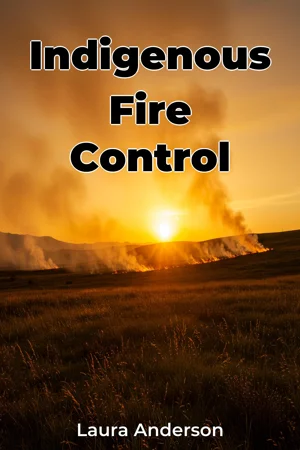
What if the key to preventing catastrophic wildfires lies not in modern technology, but in ancient practices? This book, "Indigenous Fire Control," unveils the sophisticated and sustainable fire management techniques employed by indigenous peoples for millennia, demonstrating their profound understanding of fire's ecological role. We explore how these practices, often dismissed or suppressed by modern approaches, offer invaluable lessons for restoring ecosystem health and mitigating the increasing threat of destructive wildfires in our contemporary world. This book examines two interwoven themes: the historical ecology of indigenous fire management and its relevance to modern conservation challenges. We provide a historical context, detailing how indigenous communities across diverse geographical regions, from North America to Australia, utilized fire to shape landscapes, promote biodiversity, and enhance resource availability. The significance lies in understanding that these were not random acts of burning, but carefully planned and executed strategies deeply rooted in ecological knowledge passed down through generations. These practices stand in stark contrast to the 20th-century fire suppression policies that have led to fuel build-up and increasingly severe wildfires. Our central argument is that indigenous fire stewardship represents a crucial, yet often overlooked, element in developing effective and sustainable fire management strategies. By understanding and integrating traditional ecological knowledge with modern scientific approaches, we can create more resilient landscapes and reduce the devastating impacts of wildfires on communities and ecosystems. The book is structured to first introduce the fundamental principles of indigenous fire ecology, emphasizing the understanding of fire as a natural and necessary process. In the first section, we will address the historical context, examining the diverse ways indigenous cultures around the world have interacted with fire. Then, we delve into specific case studies, describing how particular indigenous communities used controlled burns to manage forests for specific purposes, such as promoting the growth of culturally important plants, improving wildlife habitat, and reducing the risk of large-scale wildfires. A practical discussion on integrating traditional knowledge with contemporary approaches is contained in the next section. Finally, we will address the policy implications of recognizing indigenous fire stewardship, advocating for greater collaboration between indigenous communities, government agencies, and scientists in developing future fire management strategies. The evidence presented is drawn from a range of sources, including ethnographic studies, archaeological records, historical accounts, and ecological data. We analyze firsthand accounts from indigenous communities, combined with scientific research on fire ecology and landscape dynamics, to provide a comprehensive and evidence-based analysis. This book bridges history, ecology, and policy. It connects to other fields such as anthropology, environmental science, and forestry. These interdisciplinary connections enrich our understanding of the complex relationship between humans, fire, and the environment. "Indigenous Fire Control" carves a unique approach by centering indigenous knowledge as a vital and valid form of ecological expertise. It challenges the conventional narrative of fire as solely a destructive force. Written in clear, accessible language, the book balances scholarly rigor with engaging storytelling, designed for a broad audience, including environmental scientists, policymakers, land managers, students, and anyone interested in learning more about sustainable fire management and the wisdom of indigenous cultures. As a non-fiction work in the genres of History and Nature, it adheres to the principles of accurate reporting, thorough research, and balanced representation of diverse perspectives. The book focuses on specific examples and case studies, aiming for depth rather than exhaustive global coverage. The information presented has practical applications for land managers, policymakers, and communities seeking to implement more sustainable and effective fire management strategies. It provides valuable insights for restoring ecosystem health, protecting communities from wildfires, and promoting cultural understanding. While advocating for the recognition and integration of indigenous knowledge, the book also acknowledges the complexities and challenges involved in applying these practices in modern contexts. It addresses the ongoing debates surrounding fire management policies, including the role of prescribed burning, the impact of climate change, and the importance of community engagement. By presenting a balanced perspective, "Indigenous Fire Control" aims to foster a more informed and constructive dialogue about the future of fire management.
What if the key to preventing catastrophic wildfires lies not in modern technology, but in ancient practices? This book, "Indigenous Fire Control," unveils the sophisticated and sustainable fire management techniques employed by indigenous peoples for millennia, demonstrating their profound understanding of fire's ecological role. We explore how these practices, often dismissed or suppressed by modern approaches, offer invaluable lessons for restoring ecosystem health and mitigating the increasing threat of destructive wildfires in our contemporary world. This book examines two interwoven themes: the historical ecology of indigenous fire management and its relevance to modern conservation challenges. We provide a historical context, detailing how indigenous communities across diverse geographical regions, from North America to Australia, utilized fire to shape landscapes, promote biodiversity, and enhance resource availability. The significance lies in understanding that these were not random acts of burning, but carefully planned and executed strategies deeply rooted in ecological knowledge passed down through generations. These practices stand in stark contrast to the 20th-century fire suppression policies that have led to fuel build-up and increasingly severe wildfires. Our central argument is that indigenous fire stewardship represents a crucial, yet often overlooked, element in developing effective and sustainable fire management strategies. By understanding and integrating traditional ecological knowledge with modern scientific approaches, we can create more resilient landscapes and reduce the devastating impacts of wildfires on communities and ecosystems. The book is structured to first introduce the fundamental principles of indigenous fire ecology, emphasizing the understanding of fire as a natural and necessary process. In the first section, we will address the historical context, examining the diverse ways indigenous cultures around the world have interacted with fire. Then, we delve into specific case studies, describing how particular indigenous communities used controlled burns to manage forests for specific purposes, such as promoting the growth of culturally important plants, improving wildlife habitat, and reducing the risk of large-scale wildfires. A practical discussion on integrating traditional knowledge with contemporary approaches is contained in the next section. Finally, we will address the policy implications of recognizing indigenous fire stewardship, advocating for greater collaboration between indigenous communities, government agencies, and scientists in developing future fire management strategies. The evidence presented is drawn from a range of sources, including ethnographic studies, archaeological records, historical accounts, and ecological data. We analyze firsthand accounts from indigenous communities, combined with scientific research on fire ecology and landscape dynamics, to provide a comprehensive and evidence-based analysis. This book bridges history, ecology, and policy. It connects to other fields such as anthropology, environmental science, and forestry. These interdisciplinary connections enrich our understanding of the complex relationship between humans, fire, and the environment. "Indigenous Fire Control" carves a unique approach by centering indigenous knowledge as a vital and valid form of ecological expertise. It challenges the conventional narrative of fire as solely a destructive force. Written in clear, accessible language, the book balances scholarly rigor with engaging storytelling, designed for a broad audience, including environmental scientists, policymakers, land managers, students, and anyone interested in learning more about sustainable fire management and the wisdom of indigenous cultures. As a non-fiction work in the genres of History and Nature, it adheres to the principles of accurate reporting, thorough research, and balanced representation of diverse perspectives. The book focuses on specific examples and case studies, aiming for depth rather than exhaustive global coverage. The information presented has practical applications for land managers, policymakers, and communities seeking to implement more sustainable and effective fire management strategies. It provides valuable insights for restoring ecosystem health, protecting communities from wildfires, and promoting cultural understanding. While advocating for the recognition and integration of indigenous knowledge, the book also acknowledges the complexities and challenges involved in applying these practices in modern contexts. It addresses the ongoing debates surrounding fire management policies, including the role of prescribed burning, the impact of climate change, and the importance of community engagement. By presenting a balanced perspective, "Indigenous Fire Control" aims to foster a more informed and constructive dialogue about the future of fire management.
"Indigenous Fire Control" explores the long-standing, sustainable fire management techniques of indigenous peoples, revealing their profound understanding of fire's ecological role. These practices, often overlooked, offer invaluable lessons for restoring ecosystem health and mitigating destructive wildfires. For instance, controlled burns were strategically used to promote biodiversity and enhance resource availability, contrasting sharply with 20th-century fire suppression policies that led to dangerous fuel build-up. The book examines the historical ecology of indigenous fire management and its relevance to modern conservation, presenting evidence from ethnographic studies, archaeological records, and ecological data. Structured to first introduce fundamental principles, it then delves into case studies from diverse geographical regions, followed by a practical discussion on integrating traditional knowledge. Ultimately, the book advocates for greater collaboration between indigenous communities, government agencies, and scientists in developing future fire management strategies, bridging history, ecology, and policy.
Book Details
ISBN
9788235248336
Publisher
Publifye AS
Your Licenses
You don't own any licenses for this book
Purchase a license below to unlock this book and download the EPUB.
Purchase License
Select a tier to unlock this book
Need bulk licensing?
Contact us for enterprise agreements.