
About This Book
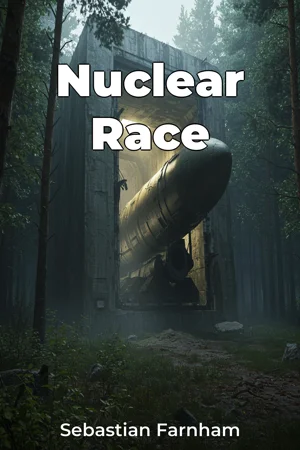
Could the Cold War have ended differently, or is the specter of nuclear annihilation perpetually woven into the fabric of global geopolitics? "Nuclear Race" delves into Russia’s complex and often paradoxical role in the nuclear arms race, from its inception in the Soviet era to its manifestation in modern weaponry, examining the profound geopolitical consequences that continue to shape our world. This book confronts three key intersecting themes: the technological evolution of Soviet and Russian nuclear weapons programs, the strategic doctrines that governed their deployment and potential use, and the political and diplomatic maneuvers that defined Russia's relationship with the United States and other nuclear powers. These topics are fundamentally important because they illuminate the precarious balance of power that has defined international relations for over seven decades and continues to influence present-day global security. To fully understand Russia’s nuclear trajectory, the book provides crucial historical context, beginning with the urgent post-World War II environment that spurred the Soviet Union to develop its own atomic bomb. It explores the ideological underpinnings of the Cold War, the nature of mutually assured destruction, and the subsequent periods of détente and renewed tension. Prior knowledge of basic Cold War history is helpful but not essential, as the book provides clear explanations of key events and concepts. The central argument of "Nuclear Race" is that Russia’s nuclear policies, driven by a complex interplay of security concerns, ideological imperatives, and great power ambitions, have been a primary determinant of global stability, or lack thereof, since 1945. Understanding these policies is essential for comprehending current international relations and anticipating future challenges in nuclear non-proliferation and disarmament. The book is structured to guide the reader through a chronological and thematic exploration of Russia's nuclear involvement. Initially, it introduces the scientific and technological foundations of the Soviet nuclear program and the personalities behind it. It then develops into an analysis of the strategic thinking that shaped Soviet nuclear deployment, including the concepts of first strike capability and flexible response. Turning to the post-Soviet era, the book examines Russia’s adaptation to a multipolar world, its modernization of nuclear forces, and its evolving relationship with international arms control treaties. The book culminates by assessing the implications of Russia's nuclear posture for contemporary global security, considering potential scenarios of conflict and cooperation. "Nuclear Race" draws upon a wide range of primary and secondary sources, including declassified Soviet documents, archival materials from Western intelligence agencies, academic research, and first-hand accounts from key policymakers and scientists. It uses diverse data to support its arguments, offering a holistic and evidence-based analysis. The book connects to several interdisciplinary fields, including political science (analyzing power dynamics and international relations), science and technology studies (examining the development and impact of nuclear technology), and sociology (exploring the social and cultural impact of nuclear weapons). These connections enrich the analysis by providing diverse perspectives on the subject matter. "Nuclear Race" offers a unique perspective by integrating historical analysis with contemporary strategic studies, providing a nuanced assessment of Russia's nuclear policies and their impact on the world. Written in an accessible yet authoritative style, "Nuclear Race" will appeal to anyone interested in military history, political science, and current international relations. It will provide valuable insights for students, scholars, policymakers, and general readers, enhancing their understanding of one of the most important factors shaping our world. As a work of history and political analysis, "Nuclear Race" adheres to the genre's conventions by providing a balanced, evidence-based account of events, interpretations, and their consequences. The scope of the book is deliberately focused on Russia's nuclear program and its geopolitical effects, without attempting to provide a comprehensive history of global nuclear proliferation. Readers can apply the information in this book to better understand current events, assess the risks of nuclear conflict, and evaluate the effectiveness of arms control policies. "Nuclear Race" also addresses several ongoing debates, including the effectiveness of nuclear deterrence, the future of arms control treaties, and the risks of nuclear proliferation in an increasingly multipolar world.
Could the Cold War have ended differently, or is the specter of nuclear annihilation perpetually woven into the fabric of global geopolitics? "Nuclear Race" delves into Russia’s complex and often paradoxical role in the nuclear arms race, from its inception in the Soviet era to its manifestation in modern weaponry, examining the profound geopolitical consequences that continue to shape our world. This book confronts three key intersecting themes: the technological evolution of Soviet and Russian nuclear weapons programs, the strategic doctrines that governed their deployment and potential use, and the political and diplomatic maneuvers that defined Russia's relationship with the United States and other nuclear powers. These topics are fundamentally important because they illuminate the precarious balance of power that has defined international relations for over seven decades and continues to influence present-day global security. To fully understand Russia’s nuclear trajectory, the book provides crucial historical context, beginning with the urgent post-World War II environment that spurred the Soviet Union to develop its own atomic bomb. It explores the ideological underpinnings of the Cold War, the nature of mutually assured destruction, and the subsequent periods of détente and renewed tension. Prior knowledge of basic Cold War history is helpful but not essential, as the book provides clear explanations of key events and concepts. The central argument of "Nuclear Race" is that Russia’s nuclear policies, driven by a complex interplay of security concerns, ideological imperatives, and great power ambitions, have been a primary determinant of global stability, or lack thereof, since 1945. Understanding these policies is essential for comprehending current international relations and anticipating future challenges in nuclear non-proliferation and disarmament. The book is structured to guide the reader through a chronological and thematic exploration of Russia's nuclear involvement. Initially, it introduces the scientific and technological foundations of the Soviet nuclear program and the personalities behind it. It then develops into an analysis of the strategic thinking that shaped Soviet nuclear deployment, including the concepts of first strike capability and flexible response. Turning to the post-Soviet era, the book examines Russia’s adaptation to a multipolar world, its modernization of nuclear forces, and its evolving relationship with international arms control treaties. The book culminates by assessing the implications of Russia's nuclear posture for contemporary global security, considering potential scenarios of conflict and cooperation. "Nuclear Race" draws upon a wide range of primary and secondary sources, including declassified Soviet documents, archival materials from Western intelligence agencies, academic research, and first-hand accounts from key policymakers and scientists. It uses diverse data to support its arguments, offering a holistic and evidence-based analysis. The book connects to several interdisciplinary fields, including political science (analyzing power dynamics and international relations), science and technology studies (examining the development and impact of nuclear technology), and sociology (exploring the social and cultural impact of nuclear weapons). These connections enrich the analysis by providing diverse perspectives on the subject matter. "Nuclear Race" offers a unique perspective by integrating historical analysis with contemporary strategic studies, providing a nuanced assessment of Russia's nuclear policies and their impact on the world. Written in an accessible yet authoritative style, "Nuclear Race" will appeal to anyone interested in military history, political science, and current international relations. It will provide valuable insights for students, scholars, policymakers, and general readers, enhancing their understanding of one of the most important factors shaping our world. As a work of history and political analysis, "Nuclear Race" adheres to the genre's conventions by providing a balanced, evidence-based account of events, interpretations, and their consequences. The scope of the book is deliberately focused on Russia's nuclear program and its geopolitical effects, without attempting to provide a comprehensive history of global nuclear proliferation. Readers can apply the information in this book to better understand current events, assess the risks of nuclear conflict, and evaluate the effectiveness of arms control policies. "Nuclear Race" also addresses several ongoing debates, including the effectiveness of nuclear deterrence, the future of arms control treaties, and the risks of nuclear proliferation in an increasingly multipolar world.
"Nuclear Race" explores Russia's pivotal role in the nuclear arms race, examining its evolution from the Soviet era to modern times and its lasting geopolitical impact. The book investigates the technological advancements of Soviet and Russian nuclear weapons programs, the strategic doctrines guiding their deployment, and the political maneuvers defining Russia's relationships with other nuclear powers. Did you know that the concept of mutually assured destruction (MAD) played a central role in shaping Cold War strategy, acting as a precarious deterrent against nuclear war? This book provides crucial historical context, beginning with the post-World War II environment that spurred the Soviet Union to develop its own atomic bomb. The book argues that Russia's nuclear policies, driven by security concerns, ideological imperatives, and great power ambitions, have significantly influenced global stability since 1945. It presents its analysis through a chronological and thematic exploration, starting with the scientific foundations of the Soviet program and moving into an analysis of strategic thinking and post-Soviet adaptation. The book culminates by assessing the implications of Russia's nuclear posture for contemporary global security. The book connects to political science, science and technology studies, and sociology, providing diverse perspectives on the subject.
Book Details
ISBN
9788235248268
Publisher
Publifye AS
Your Licenses
You don't own any licenses for this book
Purchase a license below to unlock this book and download the EPUB.
Purchase License
Select a tier to unlock this book
Need bulk licensing?
Contact us for enterprise agreements.