
About This Book
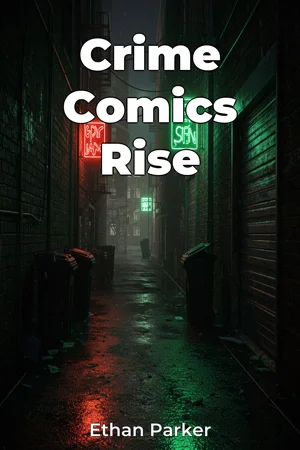
What happens when entertainment collides with societal anxieties? "Crime Comics Rise" delves into the captivating and contentious history of crime comics in the mid-20th century, exploring their meteoric rise in popularity and the intense backlash that ultimately led to their near-extinction. This book examines not only the artistic and commercial aspects of these often-overlooked publications but also the social, political, and psychological forces that shaped their reception and eventual censorship. This book addresses three key topics. First, it charts the evolution of the crime comic genre, tracing its origins from gritty pulp magazines and newspaper strips to its explosion as a distinct and influential form of visual storytelling. Second, it meticulously documents the moral panic that erupted in response to these comics, analyzing the arguments made by concerned parents, educators, and politicians who believed they were a corrupting influence on young minds. Finally, "Crime Comics Rise" investigates the role of self-regulation in the comics industry, particularly the establishment and impact of the Comics Code Authority (CCA), which effectively sanitized the genre and ushered in a new era of comic book publishing. These topics are vital because they intersect with broader discussions about censorship, media effects, and the relationship between popular culture and social values. Understanding the rise and fall of crime comics requires placing them within the context of post-World War II America. The book examines the anxieties surrounding juvenile delinquency, Cold War paranoia, and changing family dynamics that fueled the debate over their content. Readers will benefit from a basic knowledge of American history during this period, particularly the social and cultural trends that shaped the era. The central argument of "Crime Comics Rise" is that the controversy surrounding crime comics was not simply a matter of objectionable content but rather a manifestation of deep-seated societal fears and anxieties. The argument is important because it challenges simplistic narratives of censorship and provides a more nuanced understanding of the complex interplay between media, culture, and power. The book unfolds in a structured manner. It begins by introducing the key players and publications that defined the crime comic genre. It then develops the argument by exploring the emergence of the anti-comics movement, focusing on the work of key figures and the public hearings that brought the issue to national attention. The culmination of the argument examines the establishment of the Comics Code Authority and its long-term effects on the industry and the creative landscape. Finally, the book considers the legacy of crime comics and their relevance to contemporary debates about media violence and censorship. The evidence presented in "Crime Comics Rise" draws upon a variety of sources, including original comic books, archival documents, government reports, and interviews with artists, writers, and publishers. Unique data sources include a comprehensive analysis of comic book sales figures and content analysis of key publications to demonstrate the trends and changes in the genre over time. "Crime Comics Rise" possesses interdisciplinary connections to the fields of media studies, sociology, and education. By analyzing the content of crime comics through a media studies lens, we can understand how they reflected and reinforced existing social norms and values. The book’s exploration of the moral panic surrounding crime comics connects to sociological theories of deviance and social control. Examining the debates about the impact of comics on children connects to research on media effects and the psychology of childhood development. This book offers a unique perspective by examining the crime comic controversy not as an isolated event but as a case study in the broader history of media censorship and cultural anxieties. It stands apart through its detailed analysis of the often-overlooked artistic and narrative qualities of crime comics, challenging the perception of them as simply lurid and exploitative. The tone of "Crime Comics Rise" is informative and analytical, striking a balance between scholarly rigor and accessible writing. It employs a narrative non-fiction style to engage readers with the human stories behind the controversy. The target audience includes students and scholars of media studies, comic book history, and American cultural history, as well as general readers interested in the history of censorship, popular culture, and the evolution of the comic book medium. The book will be valuable to them because it provides a comprehensive and nuanced account of a pivotal moment in the history of comics and its lasting impact on the industry and society. As a work of history and film & television, "Crime Comics Rise" adheres to genre conventions by providing a clear narrative arc, presenting evidence-based arguments, and engaging with existing scholarship on the topic. The scope of "Crime Comics Rise" is primarily focused on the period from the late 1940s to the mid-1950s, when crime comics were at their peak of popularity and controversy. While the book touches upon the legacy of crime comics and their influence on subsequent genres, it does not attempt to provide a comprehensive history of the medium as a whole. The information in "Crime Comics Rise" can be applied practically by readers in a number of ways. It provides valuable insights into the dynamics of media censorship and the ongoing debate about the impact of violent or controversial content on society. It offers a framework for analyzing contemporary media controversies and understanding the complex interplay between media, culture, and power. The book addresses the ongoing debates about the role of media violence in society, the ethics of censorship, and the responsibility of creators and publishers to consider the potential impact of their work. By examining the historical context of the crime comics controversy, "Crime Comics Rise" offers a valuable perspective on these enduring issues.
What happens when entertainment collides with societal anxieties? "Crime Comics Rise" delves into the captivating and contentious history of crime comics in the mid-20th century, exploring their meteoric rise in popularity and the intense backlash that ultimately led to their near-extinction. This book examines not only the artistic and commercial aspects of these often-overlooked publications but also the social, political, and psychological forces that shaped their reception and eventual censorship. This book addresses three key topics. First, it charts the evolution of the crime comic genre, tracing its origins from gritty pulp magazines and newspaper strips to its explosion as a distinct and influential form of visual storytelling. Second, it meticulously documents the moral panic that erupted in response to these comics, analyzing the arguments made by concerned parents, educators, and politicians who believed they were a corrupting influence on young minds. Finally, "Crime Comics Rise" investigates the role of self-regulation in the comics industry, particularly the establishment and impact of the Comics Code Authority (CCA), which effectively sanitized the genre and ushered in a new era of comic book publishing. These topics are vital because they intersect with broader discussions about censorship, media effects, and the relationship between popular culture and social values. Understanding the rise and fall of crime comics requires placing them within the context of post-World War II America. The book examines the anxieties surrounding juvenile delinquency, Cold War paranoia, and changing family dynamics that fueled the debate over their content. Readers will benefit from a basic knowledge of American history during this period, particularly the social and cultural trends that shaped the era. The central argument of "Crime Comics Rise" is that the controversy surrounding crime comics was not simply a matter of objectionable content but rather a manifestation of deep-seated societal fears and anxieties. The argument is important because it challenges simplistic narratives of censorship and provides a more nuanced understanding of the complex interplay between media, culture, and power. The book unfolds in a structured manner. It begins by introducing the key players and publications that defined the crime comic genre. It then develops the argument by exploring the emergence of the anti-comics movement, focusing on the work of key figures and the public hearings that brought the issue to national attention. The culmination of the argument examines the establishment of the Comics Code Authority and its long-term effects on the industry and the creative landscape. Finally, the book considers the legacy of crime comics and their relevance to contemporary debates about media violence and censorship. The evidence presented in "Crime Comics Rise" draws upon a variety of sources, including original comic books, archival documents, government reports, and interviews with artists, writers, and publishers. Unique data sources include a comprehensive analysis of comic book sales figures and content analysis of key publications to demonstrate the trends and changes in the genre over time. "Crime Comics Rise" possesses interdisciplinary connections to the fields of media studies, sociology, and education. By analyzing the content of crime comics through a media studies lens, we can understand how they reflected and reinforced existing social norms and values. The book’s exploration of the moral panic surrounding crime comics connects to sociological theories of deviance and social control. Examining the debates about the impact of comics on children connects to research on media effects and the psychology of childhood development. This book offers a unique perspective by examining the crime comic controversy not as an isolated event but as a case study in the broader history of media censorship and cultural anxieties. It stands apart through its detailed analysis of the often-overlooked artistic and narrative qualities of crime comics, challenging the perception of them as simply lurid and exploitative. The tone of "Crime Comics Rise" is informative and analytical, striking a balance between scholarly rigor and accessible writing. It employs a narrative non-fiction style to engage readers with the human stories behind the controversy. The target audience includes students and scholars of media studies, comic book history, and American cultural history, as well as general readers interested in the history of censorship, popular culture, and the evolution of the comic book medium. The book will be valuable to them because it provides a comprehensive and nuanced account of a pivotal moment in the history of comics and its lasting impact on the industry and society. As a work of history and film & television, "Crime Comics Rise" adheres to genre conventions by providing a clear narrative arc, presenting evidence-based arguments, and engaging with existing scholarship on the topic. The scope of "Crime Comics Rise" is primarily focused on the period from the late 1940s to the mid-1950s, when crime comics were at their peak of popularity and controversy. While the book touches upon the legacy of crime comics and their influence on subsequent genres, it does not attempt to provide a comprehensive history of the medium as a whole. The information in "Crime Comics Rise" can be applied practically by readers in a number of ways. It provides valuable insights into the dynamics of media censorship and the ongoing debate about the impact of violent or controversial content on society. It offers a framework for analyzing contemporary media controversies and understanding the complex interplay between media, culture, and power. The book addresses the ongoing debates about the role of media violence in society, the ethics of censorship, and the responsibility of creators and publishers to consider the potential impact of their work. By examining the historical context of the crime comics controversy, "Crime Comics Rise" offers a valuable perspective on these enduring issues.
"Crime Comics Rise" explores the tumultuous history of crime comics in mid-20th century America, detailing their rapid ascent and the subsequent moral panic that nearly eradicated them. The book argues that the controversy surrounding these comics was rooted in deep-seated societal anxieties about juvenile delinquency and Cold War paranoia, rather than simply objectionable content. One intriguing fact is that the comics industry itself responded to the pressure by forming the Comics Code Authority (CCA), which significantly altered the landscape of comic book publishing. The book meticulously charts the evolution of the crime comic genre and analyzes the arguments of those who saw them as a corrupting influence. It examines the social, political, and psychological forces at play, offering a valuable perspective on media censorship and cultural anxieties. For instance, the public hearings brought the issue to national attention, revealing the intense feelings surrounding media violence. The narrative unfolds chronologically, beginning with the emergence of crime comics, progressing through the anti-comics movement, and culminating in the establishment of the CCA. By examining original comics, archival documents, and government reports, the book provides a comprehensive account of this pivotal moment in comics history and its lasting impact.
Book Details
ISBN
9788235248053
Publisher
Publifye AS
Your Licenses
You don't own any licenses for this book
Purchase a license below to unlock this book and download the EPUB.
Purchase License
Select a tier to unlock this book
Need bulk licensing?
Contact us for enterprise agreements.