
About This Book
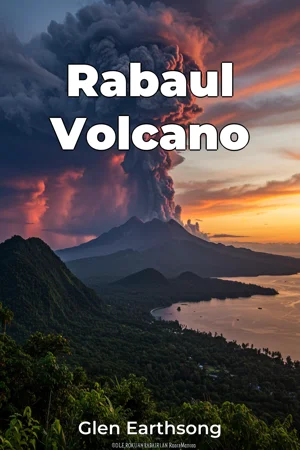
Imagine living under the constant threat of a volcano capable of unleashing catastrophic devastation. 'Rabaul Volcano' explores the volatile history of Rabaul Caldera in Papua New Guinea, its dramatic eruptions, and their profound impact on the environment and human populations. This book delves into three principal areas: the geological history of Rabaul, an analysis of its major eruptions, and the multifaceted consequences these events have had on the region's development and the lives of its inhabitants. Understanding these aspects is vital for comprehending volcanic hazards globally and mitigating their impact on vulnerable communities. The book provides essential geological and historical context, tracing the formation of the Rabaul Caldera through millennia of volcanic activity. It details the region's strategic importance during various periods, highlighting how human settlement has been shaped by, and adapted to, the constant threat of eruption. The central argument revolves around the idea that Rabaul's volcanic activity is not merely a geological hazard, but a powerful force that has deeply intertwined with the region's historical, social, and economic trajectories. Understanding this interplay is key to effective risk assessment and future resilience planning. The book is structured to progressively build the reader’s understanding. It begins with an introduction to the geological processes behind caldera formation and volcanic eruptions, specifically related to Rabaul. Subsequent sections detail specific eruption events, such as the devastating 1994 eruption, examining their precursors, eruption dynamics, and immediate aftermath. The book then shifts focus to the long-term consequences, analyzing the environmental impacts, the economic disruption, and the social and cultural adaptations of the communities affected. It culminates in a discussion of current monitoring efforts, risk management strategies, and future challenges in mitigating volcanic hazards at Rabaul. Evidence presented in the book draws upon a wide range of sources, including geological surveys, historical records, eyewitness accounts, and scientific studies. Unique data sources, such as volcanic ash deposit analyses and long-term deformation monitoring data, are used to reconstruct past eruptions and assess current volcanic activity. The methodologies involve a combination of geological fieldwork, remote sensing analysis, and computer modeling of volcanic processes. 'Rabaul Volcano' connects to various disciplines, including geology, geography, history, and social sciences. It provides insights into natural disaster management, urban planning in volcanic regions, and the socio-economic impacts of environmental hazards. This interdisciplinary approach enhances the book’s argument by demonstrating the complex interplay between natural processes and human systems. This book offers a comprehensive yet accessible examination of Rabaul Volcano. The writing style balances scientific accuracy with engaging narrative, making complex concepts understandable to a broad audience. It is aimed at students, researchers, policymakers, and anyone interested in volcanology, disaster management, or the history and geography of Papua New Guinea. An understanding of basic geographical concepts would be advantageous. The book focuses specifically on Rabaul Volcano, with limited discussion of other volcanoes, to provide an in-depth analysis of its unique characteristics and impact. While it touches upon global volcanic phenomena, its primary focus remains on the local context of Rabaul. The information presented has real-world applications for volcanic hazard mitigation, urban planning, and community resilience in other volcanic regions worldwide. Ongoing debates in volcanology, such as the predictability of eruptions and the effectiveness of different monitoring techniques, are addressed within the context of Rabaul. The book contributes to these discussions by providing a case study of a complex volcanic system and the challenges associated with managing its risks. This underscores the book's relevance to current scientific and societal concerns, making it a valuable resource for understanding and addressing the threats posed by volcanoes around the world.
Imagine living under the constant threat of a volcano capable of unleashing catastrophic devastation. 'Rabaul Volcano' explores the volatile history of Rabaul Caldera in Papua New Guinea, its dramatic eruptions, and their profound impact on the environment and human populations. This book delves into three principal areas: the geological history of Rabaul, an analysis of its major eruptions, and the multifaceted consequences these events have had on the region's development and the lives of its inhabitants. Understanding these aspects is vital for comprehending volcanic hazards globally and mitigating their impact on vulnerable communities. The book provides essential geological and historical context, tracing the formation of the Rabaul Caldera through millennia of volcanic activity. It details the region's strategic importance during various periods, highlighting how human settlement has been shaped by, and adapted to, the constant threat of eruption. The central argument revolves around the idea that Rabaul's volcanic activity is not merely a geological hazard, but a powerful force that has deeply intertwined with the region's historical, social, and economic trajectories. Understanding this interplay is key to effective risk assessment and future resilience planning. The book is structured to progressively build the reader’s understanding. It begins with an introduction to the geological processes behind caldera formation and volcanic eruptions, specifically related to Rabaul. Subsequent sections detail specific eruption events, such as the devastating 1994 eruption, examining their precursors, eruption dynamics, and immediate aftermath. The book then shifts focus to the long-term consequences, analyzing the environmental impacts, the economic disruption, and the social and cultural adaptations of the communities affected. It culminates in a discussion of current monitoring efforts, risk management strategies, and future challenges in mitigating volcanic hazards at Rabaul. Evidence presented in the book draws upon a wide range of sources, including geological surveys, historical records, eyewitness accounts, and scientific studies. Unique data sources, such as volcanic ash deposit analyses and long-term deformation monitoring data, are used to reconstruct past eruptions and assess current volcanic activity. The methodologies involve a combination of geological fieldwork, remote sensing analysis, and computer modeling of volcanic processes. 'Rabaul Volcano' connects to various disciplines, including geology, geography, history, and social sciences. It provides insights into natural disaster management, urban planning in volcanic regions, and the socio-economic impacts of environmental hazards. This interdisciplinary approach enhances the book’s argument by demonstrating the complex interplay between natural processes and human systems. This book offers a comprehensive yet accessible examination of Rabaul Volcano. The writing style balances scientific accuracy with engaging narrative, making complex concepts understandable to a broad audience. It is aimed at students, researchers, policymakers, and anyone interested in volcanology, disaster management, or the history and geography of Papua New Guinea. An understanding of basic geographical concepts would be advantageous. The book focuses specifically on Rabaul Volcano, with limited discussion of other volcanoes, to provide an in-depth analysis of its unique characteristics and impact. While it touches upon global volcanic phenomena, its primary focus remains on the local context of Rabaul. The information presented has real-world applications for volcanic hazard mitigation, urban planning, and community resilience in other volcanic regions worldwide. Ongoing debates in volcanology, such as the predictability of eruptions and the effectiveness of different monitoring techniques, are addressed within the context of Rabaul. The book contributes to these discussions by providing a case study of a complex volcanic system and the challenges associated with managing its risks. This underscores the book's relevance to current scientific and societal concerns, making it a valuable resource for understanding and addressing the threats posed by volcanoes around the world.
"Rabaul Volcano" explores the dynamic relationship between the Rabaul Caldera in Papua New Guinea, its explosive eruptions, and their lasting effects on both the environment and the people who live there. The book presents a comprehensive look into Rabaul's volcanic history, detailing significant eruptions and how these events have shaped the region’s development. Readers may be intrigued to learn how the caldera's formation spans millennia of volcanic activity and how human settlement has adapted to the constant threat of eruptions. The book uses a multidisciplinary approach, drawing from geology, geography, history, and even social sciences, to highlight the intricate connections between natural events and human systems. Progressing systematically, the book first introduces the geological processes behind caldera formation, then examines specific eruptions like the devastating 1994 event, and concludes with a discussion of current risk management and future challenges. By examining the interplay between geological hazards and historical trajectories, the book provides valuable insights for understanding volcanic hazards globally and improving disaster management strategies.
Book Details
ISBN
9788235247865
Publisher
Publifye AS
Your Licenses
You don't own any licenses for this book
Purchase a license below to unlock this book and download the EPUB.
Purchase License
Select a tier to unlock this book
Need bulk licensing?
Contact us for enterprise agreements.