
About This Book
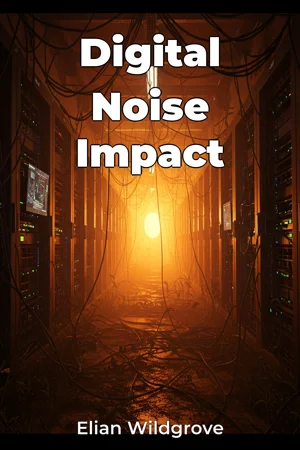
In today's hyper-connected world, are we truly more informed, or are we simply overwhelmed by a relentless deluge of digital information? "Digital Noise Impact" delves into the psychological consequences of constant online content, examining how this relentless flow shapes our attention spans, erodes our memory capabilities, and contributes to a pervasive sense of mental fatigue. This book addresses the critical need to understand the cognitive costs associated with our increasingly digital lives. Our central argument is that the constant bombardment of information in digital environments significantly impairs cognitive function, leading to decreased attention spans, compromised memory encoding and retrieval, and increased mental exhaustion. This argument is crucial because it challenges the assumption that increased access to information inherently leads to enhanced understanding or productivity. Instead, we propose that the cognitive overload created by digital noise can have detrimental effects on individual well-being and societal progress. To contextualize this argument, we will first explore the historical development of digital media and its impact on information consumption patterns. This includes tracing the evolution from traditional media formats to the current landscape of social media, streaming services, and ubiquitous internet access. We will then introduce key concepts from cognitive psychology, such as attention theory, memory models, and the science of mental fatigue, providing readers with the necessary framework to understand the book's core arguments. "Digital Noise Impact" is structured in three major parts. First, we establish the foundation by defining digital noise and its various forms, exploring the psychological mechanisms through which it affects attention, memory, and mental energy. Next, we delve into specific aspects of digital consumption, such as social media usage, multitasking behaviors, and the impact of personalized content algorithms, examining how each contributes to cognitive overload. Finally, we culminate by exploring strategies for mitigating the negative effects of digital noise, including techniques for improving focus, enhancing memory, and promoting mental well-being in the digital age. The book will present evidence from a variety of sources, including original experimental research, meta-analyses of existing studies, and case studies of individuals and organizations grappling with the challenges of digital overload. We will also draw upon data from surveys and user behavior analytics to provide a comprehensive picture of the impact of digital noise on cognitive function. The exploration in "Digital Noise Impact" has connections to several other fields, including education (how digital noise affects learning), public health (the impact on stress and mental health), and human-computer interaction (designing technologies that minimize cognitive overload). These interdisciplinary connections enrich the book's argument by demonstrating the broad relevance of digital noise to various aspects of modern life. What sets this book apart is its holistic approach to understanding the impact of digital noise. Rather than focusing solely on one aspect of cognitive function or one type of digital media, we examine the complex interplay between attention, memory, and mental fatigue across a variety of digital platforms and contexts. Written in an accessible yet authoritative style, "Digital Noise Impact" is intended for a broad audience, including students, educators, technology professionals, and anyone interested in understanding the psychological impact of our increasingly digital world. This book offers valuable insights into the challenges of navigating the digital age and provides practical strategies for reclaiming cognitive control. The scope of this book encompasses the psychological effects of digital noise in general, with specific examples from popular digital platforms. It is not intended to be a comprehensive guide to specific software or hardware solutions. The information in "Digital Noise Impact" can be applied practically by readers through the adoption of mindful technology use strategies, techniques for improving focus and concentration, and the development of healthy digital habits. Finally, "Digital Noise Impact" will address ongoing debates in the field, such as the extent to which digital technology alters cognitive abilities and the effectiveness of different intervention strategies for reducing digital overload. By acknowledging these controversies, we aim to promote critical thinking and encourage further research in this important area.
In today's hyper-connected world, are we truly more informed, or are we simply overwhelmed by a relentless deluge of digital information? "Digital Noise Impact" delves into the psychological consequences of constant online content, examining how this relentless flow shapes our attention spans, erodes our memory capabilities, and contributes to a pervasive sense of mental fatigue. This book addresses the critical need to understand the cognitive costs associated with our increasingly digital lives. Our central argument is that the constant bombardment of information in digital environments significantly impairs cognitive function, leading to decreased attention spans, compromised memory encoding and retrieval, and increased mental exhaustion. This argument is crucial because it challenges the assumption that increased access to information inherently leads to enhanced understanding or productivity. Instead, we propose that the cognitive overload created by digital noise can have detrimental effects on individual well-being and societal progress. To contextualize this argument, we will first explore the historical development of digital media and its impact on information consumption patterns. This includes tracing the evolution from traditional media formats to the current landscape of social media, streaming services, and ubiquitous internet access. We will then introduce key concepts from cognitive psychology, such as attention theory, memory models, and the science of mental fatigue, providing readers with the necessary framework to understand the book's core arguments. "Digital Noise Impact" is structured in three major parts. First, we establish the foundation by defining digital noise and its various forms, exploring the psychological mechanisms through which it affects attention, memory, and mental energy. Next, we delve into specific aspects of digital consumption, such as social media usage, multitasking behaviors, and the impact of personalized content algorithms, examining how each contributes to cognitive overload. Finally, we culminate by exploring strategies for mitigating the negative effects of digital noise, including techniques for improving focus, enhancing memory, and promoting mental well-being in the digital age. The book will present evidence from a variety of sources, including original experimental research, meta-analyses of existing studies, and case studies of individuals and organizations grappling with the challenges of digital overload. We will also draw upon data from surveys and user behavior analytics to provide a comprehensive picture of the impact of digital noise on cognitive function. The exploration in "Digital Noise Impact" has connections to several other fields, including education (how digital noise affects learning), public health (the impact on stress and mental health), and human-computer interaction (designing technologies that minimize cognitive overload). These interdisciplinary connections enrich the book's argument by demonstrating the broad relevance of digital noise to various aspects of modern life. What sets this book apart is its holistic approach to understanding the impact of digital noise. Rather than focusing solely on one aspect of cognitive function or one type of digital media, we examine the complex interplay between attention, memory, and mental fatigue across a variety of digital platforms and contexts. Written in an accessible yet authoritative style, "Digital Noise Impact" is intended for a broad audience, including students, educators, technology professionals, and anyone interested in understanding the psychological impact of our increasingly digital world. This book offers valuable insights into the challenges of navigating the digital age and provides practical strategies for reclaiming cognitive control. The scope of this book encompasses the psychological effects of digital noise in general, with specific examples from popular digital platforms. It is not intended to be a comprehensive guide to specific software or hardware solutions. The information in "Digital Noise Impact" can be applied practically by readers through the adoption of mindful technology use strategies, techniques for improving focus and concentration, and the development of healthy digital habits. Finally, "Digital Noise Impact" will address ongoing debates in the field, such as the extent to which digital technology alters cognitive abilities and the effectiveness of different intervention strategies for reducing digital overload. By acknowledging these controversies, we aim to promote critical thinking and encourage further research in this important area.
In today's digital age, "Digital Noise Impact" explores the psychological consequences of constant online information. It examines how relentless digital content affects our attention spans, memory, and mental well-being. The book argues that the constant bombardment of digital noise impairs cognitive function, challenging the assumption that more information inherently leads to better understanding. One intriguing fact is how digital noise contributes to mental fatigue, impacting productivity and overall well-being. The book emphasizes the need to understand these cognitive costs associated with our digital lives, providing insights applicable across various fields like education and public health. The book unfolds in three parts: defining digital noise and its effects, examining specific aspects of digital consumption like social media and multitasking, and exploring strategies for mitigating negative effects. It considers the impact of personalized content algorithms on cognitive overload. What makes this book unique is its holistic approach, examining the interplay between attention, memory, and mental fatigue across different digital platforms. It avoids focusing on a single aspect, offering a comprehensive view supported by research, meta-analyses, and case studies. Written for a broad audience, "Digital Noise Impact" presents information in an accessible yet authoritative style. It offers practical strategies for reclaiming cognitive control and addresses ongoing debates about how technology alters cognitive abilities. By understanding the book's insights, readers can adopt mindful technology use and develop healthier digital habits to improve focus and mental well-being.
Book Details
ISBN
9788235247780
Publisher
Publifye AS
Your Licenses
You don't own any licenses for this book
Purchase a license below to unlock this book and download the EPUB.
Purchase License
Select a tier to unlock this book
Need bulk licensing?
Contact us for enterprise agreements.