
About This Book
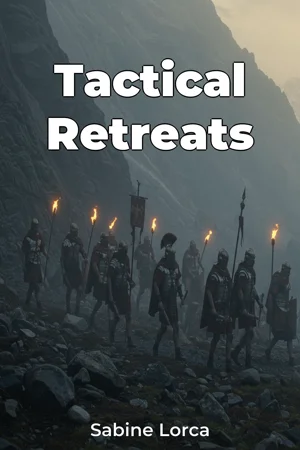
Have you ever considered that a retreat can be as strategically vital as an attack? "Tactical Retreats" delves into the often-overlooked martial art of the organized military retreat, revealing its crucial role in not only preventing annihilation but also in paving the way for future victories. This book examines how skillfully executed withdrawals have saved countless armies, preserved vital resources, and ultimately set the stage for devastating counterattacks throughout history. We will explore key elements like the logistical demands and the psychological impacts on both the retreating and pursuing forces. Understanding how retreats influence battlefield morale and strategic decision-making forms a cornerstone of our analysis. Furthermore, we will scrutinize the command structures necessary to maintain cohesion and discipline during a withdrawal, a critical factor often distinguishing a tactical maneuver from a disorganized rout. The historical context is crucial to understanding the evolution of retreat strategies. We will trace its development from ancient warfare, characterized by relatively simple formations and limited communication, to modern conflicts where technology and complex doctrines dictate the pace and scale of withdrawals. This exploration will emphasize the adaptive nature of military strategy and how retreats have evolved in response to changes in weaponry, tactics, and the overall operational environment. The central argument posits that a well-planned and executed retreat is not an admission of defeat but rather a calculated maneuver that can significantly alter the course of a conflict. It is a tool, often underappreciated, that allows commanders to conserve strength, regroup forces, and exploit enemy weaknesses. This argument challenges the conventional focus on offensive operations and highlights the strategic importance of defensive flexibility. The book unfolds by initially establishing the theoretical framework for understanding tactical retreats, defining key terms, and outlining the principles of effective withdrawal. Subsequent chapters will analyze specific historical examples, ranging from the retreat of Xenophon and his Ten Thousand to the less well understood yet equally significant German withdrawals on the Eastern Front in World War II and even the Chosin Reservoir campaign during the Korean War. Each case study will dissect the strategic context, the tactical execution, and the ultimate consequences of the retreat, drawing lessons applicable to modern military doctrine and theory. The concluding section synthesizes these historical lessons and explores their relevance to contemporary military challenges, including asymmetric warfare and peacekeeping operations. Evidence will be drawn from primary source accounts, including military dispatches, soldiers' diaries, and battlefield reports. Secondary source analysis will incorporate the work of leading military historians and strategists, providing a balanced and comprehensive perspective. The book uniquely synthesizes quantitative data, such as casualty figures and territorial gains/losses, with qualitative assessments of morale, leadership, and strategic decision-making. "Tactical Retreats" intersects with political science through its examination of how retreats influence diplomatic negotiations and public opinion. Its insights also extend to the field of psychology, particularly in understanding the effects of combat stress and the importance of maintaining unit cohesion under pressure. Furthermore, there are strong connections to logistics and supply chain management. This book distinguishes itself by focusing specifically on the *tactical* retreat as a deliberate and strategically sound military operation, rather than simply as a consequence of defeat. It provides a balanced and nuanced perspective, incorporating perspectives from both sides of the conflicts studied. The book adopts an analytical and informative tone, aiming to present complex military concepts in a clear and accessible manner. While grounded in rigorous historical research, the writing style is designed to engage a broad audience, including military professionals, history enthusiasts, and students of strategy. The primary target audience includes military officers, defense analysts, history buffs, and anyone interested in the intricacies of military strategy and leadership. It will also appeal to students of military history and political science. The book provides valuable insights into strategic decision-making, risk management, and the importance of adaptability in the face of adversity. Adhering to the conventions of military history, the book gives due consideration to both the strategic and tactical levels of warfare, providing detailed accounts of battlefield maneuvers while also examining the broader political and strategic context. The scope is limited to organized military retreats undertaken with a clear strategic objective. It will not cover disorganized routs or unplanned withdrawals resulting from catastrophic defeats, focusing instead on instances where retreats were deliberately employed as a means of achieving specific military goals. The principles and lessons outlined in "Tactical Retreats" can be applied to a range of real-world situations, from business negotiations to crisis management, where the ability to strategically withdraw and regroup is essential for long-term success. This exploration offers a fresh perspective on a critical aspect of military history, challenging conventional wisdom and offering valuable insights for both military professionals and anyone seeking to understand the dynamics of strategic decision-making. It addresses the ongoing debate about the relative importance of offensive versus defensive operations, arguing that a well-executed retreat can be as decisive as a successful attack.
Have you ever considered that a retreat can be as strategically vital as an attack? "Tactical Retreats" delves into the often-overlooked martial art of the organized military retreat, revealing its crucial role in not only preventing annihilation but also in paving the way for future victories. This book examines how skillfully executed withdrawals have saved countless armies, preserved vital resources, and ultimately set the stage for devastating counterattacks throughout history. We will explore key elements like the logistical demands and the psychological impacts on both the retreating and pursuing forces. Understanding how retreats influence battlefield morale and strategic decision-making forms a cornerstone of our analysis. Furthermore, we will scrutinize the command structures necessary to maintain cohesion and discipline during a withdrawal, a critical factor often distinguishing a tactical maneuver from a disorganized rout. The historical context is crucial to understanding the evolution of retreat strategies. We will trace its development from ancient warfare, characterized by relatively simple formations and limited communication, to modern conflicts where technology and complex doctrines dictate the pace and scale of withdrawals. This exploration will emphasize the adaptive nature of military strategy and how retreats have evolved in response to changes in weaponry, tactics, and the overall operational environment. The central argument posits that a well-planned and executed retreat is not an admission of defeat but rather a calculated maneuver that can significantly alter the course of a conflict. It is a tool, often underappreciated, that allows commanders to conserve strength, regroup forces, and exploit enemy weaknesses. This argument challenges the conventional focus on offensive operations and highlights the strategic importance of defensive flexibility. The book unfolds by initially establishing the theoretical framework for understanding tactical retreats, defining key terms, and outlining the principles of effective withdrawal. Subsequent chapters will analyze specific historical examples, ranging from the retreat of Xenophon and his Ten Thousand to the less well understood yet equally significant German withdrawals on the Eastern Front in World War II and even the Chosin Reservoir campaign during the Korean War. Each case study will dissect the strategic context, the tactical execution, and the ultimate consequences of the retreat, drawing lessons applicable to modern military doctrine and theory. The concluding section synthesizes these historical lessons and explores their relevance to contemporary military challenges, including asymmetric warfare and peacekeeping operations. Evidence will be drawn from primary source accounts, including military dispatches, soldiers' diaries, and battlefield reports. Secondary source analysis will incorporate the work of leading military historians and strategists, providing a balanced and comprehensive perspective. The book uniquely synthesizes quantitative data, such as casualty figures and territorial gains/losses, with qualitative assessments of morale, leadership, and strategic decision-making. "Tactical Retreats" intersects with political science through its examination of how retreats influence diplomatic negotiations and public opinion. Its insights also extend to the field of psychology, particularly in understanding the effects of combat stress and the importance of maintaining unit cohesion under pressure. Furthermore, there are strong connections to logistics and supply chain management. This book distinguishes itself by focusing specifically on the *tactical* retreat as a deliberate and strategically sound military operation, rather than simply as a consequence of defeat. It provides a balanced and nuanced perspective, incorporating perspectives from both sides of the conflicts studied. The book adopts an analytical and informative tone, aiming to present complex military concepts in a clear and accessible manner. While grounded in rigorous historical research, the writing style is designed to engage a broad audience, including military professionals, history enthusiasts, and students of strategy. The primary target audience includes military officers, defense analysts, history buffs, and anyone interested in the intricacies of military strategy and leadership. It will also appeal to students of military history and political science. The book provides valuable insights into strategic decision-making, risk management, and the importance of adaptability in the face of adversity. Adhering to the conventions of military history, the book gives due consideration to both the strategic and tactical levels of warfare, providing detailed accounts of battlefield maneuvers while also examining the broader political and strategic context. The scope is limited to organized military retreats undertaken with a clear strategic objective. It will not cover disorganized routs or unplanned withdrawals resulting from catastrophic defeats, focusing instead on instances where retreats were deliberately employed as a means of achieving specific military goals. The principles and lessons outlined in "Tactical Retreats" can be applied to a range of real-world situations, from business negotiations to crisis management, where the ability to strategically withdraw and regroup is essential for long-term success. This exploration offers a fresh perspective on a critical aspect of military history, challenging conventional wisdom and offering valuable insights for both military professionals and anyone seeking to understand the dynamics of strategic decision-making. It addresses the ongoing debate about the relative importance of offensive versus defensive operations, arguing that a well-executed retreat can be as decisive as a successful attack.
"Tactical Retreats" explores the underappreciated military maneuver of the tactical retreat, arguing it's not just an admission of defeat but a strategic tool. The book reveals how planned withdrawals have saved armies and set the stage for future victories by conserving resources and exploiting enemy weaknesses. From influencing battlefield morale to impacting strategic decision-making, the book highlights the crucial role of command structures in maintaining cohesion during a withdrawal. The book traces the evolution of retreat strategies from ancient warfare to modern conflicts, adapting to changes in weaponry and tactics. It examines historical examples, such as German withdrawals on the Eastern Front and the Chosin Reservoir campaign, dissecting the strategic context, tactical execution, and consequences of each retreat. By uniquely synthesizing quantitative data with qualitative assessments, "Tactical Retreats" offers a balanced perspective on military history. The book unfolds by establishing a theoretical framework, then analyzing specific historical examples and concluding with the relevance of these lessons to contemporary military challenges. It emphasizes that a well-executed retreat can be as decisive as an attack, challenging conventional wisdom and providing insights for military professionals and those interested in strategic decision-making.
Book Details
ISBN
9788235247513
Publisher
Publifye AS
Your Licenses
You don't own any licenses for this book
Purchase a license below to unlock this book and download the EPUB.
Purchase License
Select a tier to unlock this book
Need bulk licensing?
Contact us for enterprise agreements.