
About This Book
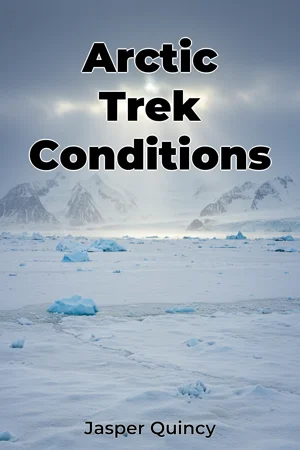
How does one navigate the Arctic on foot when the landscape offers near-zero visibility and temperatures plummet to life-threatening levels? "Arctic Trek Conditions" delves into the crucial physical, environmental, and strategic planning required for safe and successful travel across the challenging Arctic terrain. This book addresses the increasing need for expertise in Arctic navigation due to climate change, resource exploration, and scientific research. The key topics explored are the unique physical challenges posed by the Arctic environment, the critical impact of environmental factors on travel, and the necessity of strategic planning for mitigating risk. The book's central argument is that a comprehensive understanding of the interplay between physical endurance, environmental awareness, and strategic planning is paramount for safe and effective Arctic foot travel. This argument is crucial because inadequate preparation can lead to dire consequences, including injury, hypothermia, and even death. "Arctic Trek Conditions" provides a detailed exploration of the Arctic, beginning with an introduction to the region's geographical features, including ice formations, glacial landscapes, and permafrost terrain. It examines the physiological demands of Arctic travel, addressing topics such as cold-weather survival techniques, nutrition, and gear selection. The book then focuses on environmental factors, emphasizing the influence of weather patterns, snow conditions, and visibility on navigation. Crucially, it details the impact of climate change on the stability of Arctic ice and the increasing unpredictability of weather. Strategic planning forms the third major component, including route selection, risk assessment, emergency protocols, and the use of navigational tools such as maps, compasses, and GPS devices, with a focus on their limitations in extreme conditions. The book culminates by analyzing real-world case studies of successful and unsuccessful Arctic expeditions, drawing lessons relevant to future travelers and researchers. The evidence presented is drawn from a combination of scientific studies, meteorological data, geographical surveys, and firsthand accounts of Arctic explorers and indigenous communities. The book also includes original data derived from simulations and analyses of Arctic travel scenarios under varying weather conditions. Methodologies incorporate both quantitative data analysis and qualitative insights obtained from expert interviews. This book links Earth Sciences Geography by detailing the geographical and geological characteristics of the Arctic as well as Adventure by showcasing real-world case studies of Arctic expeditions. Furthermore, this book also connects to the field of environmental science by discussing the impact of climate change on Arctic travel conditions. These interdisciplinary connections reinforce the significance of understanding Arctic trek conditions from a holistic perspective. "Arctic Trek Conditions" adopts a fact-based, analytical approach, presenting information in a clear and accessible style suitable for a broad audience. While grounded in scientific data, the book avoids overly technical jargon, making it accessible to readers with varying levels of scientific background. The intended readership includes outdoor enthusiasts, adventure travelers, researchers, environmental scientists, and anyone interested in the challenges and rewards of Arctic exploration. The book is valuable by providing potentially life-saving information. Within the non-fiction adventure genre, "Arctic Trek Conditions" emphasizes practical knowledge and actionable strategies. It offers concrete advice and guidelines for planning and executing Arctic treks, distinguishing itself from purely narrative-driven adventure books. The scope of the book is limited to foot travel within the Arctic region, excluding topics such as sea ice navigation or air travel. The book intentionally focuses on providing practical guidance for traversing land-based Arctic environments under challenging weather conditions. The information presented can be directly applied to planning expeditions, conducting research, or participating in outdoor activities in the Arctic. Readers can use the book to improve their risk assessment skills, optimize gear selection, and enhance their understanding of Arctic environmental conditions. While the book draws on established scientific knowledge, it also acknowledges ongoing debates regarding the long-term impacts of climate change on Arctic environments and the ethical considerations surrounding resource exploration in the region. It addresses these debates by presenting a balanced perspective and encouraging readers to consider the complex interplay of environmental, social, and economic factors.
How does one navigate the Arctic on foot when the landscape offers near-zero visibility and temperatures plummet to life-threatening levels? "Arctic Trek Conditions" delves into the crucial physical, environmental, and strategic planning required for safe and successful travel across the challenging Arctic terrain. This book addresses the increasing need for expertise in Arctic navigation due to climate change, resource exploration, and scientific research. The key topics explored are the unique physical challenges posed by the Arctic environment, the critical impact of environmental factors on travel, and the necessity of strategic planning for mitigating risk. The book's central argument is that a comprehensive understanding of the interplay between physical endurance, environmental awareness, and strategic planning is paramount for safe and effective Arctic foot travel. This argument is crucial because inadequate preparation can lead to dire consequences, including injury, hypothermia, and even death. "Arctic Trek Conditions" provides a detailed exploration of the Arctic, beginning with an introduction to the region's geographical features, including ice formations, glacial landscapes, and permafrost terrain. It examines the physiological demands of Arctic travel, addressing topics such as cold-weather survival techniques, nutrition, and gear selection. The book then focuses on environmental factors, emphasizing the influence of weather patterns, snow conditions, and visibility on navigation. Crucially, it details the impact of climate change on the stability of Arctic ice and the increasing unpredictability of weather. Strategic planning forms the third major component, including route selection, risk assessment, emergency protocols, and the use of navigational tools such as maps, compasses, and GPS devices, with a focus on their limitations in extreme conditions. The book culminates by analyzing real-world case studies of successful and unsuccessful Arctic expeditions, drawing lessons relevant to future travelers and researchers. The evidence presented is drawn from a combination of scientific studies, meteorological data, geographical surveys, and firsthand accounts of Arctic explorers and indigenous communities. The book also includes original data derived from simulations and analyses of Arctic travel scenarios under varying weather conditions. Methodologies incorporate both quantitative data analysis and qualitative insights obtained from expert interviews. This book links Earth Sciences Geography by detailing the geographical and geological characteristics of the Arctic as well as Adventure by showcasing real-world case studies of Arctic expeditions. Furthermore, this book also connects to the field of environmental science by discussing the impact of climate change on Arctic travel conditions. These interdisciplinary connections reinforce the significance of understanding Arctic trek conditions from a holistic perspective. "Arctic Trek Conditions" adopts a fact-based, analytical approach, presenting information in a clear and accessible style suitable for a broad audience. While grounded in scientific data, the book avoids overly technical jargon, making it accessible to readers with varying levels of scientific background. The intended readership includes outdoor enthusiasts, adventure travelers, researchers, environmental scientists, and anyone interested in the challenges and rewards of Arctic exploration. The book is valuable by providing potentially life-saving information. Within the non-fiction adventure genre, "Arctic Trek Conditions" emphasizes practical knowledge and actionable strategies. It offers concrete advice and guidelines for planning and executing Arctic treks, distinguishing itself from purely narrative-driven adventure books. The scope of the book is limited to foot travel within the Arctic region, excluding topics such as sea ice navigation or air travel. The book intentionally focuses on providing practical guidance for traversing land-based Arctic environments under challenging weather conditions. The information presented can be directly applied to planning expeditions, conducting research, or participating in outdoor activities in the Arctic. Readers can use the book to improve their risk assessment skills, optimize gear selection, and enhance their understanding of Arctic environmental conditions. While the book draws on established scientific knowledge, it also acknowledges ongoing debates regarding the long-term impacts of climate change on Arctic environments and the ethical considerations surrounding resource exploration in the region. It addresses these debates by presenting a balanced perspective and encouraging readers to consider the complex interplay of environmental, social, and economic factors.
"Arctic Trek Conditions" explores the complex interplay of physical endurance, environmental awareness, and strategic planning required for safe Arctic foot travel. It highlights the unique geographical features, such as permafrost terrain and glacial landscapes, while emphasizing the impact of climate change on the region’s unpredictable weather patterns. For instance, the book points out how melting ice can drastically alter traditional routes, increasing risk. This book serves as a guide for navigating the challenges of Arctic exploration. The book progresses systematically, starting with an introduction to the Arctic's geography and the physiological demands of cold weather survival, including gear selection and nutrition. It then shifts to environmental factors like weather patterns and snow conditions, underlining the increasing instability due to climate change. Strategic planning, including risk assessment and emergency protocols, forms the core of the book. Through real-world case studies, the book offers lessons for future travelers, researchers, and outdoor enthusiasts.
Book Details
ISBN
9788235247476
Publisher
Publifye AS
Your Licenses
You don't own any licenses for this book
Purchase a license below to unlock this book and download the EPUB.
Purchase License
Select a tier to unlock this book
Need bulk licensing?
Contact us for enterprise agreements.