
About This Book
Are you seeking a path to profound relaxation and healing in a world demanding constant activity? *Restorative Yoga* invites you to explore this gentle yet powerful practice that cultivates deep rest, promotes flexibility, and relieves stress, leading to physical and emotional well-being. This book delves into the core principles of restorative yoga, its physiological effects, and practical applications for everyday life. *Restorative Yoga* focuses on three key areas: the science of relaxation, the art of supported poses, and the integration of mindfulness. Understanding the science behind relaxation—how restorative yoga interacts with the nervous system to reduce cortisol levels and activate the parasympathetic nervous system—is paramount. The book also provides detailed instructions and modifications for various supported poses, highlighting how they alleviate muscle tension and promote circulation. Finally, it emphasizes the importance of incorporating mindfulness techniques, such as breath awareness and body scan meditations, to enhance the benefits of each pose. The significance of these topics lies in their combined ability to address the pervasive effects of chronic stress, anxiety, and physical discomfort, offering a holistic approach to wellness. The roots of restorative yoga can be traced back to the teachings of B.K.S. Iyengar, who emphasized the use of props to support the body in yoga asanas. This book builds upon that foundation, incorporating insights from complementary fields such as somatic experiencing, trauma-informed care, and polyvagal theory to provide a comprehensive understanding of how restorative yoga supports healing. No prior yoga experience is required; the book offers modifications for all body types and levels of flexibility. Central to *Restorative Yoga* is the argument that true rest is not merely the absence of activity but a conscious practice that nurtures the body and mind, fostering resilience and emotional balance. This argument is crucial because it challenges the modern tendency to equate busyness with productivity, offering a sustainable alternative that prioritizes well-being and promotes long-term health. The book is structured to guide readers through a journey of understanding and practical application. It begins by introducing the foundational principles of restorative yoga, explaining the physiological and psychological benefits. It then progresses to detailed descriptions of restorative poses, grouped by their specific effects, such as stress reduction, improved sleep, and pain management. It culminates by offering guidance on creating personalized restorative yoga practices and integrating them into daily life. The evidence presented in *Restorative Yoga* draws from scientific studies on the effects of yoga and meditation on stress, anxiety, and the nervous system. It also incorporates anecdotal evidence from experienced yoga teachers and practitioners, providing real-world examples of the transformative power of restorative yoga. Unique data sources include case studies illustrating how restorative yoga has been used to support individuals recovering from trauma, managing chronic pain, or coping with grief. *Restorative Yoga* connects to several other fields, including psychology, neuroscience, and physical therapy. Its principles align with therapeutic approaches that emphasize the mind-body connection, such as mindfulness-based stress reduction (MBSR) and cognitive behavioral therapy (CBT). These connections enhance the book's argument by providing a broader context for understanding the benefits of restorative yoga. This book offers a unique perspective by emphasizing the importance of self-compassion and acceptance in restorative yoga. It encourages readers to approach their practice with kindness and without judgment, creating a safe space for healing and growth. The tone is both informative and encouraging. The writing style is accessible and conversational, avoiding technical jargon where possible and providing clear explanations of complex concepts. The target audience includes individuals seeking natural ways to manage stress, improve sleep, and enhance their overall well-being. It is also valuable for yoga teachers, therapists, and healthcare professionals who wish to incorporate restorative yoga into their practice. The book appeals to those seeking a gentle, accessible approach to yoga that can be adapted to various needs and abilities. As a health and fitness guide, *Restorative Yoga* provides practical exercises and evidence-based information to support readers in achieving their wellness goals. As a self-help stress management resource, it offers tools and techniques for cultivating resilience and emotional balance. The scope of *Restorative Yoga* is limited to the practice of restorative yoga asanas, breathing techniques, and mindfulness practices to support relaxation and healing. It does not delve into other styles of yoga. Readers can apply the information in *Restorative Yoga* by creating personalized restorative yoga practices, incorporating mindfulness techniques into their daily routines, and using restorative poses to manage stress, improve sleep, and alleviate pain. While the benefits of restorative yoga are widely recognized, debates exist regarding the optimal duration and frequency of practice. *Restorative Yoga* addresses these debates by offering flexible guidelines and encouraging readers to experiment to find what works best for them.
Are you seeking a path to profound relaxation and healing in a world demanding constant activity? *Restorative Yoga* invites you to explore this gentle yet powerful practice that cultivates deep rest, promotes flexibility, and relieves stress, leading to physical and emotional well-being. This book delves into the core principles of restorative yoga, its physiological effects, and practical applications for everyday life. *Restorative Yoga* focuses on three key areas: the science of relaxation, the art of supported poses, and the integration of mindfulness. Understanding the science behind relaxation—how restorative yoga interacts with the nervous system to reduce cortisol levels and activate the parasympathetic nervous system—is paramount. The book also provides detailed instructions and modifications for various supported poses, highlighting how they alleviate muscle tension and promote circulation. Finally, it emphasizes the importance of incorporating mindfulness techniques, such as breath awareness and body scan meditations, to enhance the benefits of each pose. The significance of these topics lies in their combined ability to address the pervasive effects of chronic stress, anxiety, and physical discomfort, offering a holistic approach to wellness. The roots of restorative yoga can be traced back to the teachings of B.K.S. Iyengar, who emphasized the use of props to support the body in yoga asanas. This book builds upon that foundation, incorporating insights from complementary fields such as somatic experiencing, trauma-informed care, and polyvagal theory to provide a comprehensive understanding of how restorative yoga supports healing. No prior yoga experience is required; the book offers modifications for all body types and levels of flexibility. Central to *Restorative Yoga* is the argument that true rest is not merely the absence of activity but a conscious practice that nurtures the body and mind, fostering resilience and emotional balance. This argument is crucial because it challenges the modern tendency to equate busyness with productivity, offering a sustainable alternative that prioritizes well-being and promotes long-term health. The book is structured to guide readers through a journey of understanding and practical application. It begins by introducing the foundational principles of restorative yoga, explaining the physiological and psychological benefits. It then progresses to detailed descriptions of restorative poses, grouped by their specific effects, such as stress reduction, improved sleep, and pain management. It culminates by offering guidance on creating personalized restorative yoga practices and integrating them into daily life. The evidence presented in *Restorative Yoga* draws from scientific studies on the effects of yoga and meditation on stress, anxiety, and the nervous system. It also incorporates anecdotal evidence from experienced yoga teachers and practitioners, providing real-world examples of the transformative power of restorative yoga. Unique data sources include case studies illustrating how restorative yoga has been used to support individuals recovering from trauma, managing chronic pain, or coping with grief. *Restorative Yoga* connects to several other fields, including psychology, neuroscience, and physical therapy. Its principles align with therapeutic approaches that emphasize the mind-body connection, such as mindfulness-based stress reduction (MBSR) and cognitive behavioral therapy (CBT). These connections enhance the book's argument by providing a broader context for understanding the benefits of restorative yoga. This book offers a unique perspective by emphasizing the importance of self-compassion and acceptance in restorative yoga. It encourages readers to approach their practice with kindness and without judgment, creating a safe space for healing and growth. The tone is both informative and encouraging. The writing style is accessible and conversational, avoiding technical jargon where possible and providing clear explanations of complex concepts. The target audience includes individuals seeking natural ways to manage stress, improve sleep, and enhance their overall well-being. It is also valuable for yoga teachers, therapists, and healthcare professionals who wish to incorporate restorative yoga into their practice. The book appeals to those seeking a gentle, accessible approach to yoga that can be adapted to various needs and abilities. As a health and fitness guide, *Restorative Yoga* provides practical exercises and evidence-based information to support readers in achieving their wellness goals. As a self-help stress management resource, it offers tools and techniques for cultivating resilience and emotional balance. The scope of *Restorative Yoga* is limited to the practice of restorative yoga asanas, breathing techniques, and mindfulness practices to support relaxation and healing. It does not delve into other styles of yoga. Readers can apply the information in *Restorative Yoga* by creating personalized restorative yoga practices, incorporating mindfulness techniques into their daily routines, and using restorative poses to manage stress, improve sleep, and alleviate pain. While the benefits of restorative yoga are widely recognized, debates exist regarding the optimal duration and frequency of practice. *Restorative Yoga* addresses these debates by offering flexible guidelines and encouraging readers to experiment to find what works best for them.
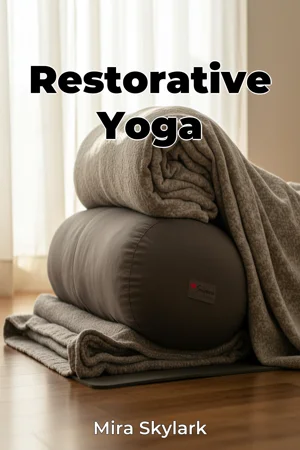
"Restorative Yoga" introduces a gentle yet powerful path to relaxation and healing, offering respite from the demands of modern life. The book explains how restorative yoga reduces cortisol levels, activating the parasympathetic nervous system to promote physical and emotional well-being. It details supported poses and emphasizes mindfulness techniques like breath awareness, helping readers alleviate muscle tension and foster self-compassion, addressing the pervasive effects of chronic stress and anxiety. Building upon the teachings of B.K.S. Iyengar, the book incorporates insights from somatic experiencing and trauma-informed care, making it accessible to all, regardless of prior yoga experience. "Restorative Yoga" argues that true rest is a conscious practice, not just the absence of activity, nurturing both body and mind. The book guides readers through the foundational principles, progresses to pose descriptions grouped by their effects (stress reduction, sleep improvement), and culminates with guidance on creating personalized practices.
Book Details
ISBN
9788235247124
Publisher
Publifye AS
Your Licenses
You don't own any licenses for this book
Purchase a license below to unlock this book and download the EPUB.
Purchase License
Select a tier to unlock this book
Need bulk licensing?
Contact us for enterprise agreements.