
About This Book
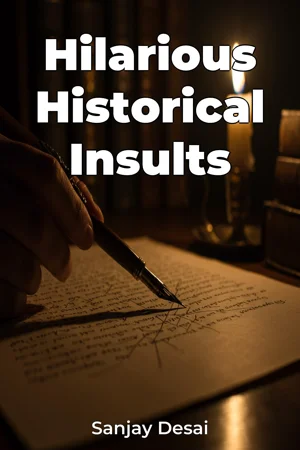
Ever wondered what history's sharpest tongues have uttered in moments of conflict? "Hilarious Historical Insults" delves into the world of verbal sparring across the ages, collecting and analyzing some of the most cutting, witty, and downright brutal insults delivered by historical figures, exploring their social context and lasting impact. This book aims to entertain and enlighten readers about the art of the insult as practiced by masters of wit and political maneuvering. The book examines three core aspects of historical insults: the anatomy of a good insult, including delivery and intended audience; the sociopolitical contexts in which insults thrived; and the long-term consequences of uttering or receiving such barbs. These topics are relevant because they provide insight into past societies, revealing power dynamics, social norms, and the human tendency to engage in verbal conflict. Understanding history is crucial to appreciating the evolution and effectiveness of insults. The social standing of the participants, the political climate, and the prevailing cultural sensitivities all shaped what was considered offensive. Without this context, the insults lose their potency and meaning. The central argument of "Hilarious Historical Insults" is that insults, beyond being mere displays of aggression, served as powerful tools for shaping public opinion, reinforcing social hierarchies, and even influencing the course of events. By studying these verbal exchanges, we gain perspective on the values, anxieties, and conflicts that defined different historical periods. The book begins by introducing the concept of insults as a form of social and political commentary, discussing the fundamental elements that make an insult effective: wit, timing, and a target's vulnerability. It then moves on to explore specific historical periods, such as ancient Rome, Renaissance Europe, and 18th-century England, examining the prominent figures known for their sharp tongues and the insults they deployed. Case studies will explore insults from Cicero's political battles, the witty retorts exchanged in the royal courts of Europe, and scathing remarks that punctuated revolutionary debates. The book culminates in an analysis of the lasting impact of these insults, evaluating how they have shaped historical narratives and continue to resonate today. It also explores the ethical considerations of using insults, even in historical contexts. This book employs historical records, including letters, memoirs, plays, and political pamphlets, to reconstruct the context and delivery of insults. The analysis combines historical research with linguistic principles to understand the nuances of language and the social impact of specific words and phrases. The book also makes connections to fields such as sociology, exploring how insults reinforce social hierarchies; political science, by examining how insults are used as political weapons; and linguistics, by analyzing the structure and function of insults as a form of communication. What sets this book apart is its focus on the humor and artistry of historical insults. Rather than simply cataloging offensive remarks, it analyzes the wit, intelligence, and strategic thinking behind them. This approach adds a layer of entertainment and demonstrates the human capacity for creative expression, even in moments of conflict. The writing style is accessible and engaging, aimed at a broad audience. While the content is thoroughly researched and fact-based, the tone is conversational and humorous, making the subject matter approachable and entertaining. This book targets history enthusiasts, language lovers, and anyone interested in the art of wit and rhetoric. It offers a unique perspective on history, providing insights into the personalities, conflicts, and values of past societies through the lens of their most memorable insults. The scope of the book is limited to well-documented insults that can be verified through historical sources, focusing on insults delivered by and to prominent figures. It does not delve into everyday insults or folk humor, focusing instead on the documented exchanges that shaped historical events. Readers can apply the principles of effective communication they learn from the analysis of historical insults to their own lives, improving their ability to craft witty remarks, manage conflict, and understand the power of language. While the book focuses on humorous insults, it also acknowledges the potential for harm caused by offensive language. It addresses the ongoing debate about the role of insults in public discourse, considering their impact on marginalized groups and the importance of responsible communication.
Ever wondered what history's sharpest tongues have uttered in moments of conflict? "Hilarious Historical Insults" delves into the world of verbal sparring across the ages, collecting and analyzing some of the most cutting, witty, and downright brutal insults delivered by historical figures, exploring their social context and lasting impact. This book aims to entertain and enlighten readers about the art of the insult as practiced by masters of wit and political maneuvering. The book examines three core aspects of historical insults: the anatomy of a good insult, including delivery and intended audience; the sociopolitical contexts in which insults thrived; and the long-term consequences of uttering or receiving such barbs. These topics are relevant because they provide insight into past societies, revealing power dynamics, social norms, and the human tendency to engage in verbal conflict. Understanding history is crucial to appreciating the evolution and effectiveness of insults. The social standing of the participants, the political climate, and the prevailing cultural sensitivities all shaped what was considered offensive. Without this context, the insults lose their potency and meaning. The central argument of "Hilarious Historical Insults" is that insults, beyond being mere displays of aggression, served as powerful tools for shaping public opinion, reinforcing social hierarchies, and even influencing the course of events. By studying these verbal exchanges, we gain perspective on the values, anxieties, and conflicts that defined different historical periods. The book begins by introducing the concept of insults as a form of social and political commentary, discussing the fundamental elements that make an insult effective: wit, timing, and a target's vulnerability. It then moves on to explore specific historical periods, such as ancient Rome, Renaissance Europe, and 18th-century England, examining the prominent figures known for their sharp tongues and the insults they deployed. Case studies will explore insults from Cicero's political battles, the witty retorts exchanged in the royal courts of Europe, and scathing remarks that punctuated revolutionary debates. The book culminates in an analysis of the lasting impact of these insults, evaluating how they have shaped historical narratives and continue to resonate today. It also explores the ethical considerations of using insults, even in historical contexts. This book employs historical records, including letters, memoirs, plays, and political pamphlets, to reconstruct the context and delivery of insults. The analysis combines historical research with linguistic principles to understand the nuances of language and the social impact of specific words and phrases. The book also makes connections to fields such as sociology, exploring how insults reinforce social hierarchies; political science, by examining how insults are used as political weapons; and linguistics, by analyzing the structure and function of insults as a form of communication. What sets this book apart is its focus on the humor and artistry of historical insults. Rather than simply cataloging offensive remarks, it analyzes the wit, intelligence, and strategic thinking behind them. This approach adds a layer of entertainment and demonstrates the human capacity for creative expression, even in moments of conflict. The writing style is accessible and engaging, aimed at a broad audience. While the content is thoroughly researched and fact-based, the tone is conversational and humorous, making the subject matter approachable and entertaining. This book targets history enthusiasts, language lovers, and anyone interested in the art of wit and rhetoric. It offers a unique perspective on history, providing insights into the personalities, conflicts, and values of past societies through the lens of their most memorable insults. The scope of the book is limited to well-documented insults that can be verified through historical sources, focusing on insults delivered by and to prominent figures. It does not delve into everyday insults or folk humor, focusing instead on the documented exchanges that shaped historical events. Readers can apply the principles of effective communication they learn from the analysis of historical insults to their own lives, improving their ability to craft witty remarks, manage conflict, and understand the power of language. While the book focuses on humorous insults, it also acknowledges the potential for harm caused by offensive language. It addresses the ongoing debate about the role of insults in public discourse, considering their impact on marginalized groups and the importance of responsible communication.
"Hilarious Historical Insults" explores the fascinating world of verbal sparring throughout history. It delves into the sharpest, wittiest, and sometimes brutal insults delivered by historical figures. The book examines the social and political contexts of these insults, highlighting how they served as tools for shaping public opinion and reinforcing social hierarchies. For instance, insults could be a potent political weapon, influencing events and revealing societal values and anxieties. The book's unique value lies in its focus on the humor and artistry behind historical insults, rather than merely cataloging offensive remarks. It analyzes the wit and strategic thinking involved, demonstrating human creativity even in conflict. Beginning with an introduction to insults as social and political commentary, the book progresses through specific historical periods like ancient Rome and Renaissance Europe, examining prominent figures and their sharpest barbs. By using historical records, the book reconstructs the context and delivery of insults, blending historical research with linguistic principles. This approach offers readers a unique perspective on history, appreciating the personalities, conflicts, and values of past societies through their most memorable and humorous exchanges.
Book Details
ISBN
9788235246745
Publisher
Publifye AS
Your Licenses
You don't own any licenses for this book
Purchase a license below to unlock this book and download the EPUB.
Purchase License
Select a tier to unlock this book
Need bulk licensing?
Contact us for enterprise agreements.