
About This Book
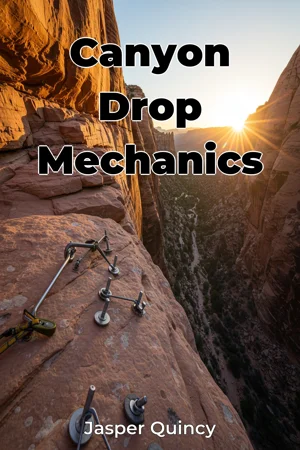
Have you ever considered the intricate engineering and precise techniques required to safely descend into the heart of a deep canyon? "Canyon Drop Mechanics" delves into the technical and practical aspects of rappelling in challenging canyon environments, whether for recreational expeditions or high-stakes rescue operations. This book explores three fundamental pillars: anchor selection and construction, descent control systems, and emergency self-rescue techniques, offering a comprehensive guide for anyone seeking to master this demanding skill. Understanding these elements is not merely about personal safety; it's about responsible interaction with the natural environment and the ability to respond effectively in critical situations. The book provides a broad historical overview, tracing the evolution of rappelling techniques from early mountaineering to modern canyoning, while examining the influence of industrial rope access and military applications. Readers should possess a basic understanding of knot tying and elementary physics concepts, which will be built upon in subsequent chapters. The central argument of "Canyon Drop Mechanics" is that a thorough understanding of the underlying principles of rappelling mechanics, combined with practical experience and sound judgment, is essential for safe and successful vertical canyon exploration. This argument is vital because it challenges the common reliance on rote memorization of techniques, instead emphasizing a deeper comprehension that allows for informed decision-making in dynamic and unpredictable environments. The book is structured to guide the reader from fundamental concepts to advanced techniques. Part one introduces the physics of rappelling, exploring force vectors, friction, and rope dynamics. Part two focuses on anchor systems, meticulously detailing various anchor types, load-sharing principles, and techniques for creating reliable anchors in diverse geological formations. Part three examines descent control devices, comparing their advantages and disadvantages, and providing guidance on selecting the appropriate device for specific scenarios. The last section culminates in a discussion of emergency procedures, covering self-rescue techniques, rope ascension methods, and strategies for dealing with common rappelling mishaps. The book draws upon a wide range of sources, including engineering test data on anchor strength, accident reports from search and rescue organizations, and firsthand accounts from experienced canyoners. Unique data sets, such as comparative analyses of different rope types under varying environmental conditions, enhance the book's practical value. "Canyon Drop Mechanics" connects to several disciplines, including geology (understanding rock formations for anchor selection), physics (analyzing forces and mechanics), and risk management (assessing and mitigating hazards). These interdisciplinary connections enrich the reader's understanding and provide a more comprehensive perspective. A unique aspect of this book is its emphasis on a systems-thinking approach to rappelling. Rather than treating each element in isolation, "Canyon Drop Mechanics" stresses the interconnectedness of anchors, descent devices, and rope management techniques, fostering a holistic understanding of the entire rappelling system. The tone is technical yet accessible, blending scientific rigor with practical advice in a manner that appeals to both novice and experienced canyoners. The target audience includes recreational canyoneers, search and rescue personnel, climbing instructors, and anyone involved in vertical rope work. The book's value lies in its comprehensive coverage of essential topics, its emphasis on practical application, and its commitment to promoting a culture of safety and informed decision-making. As a non-fiction sports and adventure guide, the book adheres to genre conventions by providing detailed instructions, safety guidelines, and real-world examples. It also acknowledges the inherent risks involved in canyoning and emphasizes the importance of proper training and experience. The scope of "Canyon Drop Mechanics" is limited to technical aspects of rappelling within canyon environments. It does not cover canyon navigation, hydrology, or advanced wilderness survival skills, which are considered separate topics. The information presented is immediately applicable in real-world scenarios, enabling readers to improve their rappelling skills, enhance their safety practices, and make more informed decisions in the field. While rappelling techniques are generally well-established, ongoing debates exist regarding the use of specific anchor types in certain geological formations and the effectiveness of different self-rescue methods. "Canyon Drop Mechanics" addresses these debates by presenting evidence-based recommendations and encouraging critical thinking.
Have you ever considered the intricate engineering and precise techniques required to safely descend into the heart of a deep canyon? "Canyon Drop Mechanics" delves into the technical and practical aspects of rappelling in challenging canyon environments, whether for recreational expeditions or high-stakes rescue operations. This book explores three fundamental pillars: anchor selection and construction, descent control systems, and emergency self-rescue techniques, offering a comprehensive guide for anyone seeking to master this demanding skill. Understanding these elements is not merely about personal safety; it's about responsible interaction with the natural environment and the ability to respond effectively in critical situations. The book provides a broad historical overview, tracing the evolution of rappelling techniques from early mountaineering to modern canyoning, while examining the influence of industrial rope access and military applications. Readers should possess a basic understanding of knot tying and elementary physics concepts, which will be built upon in subsequent chapters. The central argument of "Canyon Drop Mechanics" is that a thorough understanding of the underlying principles of rappelling mechanics, combined with practical experience and sound judgment, is essential for safe and successful vertical canyon exploration. This argument is vital because it challenges the common reliance on rote memorization of techniques, instead emphasizing a deeper comprehension that allows for informed decision-making in dynamic and unpredictable environments. The book is structured to guide the reader from fundamental concepts to advanced techniques. Part one introduces the physics of rappelling, exploring force vectors, friction, and rope dynamics. Part two focuses on anchor systems, meticulously detailing various anchor types, load-sharing principles, and techniques for creating reliable anchors in diverse geological formations. Part three examines descent control devices, comparing their advantages and disadvantages, and providing guidance on selecting the appropriate device for specific scenarios. The last section culminates in a discussion of emergency procedures, covering self-rescue techniques, rope ascension methods, and strategies for dealing with common rappelling mishaps. The book draws upon a wide range of sources, including engineering test data on anchor strength, accident reports from search and rescue organizations, and firsthand accounts from experienced canyoners. Unique data sets, such as comparative analyses of different rope types under varying environmental conditions, enhance the book's practical value. "Canyon Drop Mechanics" connects to several disciplines, including geology (understanding rock formations for anchor selection), physics (analyzing forces and mechanics), and risk management (assessing and mitigating hazards). These interdisciplinary connections enrich the reader's understanding and provide a more comprehensive perspective. A unique aspect of this book is its emphasis on a systems-thinking approach to rappelling. Rather than treating each element in isolation, "Canyon Drop Mechanics" stresses the interconnectedness of anchors, descent devices, and rope management techniques, fostering a holistic understanding of the entire rappelling system. The tone is technical yet accessible, blending scientific rigor with practical advice in a manner that appeals to both novice and experienced canyoners. The target audience includes recreational canyoneers, search and rescue personnel, climbing instructors, and anyone involved in vertical rope work. The book's value lies in its comprehensive coverage of essential topics, its emphasis on practical application, and its commitment to promoting a culture of safety and informed decision-making. As a non-fiction sports and adventure guide, the book adheres to genre conventions by providing detailed instructions, safety guidelines, and real-world examples. It also acknowledges the inherent risks involved in canyoning and emphasizes the importance of proper training and experience. The scope of "Canyon Drop Mechanics" is limited to technical aspects of rappelling within canyon environments. It does not cover canyon navigation, hydrology, or advanced wilderness survival skills, which are considered separate topics. The information presented is immediately applicable in real-world scenarios, enabling readers to improve their rappelling skills, enhance their safety practices, and make more informed decisions in the field. While rappelling techniques are generally well-established, ongoing debates exist regarding the use of specific anchor types in certain geological formations and the effectiveness of different self-rescue methods. "Canyon Drop Mechanics" addresses these debates by presenting evidence-based recommendations and encouraging critical thinking.
"Canyon Drop Mechanics" explores the comprehensive world of rappelling within challenging canyon environments, focusing on the crucial interplay between anchor systems, descent control, and self-rescue techniques. This book uniquely emphasizes a systems-thinking approach, highlighting the interconnectedness of each element rather than treating them in isolation. Readers will discover the evolution of rappelling, from early mountaineering to modern canyoning, with insights into how industrial rope access and military applications have shaped current practices. The book progresses systematically, starting with the fundamental physics of rappelling, including force vectors and rope dynamics, before moving into detailed discussions of anchor selection and descent control devices. A key focus is on understanding, not just memorizing, techniques for making informed decisions in unpredictable situations. The latter part of the book is dedicated to emergency procedures and self-rescue, essential knowledge for safe canyon exploration and effective response to mishaps. This resource is valuable for recreational canyoneers, search and rescue teams, and climbing instructors, offering a blend of scientific rigor and practical advice. "Canyon Drop Mechanics" stands out by integrating engineering test data, accident reports, and first-hand accounts, promoting safety and informed decision-making in the thrilling yet demanding sport of canyoning, making it an invaluable guide for anyone serious about vertical descent.
Book Details
ISBN
9788235246677
Publisher
Publifye AS
Your Licenses
You don't own any licenses for this book
Purchase a license below to unlock this book and download the EPUB.
Purchase License
Select a tier to unlock this book
Need bulk licensing?
Contact us for enterprise agreements.