
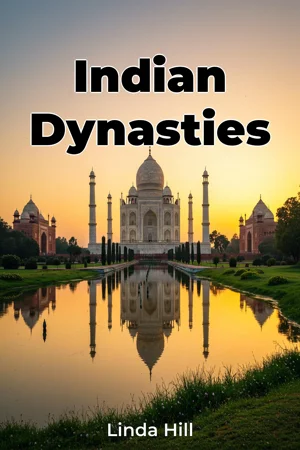
About This Book
How did a succession of powerful dynasties shape the cultural, economic, and political landscape of India? "Indian Dynasties" delves into the heart of India's rich history, exploring the influential empires that reigned across the subcontinent. This book examines the rise and fall of significant Indian dynasties, from the ancient Maurya and Gupta Empires to the medieval Delhi Sultanate and the formidable Mughal Empire, revealing their enduring impact on the modern world. This book focuses on the intricate interplay between political power, social structures, economic systems, and religious influences that defined each dynasty. Understanding these dynamics is crucial to grasping the complexities of India's past and its lasting influence on global history. Further, it provides a detailed account of the key rulers, administrative practices, architectural achievements, and cultural developments that characterized each empire, offering a comprehensive overview of their contributions. The narrative begins by establishing the pre-Mauryan context, examining the smaller kingdoms and societal structures that preceded the emergence of large-scale empires. A basic understanding of ancient Indian geography and early religious movements is beneficial for readers. The central argument posits that the recurring cycles of dynastic rise, consolidation, and decline in India resulted from the complex interplay of internal power struggles, external pressures, and the evolving relationship between rulers and their subjects. This cycle fostered a unique pattern of continuity and change that defines Indian history. The book's structure unfolds chronologically, beginning with the Maurya Empire and its contributions to centralized governance and the spread of Buddhism. It then transitions to the Gupta Empire, highlighting its golden age of scientific, artistic, and literary achievements. The narrative then progresses to the medieval period, examining the diverse dynasties of the Delhi Sultanate and their impact on Indian society and culture. The culmination of the book focuses on the Mughal Empire, analyzing its sophisticated administrative system, patronage of the arts, and its lasting architectural legacy. The book concludes by considering the long-term effects of these dynasties on modern India. The evidence presented draws upon a range of sources, including archaeological findings, inscriptions, numismatic evidence, and literary texts from the periods under examination. The book also incorporates recent scholarship and interpretations of historical events. It uses a comparative approach, drawing connections between different dynasties and highlighting shared characteristics and divergent paths. This study also connects to fields such as archaeology, religious studies, and art history, exploring the material culture, religious beliefs, and artistic expressions that defined each era. These interdisciplinary connections enrich the understanding of the social and cultural context within which these dynasties operated. "Indian Dynasties" provides a fresh perspective by emphasizing the social and economic factors that influenced the trajectory of each empire. It moves beyond a simple recounting of rulers and battles, offering insights into the lives of ordinary people and the forces that shaped their experiences. The book adopts a balanced and objective tone, presenting information in a clear and accessible manner. It is aimed at students, researchers, and general readers interested in Indian history, world history, and comparative empire studies. The scope is limited to the most prominent and widely studied dynasties, acknowledging that many other regional kingdoms also contributed to India's rich historical tapestry. The lessons learned from the rise and fall of these dynasties can inform our understanding of contemporary political and social challenges. The recurring themes of centralization versus decentralization, religious tolerance versus intolerance, and economic development versus social inequality continue to resonate in modern India and beyond. Furthermore, historical debates surrounding the interpretation of certain events, such as the decline of the Gupta Empire, are discussed, presenting multiple perspectives on these complex issues.
How did a succession of powerful dynasties shape the cultural, economic, and political landscape of India? "Indian Dynasties" delves into the heart of India's rich history, exploring the influential empires that reigned across the subcontinent. This book examines the rise and fall of significant Indian dynasties, from the ancient Maurya and Gupta Empires to the medieval Delhi Sultanate and the formidable Mughal Empire, revealing their enduring impact on the modern world. This book focuses on the intricate interplay between political power, social structures, economic systems, and religious influences that defined each dynasty. Understanding these dynamics is crucial to grasping the complexities of India's past and its lasting influence on global history. Further, it provides a detailed account of the key rulers, administrative practices, architectural achievements, and cultural developments that characterized each empire, offering a comprehensive overview of their contributions. The narrative begins by establishing the pre-Mauryan context, examining the smaller kingdoms and societal structures that preceded the emergence of large-scale empires. A basic understanding of ancient Indian geography and early religious movements is beneficial for readers. The central argument posits that the recurring cycles of dynastic rise, consolidation, and decline in India resulted from the complex interplay of internal power struggles, external pressures, and the evolving relationship between rulers and their subjects. This cycle fostered a unique pattern of continuity and change that defines Indian history. The book's structure unfolds chronologically, beginning with the Maurya Empire and its contributions to centralized governance and the spread of Buddhism. It then transitions to the Gupta Empire, highlighting its golden age of scientific, artistic, and literary achievements. The narrative then progresses to the medieval period, examining the diverse dynasties of the Delhi Sultanate and their impact on Indian society and culture. The culmination of the book focuses on the Mughal Empire, analyzing its sophisticated administrative system, patronage of the arts, and its lasting architectural legacy. The book concludes by considering the long-term effects of these dynasties on modern India. The evidence presented draws upon a range of sources, including archaeological findings, inscriptions, numismatic evidence, and literary texts from the periods under examination. The book also incorporates recent scholarship and interpretations of historical events. It uses a comparative approach, drawing connections between different dynasties and highlighting shared characteristics and divergent paths. This study also connects to fields such as archaeology, religious studies, and art history, exploring the material culture, religious beliefs, and artistic expressions that defined each era. These interdisciplinary connections enrich the understanding of the social and cultural context within which these dynasties operated. "Indian Dynasties" provides a fresh perspective by emphasizing the social and economic factors that influenced the trajectory of each empire. It moves beyond a simple recounting of rulers and battles, offering insights into the lives of ordinary people and the forces that shaped their experiences. The book adopts a balanced and objective tone, presenting information in a clear and accessible manner. It is aimed at students, researchers, and general readers interested in Indian history, world history, and comparative empire studies. The scope is limited to the most prominent and widely studied dynasties, acknowledging that many other regional kingdoms also contributed to India's rich historical tapestry. The lessons learned from the rise and fall of these dynasties can inform our understanding of contemporary political and social challenges. The recurring themes of centralization versus decentralization, religious tolerance versus intolerance, and economic development versus social inequality continue to resonate in modern India and beyond. Furthermore, historical debates surrounding the interpretation of certain events, such as the decline of the Gupta Empire, are discussed, presenting multiple perspectives on these complex issues.
"Indian Dynasties" explores the powerful empires that shaped India's history, from the Mauryas to the Mughals. This book delves into the political power, social structures, and economic systems of each dynasty, revealing their lasting impact. A key insight is understanding how the recurring cycles of dynastic rise and fall stemmed from internal power struggles and external pressures. The book examines the unique contributions of each empire, for example, the Gupta Empire's "golden age" of scientific and artistic achievement. It also highlights the Delhi Sultanate's impact on Indian society. By using archaeological findings, inscriptions, and literary texts, this book offers a comprehensive overview of India's dynastic history. The narrative progresses chronologically, starting with the pre-Mauryan context and moving through the Maurya, Gupta, Delhi Sultanate, and Mughal Empires. "Indian Dynasties" provides a fresh perspective by considering the social and economic factors that influenced each empire, moving beyond just rulers and battles to examine the lives of ordinary people.
Book Details
ISBN
9788235246103
Publisher
Publifye AS
Your Licenses
You don't own any licenses for this book
Purchase a license below to unlock this book and download the EPUB.
Purchase License
Select a tier to unlock this book
Need bulk licensing?
Contact us for enterprise agreements.