
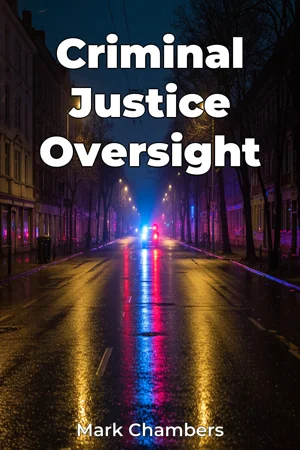
About This Book
How can we ensure justice is truly served when those entrusted with upholding the law sometimes abuse their power? "Criminal Justice Oversight" delves into the critical role of independent watchdogs, inspector generals, and external commissions in safeguarding the integrity of criminal law enforcement and correction systems in the United States. This book examines the necessity, function, and effectiveness of these oversight bodies, and it is vital for understanding the ongoing challenges to accountability within the criminal justice system. "Criminal Justice Oversight" focuses on three main areas: first, the structure and operational guidelines of various oversight mechanisms at the federal, state, and local levels; second, the practical impact of these bodies on reducing corruption, preventing misconduct, and improving transparency; and third, the persistent obstacles that undermine their effectiveness, such as political interference, inadequate funding, and limited legal authority. These topics are highly relevant in an era of heightened public scrutiny of law enforcement practices and widespread concern about systemic bias. Building upon decades of research in criminology, political science, and public administration, this book offers a comprehensive analysis of criminal justice oversight. It examines landmark cases of police misconduct and correctional failures, highlighting the critical role oversight bodies played in uncovering wrongdoing and recommending reforms. The core argument is that effective, independent oversight is essential for maintaining public trust in the criminal justice system and ensuring equitable and just outcomes. However, this oversight is frequently compromised by structural weaknesses and external pressures. The book begins by introducing the concept of criminal justice oversight and its evolution in the United States. It then dedicates individual chapters to the roles and responsibilities of inspector generals, independent police auditors, civilian review boards, and legislative oversight committees. Each chapter analyzes the legal frameworks governing these bodies, their investigative powers, and their capacity to implement meaningful change. The book culminates in a discussion of best practices for enhancing the effectiveness of criminal justice oversight, including strategies for promoting independence, securing adequate resources, and fostering collaboration between oversight bodies and the communities they serve. To support its arguments, "Criminal Justice Oversight" draws upon a wide range of primary and secondary sources, including government reports, court documents, academic studies, and interviews with oversight officials and community stakeholders. It utilizes statistical data to assess the impact of oversight on key indicators of criminal justice performance, such as rates of complaints against law enforcement, incidence of prison violence, and levels of public confidence in the system. The book connects to several other fields of study, including constitutional law, human rights, and public policy. It also links to sociology through analyses of the social impacts of flawed law enforcement. This interdisciplinary approach enriches the book's analysis and provides a more nuanced understanding of the challenges and opportunities for criminal justice reform. "Criminal Justice Oversight" adopts a balanced and objective tone, presenting evidence-based arguments and acknowledging the complexities of criminal justice reform. It avoids sensationalism and offers a realistic assessment of the potential for oversight to promote accountability and improve outcomes. The intended audience includes academics, policymakers, law enforcement professionals, students, and community activists interested in criminal justice reform. It would be valuable to these readers, providing a comprehensive overview of the oversight landscape and offering practical recommendations for strengthening accountability. As a work of political science and true crime, the book adheres to the conventions of rigorous research, factual accuracy, and objective analysis. While "Criminal Justice Oversight" provides a broad overview of the oversight landscape, it focuses specifically on the United States and does not attempt to offer a comparative analysis of oversight systems in other countries. The information in this book can be applied practically by policymakers seeking to strengthen oversight mechanisms, law enforcement agencies seeking to improve their accountability practices, and community organizations advocating for criminal justice reform. The book addresses ongoing debates about the appropriate scope and intensity of criminal justice oversight, particularly in the context of concerns about police brutality and racial bias.
How can we ensure justice is truly served when those entrusted with upholding the law sometimes abuse their power? "Criminal Justice Oversight" delves into the critical role of independent watchdogs, inspector generals, and external commissions in safeguarding the integrity of criminal law enforcement and correction systems in the United States. This book examines the necessity, function, and effectiveness of these oversight bodies, and it is vital for understanding the ongoing challenges to accountability within the criminal justice system. "Criminal Justice Oversight" focuses on three main areas: first, the structure and operational guidelines of various oversight mechanisms at the federal, state, and local levels; second, the practical impact of these bodies on reducing corruption, preventing misconduct, and improving transparency; and third, the persistent obstacles that undermine their effectiveness, such as political interference, inadequate funding, and limited legal authority. These topics are highly relevant in an era of heightened public scrutiny of law enforcement practices and widespread concern about systemic bias. Building upon decades of research in criminology, political science, and public administration, this book offers a comprehensive analysis of criminal justice oversight. It examines landmark cases of police misconduct and correctional failures, highlighting the critical role oversight bodies played in uncovering wrongdoing and recommending reforms. The core argument is that effective, independent oversight is essential for maintaining public trust in the criminal justice system and ensuring equitable and just outcomes. However, this oversight is frequently compromised by structural weaknesses and external pressures. The book begins by introducing the concept of criminal justice oversight and its evolution in the United States. It then dedicates individual chapters to the roles and responsibilities of inspector generals, independent police auditors, civilian review boards, and legislative oversight committees. Each chapter analyzes the legal frameworks governing these bodies, their investigative powers, and their capacity to implement meaningful change. The book culminates in a discussion of best practices for enhancing the effectiveness of criminal justice oversight, including strategies for promoting independence, securing adequate resources, and fostering collaboration between oversight bodies and the communities they serve. To support its arguments, "Criminal Justice Oversight" draws upon a wide range of primary and secondary sources, including government reports, court documents, academic studies, and interviews with oversight officials and community stakeholders. It utilizes statistical data to assess the impact of oversight on key indicators of criminal justice performance, such as rates of complaints against law enforcement, incidence of prison violence, and levels of public confidence in the system. The book connects to several other fields of study, including constitutional law, human rights, and public policy. It also links to sociology through analyses of the social impacts of flawed law enforcement. This interdisciplinary approach enriches the book's analysis and provides a more nuanced understanding of the challenges and opportunities for criminal justice reform. "Criminal Justice Oversight" adopts a balanced and objective tone, presenting evidence-based arguments and acknowledging the complexities of criminal justice reform. It avoids sensationalism and offers a realistic assessment of the potential for oversight to promote accountability and improve outcomes. The intended audience includes academics, policymakers, law enforcement professionals, students, and community activists interested in criminal justice reform. It would be valuable to these readers, providing a comprehensive overview of the oversight landscape and offering practical recommendations for strengthening accountability. As a work of political science and true crime, the book adheres to the conventions of rigorous research, factual accuracy, and objective analysis. While "Criminal Justice Oversight" provides a broad overview of the oversight landscape, it focuses specifically on the United States and does not attempt to offer a comparative analysis of oversight systems in other countries. The information in this book can be applied practically by policymakers seeking to strengthen oversight mechanisms, law enforcement agencies seeking to improve their accountability practices, and community organizations advocating for criminal justice reform. The book addresses ongoing debates about the appropriate scope and intensity of criminal justice oversight, particularly in the context of concerns about police brutality and racial bias.
"Criminal Justice Oversight" explores the crucial role of independent oversight in the U.S. criminal justice system, examining how watchdogs, inspector generals, and external commissions work to ensure accountability and transparency in law enforcement. The book delves into the structures and functions of these oversight mechanisms at various levels, highlighting their impact on reducing corruption and preventing misconduct. For instance, independent investigations can uncover hidden patterns of abuse, while civilian review boards offer a platform for community input, fostering trust between law enforcement and the public. However, the book also addresses the persistent challenges that undermine effective criminal justice oversight, such as political interference and inadequate funding. These obstacles often limit the authority and independence of oversight bodies, hindering their ability to implement meaningful changes. Beginning with an introduction to the evolution of oversight, the book dedicates chapters to various oversight bodies, analyzing their legal frameworks and investigative powers. Using a balanced approach, "Criminal Justice Oversight" draws upon government reports, court documents, and academic studies to assess the impact of oversight on key indicators of criminal justice performance. It emphasizes the importance of independent oversight as essential for maintaining public trust and ensuring equitable outcomes, making it a valuable resource for anyone interested in true crime, political science, or criminal justice reform.
Book Details
ISBN
9788235246035
Publisher
Publifye AS
Your Licenses
You don't own any licenses for this book
Purchase a license below to unlock this book and download the EPUB.
Purchase License
Select a tier to unlock this book
Need bulk licensing?
Contact us for enterprise agreements.