
About This Book
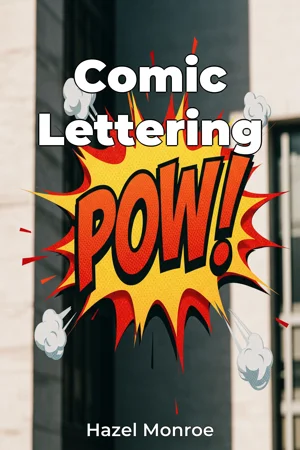
Have you ever considered the profound impact of lettering on the storytelling power of comics? "Comic Lettering" unveils the secrets behind effective comic dialogue, demonstrating how fonts, speech bubbles, and sound effects are integral to conveying emotion, pacing, and narrative depth. This book examines the art and design principles underpinning successful comic lettering, exploring its significance in shaping reader experience and artistic expression. This book focuses on three key areas: the psychology of typefaces and their impact on character voice, the construction and placement of speech bubbles to guide reading flow, and the strategic use of sound effects to amplify action and atmosphere. These elements are not merely aesthetic choices; they are fundamental tools for visual communication that directly influence how readers perceive and engage with the story. Understanding these principles is crucial for anyone involved in comic creation, from writers and artists to editors and publishers. The historical evolution of comic lettering is explored, tracing its roots from early newspaper strips to modern graphic novels. We delve into the influence of technological advancements, such as digital lettering software, and the contributions of seminal figures who have shaped the field. While no prior knowledge of typography is strictly required, a basic familiarity with comic book conventions will enhance the reader's understanding. The central argument of "Comic Lettering" is that effective lettering is not simply a technical skill, but an artistic practice that requires a deep understanding of visual narrative and reader psychology. By mastering the techniques presented in this book, creators can elevate their comics from visually appealing to truly immersive and emotionally resonant experiences. The book’s structure begins with an introduction to the core principles of typography and their application to comic lettering. It then progresses into the specifics of speech bubble design, including shape, size, tail placement, and multi-bubble arrangements. A dedicated section covers the creation and implementation of dynamic sound effects, exploring different lettering styles and their ability to convey various auditory experiences. The book concludes with practical exercises and case studies, illustrating how these techniques can be applied to real-world comic projects. Supporting the book’s arguments is a blend of visual analysis, historical research, and practical experimentation. Examples are drawn from a diverse range of comics, spanning different genres and eras, to demonstrate the versatility and adaptability of lettering techniques. Interviews with professional comic letterers offer insights into their creative processes and decision-making. "Comic Lettering" also connects to broader fields such as graphic design, visual communication, and semiotics. By examining the interplay between text and image, the book sheds light on the fundamental principles of visual storytelling. Its exploration of reader psychology aligns with principles found in marketing and advertising, where understanding audience perception is paramount. A unique aspect of this book is its focus on the emotional impact of lettering. It goes beyond the technical aspects of font selection and bubble placement, examining how these choices can influence the reader's emotional response to the story. This approach encourages creators to think critically about the message they are conveying and how lettering can be used to enhance its impact. Written in an accessible and engaging style, "Comic Lettering" avoids overly technical jargon and focuses on clear explanations and practical examples. The tone is informative and encouraging, aiming to empower readers with the knowledge and skills they need to improve their own comic lettering. The target audience includes aspiring and professional comic artists, writers, and editors, as well as students of graphic design and visual communication. Anyone interested in understanding the role of lettering in visual storytelling will find this book valuable. Adhering to the conventions of a design-focused non-fiction book, "Comic Lettering" incorporates numerous illustrations and diagrams to visually demonstrate key concepts. Real-world examples and case studies provide practical context and inspiration. The scope of this book is limited to the principles and techniques of comic lettering. It does not delve into the broader aspects of comic book production, such as writing, penciling, inking, or coloring. This focus allows for a more in-depth exploration of the specific challenges and opportunities presented by comic lettering. The information presented in "Comic Lettering" can be applied directly to the creation of comics, graphic novels, and other forms of visual storytelling. By mastering the techniques outlined in this book, creators can significantly improve the clarity, impact, and emotional resonance of their work. While the fundamental principles of comic lettering are generally accepted, there are ongoing debates about the use of specific fonts and styles. This book acknowledges these discussions and encourages readers to experiment and develop their own unique lettering styles. The book’s emphasis on the emotional impact of lettering provides a framework for evaluating different approaches and making informed creative decisions.
Have you ever considered the profound impact of lettering on the storytelling power of comics? "Comic Lettering" unveils the secrets behind effective comic dialogue, demonstrating how fonts, speech bubbles, and sound effects are integral to conveying emotion, pacing, and narrative depth. This book examines the art and design principles underpinning successful comic lettering, exploring its significance in shaping reader experience and artistic expression. This book focuses on three key areas: the psychology of typefaces and their impact on character voice, the construction and placement of speech bubbles to guide reading flow, and the strategic use of sound effects to amplify action and atmosphere. These elements are not merely aesthetic choices; they are fundamental tools for visual communication that directly influence how readers perceive and engage with the story. Understanding these principles is crucial for anyone involved in comic creation, from writers and artists to editors and publishers. The historical evolution of comic lettering is explored, tracing its roots from early newspaper strips to modern graphic novels. We delve into the influence of technological advancements, such as digital lettering software, and the contributions of seminal figures who have shaped the field. While no prior knowledge of typography is strictly required, a basic familiarity with comic book conventions will enhance the reader's understanding. The central argument of "Comic Lettering" is that effective lettering is not simply a technical skill, but an artistic practice that requires a deep understanding of visual narrative and reader psychology. By mastering the techniques presented in this book, creators can elevate their comics from visually appealing to truly immersive and emotionally resonant experiences. The book’s structure begins with an introduction to the core principles of typography and their application to comic lettering. It then progresses into the specifics of speech bubble design, including shape, size, tail placement, and multi-bubble arrangements. A dedicated section covers the creation and implementation of dynamic sound effects, exploring different lettering styles and their ability to convey various auditory experiences. The book concludes with practical exercises and case studies, illustrating how these techniques can be applied to real-world comic projects. Supporting the book’s arguments is a blend of visual analysis, historical research, and practical experimentation. Examples are drawn from a diverse range of comics, spanning different genres and eras, to demonstrate the versatility and adaptability of lettering techniques. Interviews with professional comic letterers offer insights into their creative processes and decision-making. "Comic Lettering" also connects to broader fields such as graphic design, visual communication, and semiotics. By examining the interplay between text and image, the book sheds light on the fundamental principles of visual storytelling. Its exploration of reader psychology aligns with principles found in marketing and advertising, where understanding audience perception is paramount. A unique aspect of this book is its focus on the emotional impact of lettering. It goes beyond the technical aspects of font selection and bubble placement, examining how these choices can influence the reader's emotional response to the story. This approach encourages creators to think critically about the message they are conveying and how lettering can be used to enhance its impact. Written in an accessible and engaging style, "Comic Lettering" avoids overly technical jargon and focuses on clear explanations and practical examples. The tone is informative and encouraging, aiming to empower readers with the knowledge and skills they need to improve their own comic lettering. The target audience includes aspiring and professional comic artists, writers, and editors, as well as students of graphic design and visual communication. Anyone interested in understanding the role of lettering in visual storytelling will find this book valuable. Adhering to the conventions of a design-focused non-fiction book, "Comic Lettering" incorporates numerous illustrations and diagrams to visually demonstrate key concepts. Real-world examples and case studies provide practical context and inspiration. The scope of this book is limited to the principles and techniques of comic lettering. It does not delve into the broader aspects of comic book production, such as writing, penciling, inking, or coloring. This focus allows for a more in-depth exploration of the specific challenges and opportunities presented by comic lettering. The information presented in "Comic Lettering" can be applied directly to the creation of comics, graphic novels, and other forms of visual storytelling. By mastering the techniques outlined in this book, creators can significantly improve the clarity, impact, and emotional resonance of their work. While the fundamental principles of comic lettering are generally accepted, there are ongoing debates about the use of specific fonts and styles. This book acknowledges these discussions and encourages readers to experiment and develop their own unique lettering styles. The book’s emphasis on the emotional impact of lettering provides a framework for evaluating different approaches and making informed creative decisions.
"Comic Lettering" explores the often-overlooked art of lettering in comics, revealing how typography, speech bubbles, and sound effects profoundly impact storytelling. The book argues that lettering is not just a technical skill, but a crucial element of visual communication that shapes reader experience. Did you know that the psychology of typefaces influences character voice, and the strategic placement of speech bubbles guides reading flow? It's all about enhancing the narrative depth. The book emphasizes the emotional impact of lettering, delving into how design choices affect reader response. Starting with typography basics, it progresses to speech bubble design and sound effect creation. Through visual analysis, historical context, and interviews, "Comic Lettering" equips artists, writers, and designers with practical techniques to elevate their comic art and visual storytelling.
Book Details
ISBN
9788235246004
Publisher
Publifye AS
Your Licenses
You don't own any licenses for this book
Purchase a license below to unlock this book and download the EPUB.
Purchase License
Select a tier to unlock this book
Need bulk licensing?
Contact us for enterprise agreements.