
About This Book
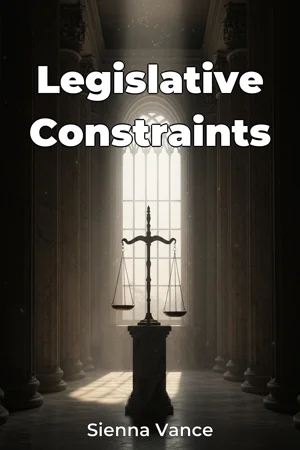
How far-reaching should governmental power be? *Legislative Constraints* delves into the intricate web of legal limitations, legislative oversight, and checks on administrative power that define the boundaries of government action. These constraints are not mere formalities; they are the bedrock of a free and just society, preventing the abuse of authority and ensuring accountability. This book examines the key mechanisms that keep administrative power in check, offering a comprehensive analysis of their effectiveness and potential pitfalls. Understanding these constraints is crucial for anyone seeking to engage with the political landscape, whether as a citizen, policymaker, or legal professional. This analysis is vital because the expansion of administrative agencies has placed considerable power in the hands of unelected officials. Without robust checks and balances, the potential for overreach and the erosion of individual liberties grows exponentially. This book addresses this challenge by exploring the legal framework that governs agency action, the role of legislative oversight in holding agencies accountable, and the various checks placed on administrative discretion. The book begins by establishing a foundation in administrative law, tracing its historical development and outlining the principles that underpin the modern regulatory state. It then proceeds to a detailed examination of the Administrative Procedure Act (APA) and other statutes that define the legal limits on agency action. Key concepts such as due process, judicial review, and the delegation doctrine are explored in depth, providing readers with a solid understanding of the legal landscape. From here, the book turns to the crucial role of legislative oversight. It examines the tools available to Congress, such as committee hearings, the power of the purse, and the Congressional Review Act, assessing their effectiveness in preventing agency overreach and ensuring compliance with legislative intent. Through case studies and real-world examples, it will explore the dynamics of legislative-executive relations and the challenges of maintaining effective oversight in a complex political environment. Finally, *Legislative Constraints* analyzes the various checks placed on administrative power, including judicial review, presidential control, and internal agency procedures. It assesses the strengths and weaknesses of each mechanism, exploring their impact on agency decision-making and their ability to protect individual rights. The book culminates in a discussion of potential reforms to enhance the effectiveness of legislative constraints, ensuring that government agencies remain accountable to the people they serve. The arguments presented are supported by a wealth of legal scholarship, case law, and empirical research. Drawing on data from congressional hearings, agency reports, and court decisions, the book offers a nuanced and evidence-based analysis of the challenges and opportunities of legislative constraints. This interdisciplinary approach connects law to political science and public administration, offering a holistic perspective on the dynamics of government power. A unique feature of this work is its focus on the practical implications of legislative constraints. It moves beyond theoretical discussions to explore how these constraints function in the real world, examining their impact on agency behavior, regulatory outcomes, and individual rights. It presents information in an academic yet accessible style, making it valuable to scholars, students, and anyone interested in understanding the workings of government. The target audience includes students of law, political science, and public administration, as well as policymakers, legal professionals, and engaged citizens. This book is designed to shed light on how the government is kept in check and encourage critical thought on the balance of power in a democratic society. While this book offers a broad overview of legislative constraints on administrative power, it acknowledges the limitations of focusing primarily on the federal level. The dynamics of state and local government are distinct and warrant separate consideration. Ultimately, *Legislative Constraints* seeks to provide readers with a deeper understanding of the mechanisms that safeguard liberty and promote government accountability, empowering them to engage more effectively in the political process.
How far-reaching should governmental power be? *Legislative Constraints* delves into the intricate web of legal limitations, legislative oversight, and checks on administrative power that define the boundaries of government action. These constraints are not mere formalities; they are the bedrock of a free and just society, preventing the abuse of authority and ensuring accountability. This book examines the key mechanisms that keep administrative power in check, offering a comprehensive analysis of their effectiveness and potential pitfalls. Understanding these constraints is crucial for anyone seeking to engage with the political landscape, whether as a citizen, policymaker, or legal professional. This analysis is vital because the expansion of administrative agencies has placed considerable power in the hands of unelected officials. Without robust checks and balances, the potential for overreach and the erosion of individual liberties grows exponentially. This book addresses this challenge by exploring the legal framework that governs agency action, the role of legislative oversight in holding agencies accountable, and the various checks placed on administrative discretion. The book begins by establishing a foundation in administrative law, tracing its historical development and outlining the principles that underpin the modern regulatory state. It then proceeds to a detailed examination of the Administrative Procedure Act (APA) and other statutes that define the legal limits on agency action. Key concepts such as due process, judicial review, and the delegation doctrine are explored in depth, providing readers with a solid understanding of the legal landscape. From here, the book turns to the crucial role of legislative oversight. It examines the tools available to Congress, such as committee hearings, the power of the purse, and the Congressional Review Act, assessing their effectiveness in preventing agency overreach and ensuring compliance with legislative intent. Through case studies and real-world examples, it will explore the dynamics of legislative-executive relations and the challenges of maintaining effective oversight in a complex political environment. Finally, *Legislative Constraints* analyzes the various checks placed on administrative power, including judicial review, presidential control, and internal agency procedures. It assesses the strengths and weaknesses of each mechanism, exploring their impact on agency decision-making and their ability to protect individual rights. The book culminates in a discussion of potential reforms to enhance the effectiveness of legislative constraints, ensuring that government agencies remain accountable to the people they serve. The arguments presented are supported by a wealth of legal scholarship, case law, and empirical research. Drawing on data from congressional hearings, agency reports, and court decisions, the book offers a nuanced and evidence-based analysis of the challenges and opportunities of legislative constraints. This interdisciplinary approach connects law to political science and public administration, offering a holistic perspective on the dynamics of government power. A unique feature of this work is its focus on the practical implications of legislative constraints. It moves beyond theoretical discussions to explore how these constraints function in the real world, examining their impact on agency behavior, regulatory outcomes, and individual rights. It presents information in an academic yet accessible style, making it valuable to scholars, students, and anyone interested in understanding the workings of government. The target audience includes students of law, political science, and public administration, as well as policymakers, legal professionals, and engaged citizens. This book is designed to shed light on how the government is kept in check and encourage critical thought on the balance of power in a democratic society. While this book offers a broad overview of legislative constraints on administrative power, it acknowledges the limitations of focusing primarily on the federal level. The dynamics of state and local government are distinct and warrant separate consideration. Ultimately, *Legislative Constraints* seeks to provide readers with a deeper understanding of the mechanisms that safeguard liberty and promote government accountability, empowering them to engage more effectively in the political process.
*Legislative Constraints* explores the critical role of checks and balances in limiting government power, particularly the administrative power wielded by agencies. It examines how legislative oversight, legal limitations, and judicial review work in tandem to ensure accountability and prevent overreach. A key insight is the balance between empowering agencies for effective governance and safeguarding individual liberties through due process. For instance, while agencies require flexibility to address complex issues, strict adherence to the Administrative Procedure Act (APA) is essential to prevent arbitrary decision-making. The book progresses from establishing a foundation in administrative law to analyzing specific mechanisms like congressional hearings and judicial review. It delves into the effectiveness of legislative oversight in preventing agency overreach and ensuring compliance with legislative intent. The text also considers how presidential control and internal agency procedures serve as checks on administrative power. This approach provides a holistic view of government accountability, making it valuable for those in political science, public administration, or law.
Book Details
ISBN
9788235245991
Publisher
Publifye AS
Your Licenses
You don't own any licenses for this book
Purchase a license below to unlock this book and download the EPUB.
Purchase License
Select a tier to unlock this book
Need bulk licensing?
Contact us for enterprise agreements.