
About This Book
How has philosophy, the bedrock of critical thought, influenced the very methods by which we impart and acquire knowledge? This book, *Philosophy And Teaching*, delves into the profound and often overlooked relationship between philosophical thought and the practical realities of education. We explore how core philosophical ideas have shaped not only what we teach but, more importantly, *how* we teach and learn. The central aim of *Philosophy And Teaching* is to demonstrate how different schools of philosophical thought—including but not limited to idealism, realism, pragmatism, and existentialism—have directly informed pedagogical approaches and learning theories. Understanding these connections is vital for educators, policymakers, and anyone interested in improving educational outcomes because it provides a deeper understanding of the assumptions and values that underpin current educational practices. Further, we examine the ethical considerations that arise within educational settings, particularly concerning issues of social justice, equity, and the role of education in fostering responsible citizenship. Contextually, the book will provide a historical overview of the evolution of educational philosophies, tracing their roots from ancient Greece to contemporary debates. This necessitates a brief overview of key philosophical figures and their contributions, such as Plato, Aristotle, John Locke, Jean-Jacques Rousseau, and John Dewey. Readers will gain an appreciation for how social, political, and economic forces have shaped philosophical thought on education and conversely, how philosophy has influenced societal values and norms. The central argument posits that a conscious understanding of philosophical principles enables educators to make more informed and effective decisions about curriculum design, instructional strategies, and assessment methods. By grounding educational practices in sound philosophical reasoning, educators can better address the diverse needs of learners and create more meaningful and engaging learning experiences. The book is structured to guide readers through a logical progression of ideas. It begins by introducing the fundamental concepts of philosophy as they relate to education, clarifying key terms, and establishing a framework for analysis. Then, the book examines specific philosophical schools of thought, illustrating their influence on educational practices with concrete examples and case studies. For instance, we analyze how pragmatism, with its emphasis on experiential learning, has influenced the development of project-based curricula and inquiry. In a parallel fashion, this book explains idealism and realism, analyzing their impact on the design of educational aims and curricula. The book culminates by exploring the ethical dimensions of teaching and learning, focusing on issues of social justice, diversity, and the role of education in promoting civic engagement. Drawing from real-world examples and empirical research, this book also examines the practical implications of philosophical principles. *Philosophy And Teaching* draws upon a wide range of sources, including historical texts, philosophical treatises, educational research studies, and contemporary policy documents. Specific methodologies include philosophical analysis, historical inquiry, and comparative case studies. Interdisciplinarily, this work connects to fields such as sociology, psychology, and political science. Sociological perspectives inform our understanding of the social and cultural contexts of education, while psychological theories shed light on the cognitive and emotional processes involved in learning. Political science illuminates the power dynamics and ideological forces that shape educational policy and practice. A unique aspect of this book is its emphasis on practical application. It moves beyond abstract theoretical discussions to provide concrete strategies for integrating philosophical insights into everyday teaching practices. The writing style aims for clarity and accessibility, avoiding jargon and technical language wherever possible. The intended audience includes teacher education students, practicing teachers, educational administrators, policymakers, and anyone interested in the philosophical foundations of education. This book offers a valuable resource for anyone seeking to deepen their understanding of the complex relationship between philosophy and education and to improve their practice through informed reflection and critical analysis. Although the focus is broad, this book primarily addresses education within formal schooling environments. *Philosophy And Teaching* ultimately strives to equip educators with the intellectual tools they need to navigate the complexities of their profession and to create more just, equitable, and effective learning environments for all students. The application of philosophical inquiry helps address controversies related to curriculum content, standardized testing, and pedagogical approaches.
How has philosophy, the bedrock of critical thought, influenced the very methods by which we impart and acquire knowledge? This book, *Philosophy And Teaching*, delves into the profound and often overlooked relationship between philosophical thought and the practical realities of education. We explore how core philosophical ideas have shaped not only what we teach but, more importantly, *how* we teach and learn. The central aim of *Philosophy And Teaching* is to demonstrate how different schools of philosophical thought—including but not limited to idealism, realism, pragmatism, and existentialism—have directly informed pedagogical approaches and learning theories. Understanding these connections is vital for educators, policymakers, and anyone interested in improving educational outcomes because it provides a deeper understanding of the assumptions and values that underpin current educational practices. Further, we examine the ethical considerations that arise within educational settings, particularly concerning issues of social justice, equity, and the role of education in fostering responsible citizenship. Contextually, the book will provide a historical overview of the evolution of educational philosophies, tracing their roots from ancient Greece to contemporary debates. This necessitates a brief overview of key philosophical figures and their contributions, such as Plato, Aristotle, John Locke, Jean-Jacques Rousseau, and John Dewey. Readers will gain an appreciation for how social, political, and economic forces have shaped philosophical thought on education and conversely, how philosophy has influenced societal values and norms. The central argument posits that a conscious understanding of philosophical principles enables educators to make more informed and effective decisions about curriculum design, instructional strategies, and assessment methods. By grounding educational practices in sound philosophical reasoning, educators can better address the diverse needs of learners and create more meaningful and engaging learning experiences. The book is structured to guide readers through a logical progression of ideas. It begins by introducing the fundamental concepts of philosophy as they relate to education, clarifying key terms, and establishing a framework for analysis. Then, the book examines specific philosophical schools of thought, illustrating their influence on educational practices with concrete examples and case studies. For instance, we analyze how pragmatism, with its emphasis on experiential learning, has influenced the development of project-based curricula and inquiry. In a parallel fashion, this book explains idealism and realism, analyzing their impact on the design of educational aims and curricula. The book culminates by exploring the ethical dimensions of teaching and learning, focusing on issues of social justice, diversity, and the role of education in promoting civic engagement. Drawing from real-world examples and empirical research, this book also examines the practical implications of philosophical principles. *Philosophy And Teaching* draws upon a wide range of sources, including historical texts, philosophical treatises, educational research studies, and contemporary policy documents. Specific methodologies include philosophical analysis, historical inquiry, and comparative case studies. Interdisciplinarily, this work connects to fields such as sociology, psychology, and political science. Sociological perspectives inform our understanding of the social and cultural contexts of education, while psychological theories shed light on the cognitive and emotional processes involved in learning. Political science illuminates the power dynamics and ideological forces that shape educational policy and practice. A unique aspect of this book is its emphasis on practical application. It moves beyond abstract theoretical discussions to provide concrete strategies for integrating philosophical insights into everyday teaching practices. The writing style aims for clarity and accessibility, avoiding jargon and technical language wherever possible. The intended audience includes teacher education students, practicing teachers, educational administrators, policymakers, and anyone interested in the philosophical foundations of education. This book offers a valuable resource for anyone seeking to deepen their understanding of the complex relationship between philosophy and education and to improve their practice through informed reflection and critical analysis. Although the focus is broad, this book primarily addresses education within formal schooling environments. *Philosophy And Teaching* ultimately strives to equip educators with the intellectual tools they need to navigate the complexities of their profession and to create more just, equitable, and effective learning environments for all students. The application of philosophical inquiry helps address controversies related to curriculum content, standardized testing, and pedagogical approaches.
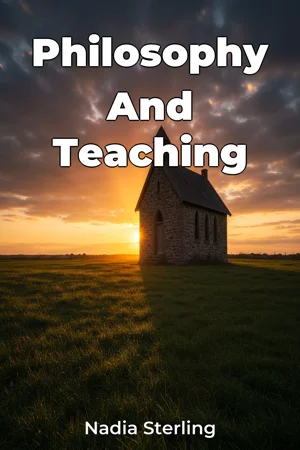
*Philosophy And Teaching* explores the deep connection between philosophical thought and educational practices. It examines how major philosophical schools, like idealism and pragmatism, have shaped teaching methods, curriculum design, and learning theories. A key insight is understanding these philosophical underpinnings allows educators to make more informed decisions about how and what they teach. For example, the book demonstrates how pragmatism's focus on experience has influenced the rise of project-based learning. This textbook provides a historical overview of educational philosophies, tracing their evolution from ancient Greece to today's debates. It highlights the impact of figures like Plato and John Dewey on educational thought. The book emphasizes the ethical dimensions of education, focusing on social justice, equity, and how education can foster responsible citizenship. It progresses logically, starting with fundamental concepts and moving to specific philosophical schools, using real-world examples to illustrate their influence. A unique aspect of *Philosophy And Teaching* is its focus on practical application, providing strategies for integrating philosophical insights into teaching. It uses accessible language to appeal to teacher education students, practicing teachers, and policymakers, offering a valuable resource for improving educational practices through critical analysis.
Book Details
ISBN
9788235245809
Publisher
Publifye AS
Your Licenses
You don't own any licenses for this book
Purchase a license below to unlock this book and download the EPUB.
Purchase License
Select a tier to unlock this book
Need bulk licensing?
Contact us for enterprise agreements.