
About This Book
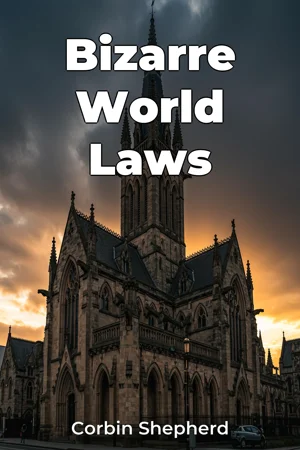
Ever wonder if there's a place where it's illegal to die? Or perhaps a country where flushing the toilet after 10 PM is against the law? Welcome to the world of "Bizarre World Laws," a journey through the oddest, most unexpected, and sometimes bewildering legal statutes that govern societies around the globe. This book delves into the perplexing realm of laws that seem to defy logic, exploring not just *what* these laws are, but *why* they exist and what they reveal about the cultures and histories that spawned them. "Bizarre World Laws" addresses the significance of understanding legal oddities beyond mere amusement. These laws, often remnants of historical events, social norms, or even political agendas, offer a unique lens through which to examine the values and priorities of different societies. They highlight the often-unintended consequences of governance and the enduring impact of the past on the present. Understanding these laws provides insights into cultural anthropology, political science, and the very nature of human decision-making. The context for many of these bizarre laws lies in the specific historical, social, and political environments in which they arose. What might seem absurd today often had a rational basis in its time, whether related to public health, economic policy, or social control. For example, laws regulating clothing or personal hygiene might have stemmed from attempts to prevent the spread of disease, while restrictions on certain activities on specific days could reflect religious or cultural observances. The central argument of this book is that these seemingly ridiculous laws are more than just curiosities. They are artifacts that illuminate the complex interplay between power, culture, and history. By examining these legal anomalies, we gain a deeper understanding of how societies function, how laws are created and enforced, and how cultural values are embedded in legal frameworks. The book is structured to provide a comprehensive overview of this topic. It begins by introducing the concept of bizarre laws and their significance in understanding societal values. The first major section explores laws related to public health and safety, examining instances where regulations, intended to protect citizens, have resulted in unusual or unexpected outcomes. The second section focuses on laws that reflect cultural or religious beliefs, showcasing how moral codes and traditions have been codified into legal statutes. The third major point analyzes laws related to economic activity, from regulations on commerce to restrictions on personal finance, revealing how laws reflect economic priorities. The book culminates with an exploration of the practical implications of these laws and the ongoing debates surrounding their relevance in the modern world. The book is supported by diverse evidence and meticulous research. It draws upon primary sources, including legal documents, historical records, and governmental reports, as well as secondary sources such as scholarly articles and journalistic accounts. The methodologies include comparative legal analysis and historical contextualization, providing a nuanced understanding of the laws and their origins. "Bizarre World Laws" also connects to other fields of study. It intersects with history by providing a glimpse into the past through the lens of legal history. It connects with sociology by exploring the social norms and values that underpin legal systems. It also intersects with political science by analyzing the power dynamics that shape laws and governance. This book distinguishes itself through its unique approach of using legal oddities as a key to understanding broader social and political phenomena. Rather than simply listing strange laws, it analyzes them to reveal insights into cultural values, historical events, and the nature of power. The tone is informative and engaging, aiming to make complex legal concepts accessible to a broad audience. The intended audience includes anyone interested in history, politics, sociology, or simply the peculiarities of human behavior. The book would be valuable to students, researchers, and general readers who are curious about the world and the diverse ways in which societies are governed. As a non-fiction work in the genres of politics and history, the book adheres to the conventions of accuracy, evidence-based analysis, and clear presentation. It aims to provide a reliable and informative account of the topic, while also engaging the reader with its entertaining and thought-provoking content. The scope of the book is intentionally broad, covering a wide range of countries and historical periods. However, it is limited to laws that are considered unusual or unexpected from a contemporary perspective. It does not aim to provide a comprehensive survey of all legal systems, but rather to highlight the most intriguing and revealing examples. The information in this book can be applied to a better understanding of current legal debates, cultural differences, and the historical roots of contemporary social issues. By examining the oddities of the past, readers can gain a new perspective on the present and the complex challenges facing societies around the world.
Ever wonder if there's a place where it's illegal to die? Or perhaps a country where flushing the toilet after 10 PM is against the law? Welcome to the world of "Bizarre World Laws," a journey through the oddest, most unexpected, and sometimes bewildering legal statutes that govern societies around the globe. This book delves into the perplexing realm of laws that seem to defy logic, exploring not just *what* these laws are, but *why* they exist and what they reveal about the cultures and histories that spawned them. "Bizarre World Laws" addresses the significance of understanding legal oddities beyond mere amusement. These laws, often remnants of historical events, social norms, or even political agendas, offer a unique lens through which to examine the values and priorities of different societies. They highlight the often-unintended consequences of governance and the enduring impact of the past on the present. Understanding these laws provides insights into cultural anthropology, political science, and the very nature of human decision-making. The context for many of these bizarre laws lies in the specific historical, social, and political environments in which they arose. What might seem absurd today often had a rational basis in its time, whether related to public health, economic policy, or social control. For example, laws regulating clothing or personal hygiene might have stemmed from attempts to prevent the spread of disease, while restrictions on certain activities on specific days could reflect religious or cultural observances. The central argument of this book is that these seemingly ridiculous laws are more than just curiosities. They are artifacts that illuminate the complex interplay between power, culture, and history. By examining these legal anomalies, we gain a deeper understanding of how societies function, how laws are created and enforced, and how cultural values are embedded in legal frameworks. The book is structured to provide a comprehensive overview of this topic. It begins by introducing the concept of bizarre laws and their significance in understanding societal values. The first major section explores laws related to public health and safety, examining instances where regulations, intended to protect citizens, have resulted in unusual or unexpected outcomes. The second section focuses on laws that reflect cultural or religious beliefs, showcasing how moral codes and traditions have been codified into legal statutes. The third major point analyzes laws related to economic activity, from regulations on commerce to restrictions on personal finance, revealing how laws reflect economic priorities. The book culminates with an exploration of the practical implications of these laws and the ongoing debates surrounding their relevance in the modern world. The book is supported by diverse evidence and meticulous research. It draws upon primary sources, including legal documents, historical records, and governmental reports, as well as secondary sources such as scholarly articles and journalistic accounts. The methodologies include comparative legal analysis and historical contextualization, providing a nuanced understanding of the laws and their origins. "Bizarre World Laws" also connects to other fields of study. It intersects with history by providing a glimpse into the past through the lens of legal history. It connects with sociology by exploring the social norms and values that underpin legal systems. It also intersects with political science by analyzing the power dynamics that shape laws and governance. This book distinguishes itself through its unique approach of using legal oddities as a key to understanding broader social and political phenomena. Rather than simply listing strange laws, it analyzes them to reveal insights into cultural values, historical events, and the nature of power. The tone is informative and engaging, aiming to make complex legal concepts accessible to a broad audience. The intended audience includes anyone interested in history, politics, sociology, or simply the peculiarities of human behavior. The book would be valuable to students, researchers, and general readers who are curious about the world and the diverse ways in which societies are governed. As a non-fiction work in the genres of politics and history, the book adheres to the conventions of accuracy, evidence-based analysis, and clear presentation. It aims to provide a reliable and informative account of the topic, while also engaging the reader with its entertaining and thought-provoking content. The scope of the book is intentionally broad, covering a wide range of countries and historical periods. However, it is limited to laws that are considered unusual or unexpected from a contemporary perspective. It does not aim to provide a comprehensive survey of all legal systems, but rather to highlight the most intriguing and revealing examples. The information in this book can be applied to a better understanding of current legal debates, cultural differences, and the historical roots of contemporary social issues. By examining the oddities of the past, readers can gain a new perspective on the present and the complex challenges facing societies around the world.
"Bizarre World Laws" explores the peculiar and often illogical legal statutes found across the globe, offering insights into the cultures and histories that shaped them. Going beyond mere amusement, it demonstrates how these unusual laws reflect societal values, historical events, and even political agendas. For instance, some historical laws regulating clothing were originally intended to prevent the spread of disease, showcasing how public health concerns have influenced legal frameworks. The book argues that these seemingly ridiculous laws are artifacts that illuminate the complex interplay between power, culture, and history. Structured to provide a comprehensive overview, the book begins with an introduction to the concept of bizarre laws and progresses through exploring laws related to public health, cultural beliefs, and economic activities. By examining these legal anomalies, readers gain a deeper understanding of how societies function, how laws are created and enforced, and how cultural values are embedded in legal frameworks, as well as the influence of cultural norms.
Book Details
ISBN
9788235245625
Publisher
Publifye AS
Your Licenses
You don't own any licenses for this book
Purchase a license below to unlock this book and download the EPUB.
Purchase License
Select a tier to unlock this book
Need bulk licensing?
Contact us for enterprise agreements.