
About This Book
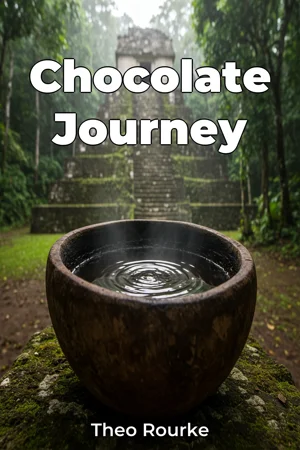
Did you know that the very substance we now associate with sweet indulgence was once a bitter ceremonial drink, revered by ancient civilizations? "Chocolate Journey" embarks on a comprehensive exploration of chocolate, tracing its transformation from a sacred Mesoamerican beverage to a globally consumed confectionery and a symbol of luxury. This book delves into the intricate history, cultural significance, and economic impact of chocolate, revealing the complex story behind this ubiquitous treat. The central argument of "Chocolate Journey" is that chocolate's evolution is a microcosm of global exchange, cultural adaptation, and economic transformation. This argument is important because it challenges simplistic narratives of commodity history, highlighting the active role of indigenous cultures in shaping chocolate's early development and the subsequent impact of colonialism and industrialization on its global trajectory. The book's structure will guide the reader through four distinct phases of chocolate's history. Part one introduces the earliest uses of cacao in Mesoamerican societies like the Maya and Aztec, detailing its religious significance, preparation methods, and role in social rituals. We will explore archaeological evidence, decipher ancient texts, and analyze artistic representations to understand the profound cultural importance of cacao. Part two examines the introduction of chocolate to Europe, focusing on its initial reception among the elite, the gradual refinement of recipes, and the development of chocolate houses as centers of social and political life. Part three investigates the industrial revolution's impact on chocolate production, from the mechanization of processing to the rise of mass-marketed confections, and the ethical considerations of labor and sourcing. Finally, part four analyzes the contemporary chocolate industry, exploring issues of sustainability, fair trade, and the ongoing quest for quality and innovation. "Chocolate Journey" draws on a wide range of primary and secondary sources, including archaeological reports, colonial-era documents, historical cookbooks, business records, and anthropological studies. Original research will be presented, including an analysis of previously untranslated colonial recipes showing the changes Europeans forced upon the original beverage and detailed sourcing from different regions of the world. The book connects to various fields, including anthropology, exploring the cultural significance of food; economics, analyzing the commodity chains and global trade networks associated with chocolate; and environmental studies, examining the ecological impact of cacao cultivation. These interdisciplinary connections enhance the book's argument by providing a holistic understanding of chocolate's multifaceted role in society. The tone of "Chocolate Journey" will be informative while engaging, combining rigorous historical analysis with compelling storytelling. The writing style aims to be accessible to a broad audience while maintaining scholarly accuracy. The book targets readers interested in food history, cultural studies, and the global economy. It will appeal to anyone curious about the origins of common foods and the complex forces that shape their production and consumption. Additionally, this book is tailored for fans of food writing who appreciate detailed research and a narrative approach. It will particularly resonate with those seeking a global perspective on the food we eat. As a work of history and food writing, "Chocolate Journey" adheres to the genre's conventions of meticulous research, accurate sourcing, and engaging narrative. It emphasizes factual accuracy and avoids sensationalism, presenting a balanced and nuanced account of chocolate's history. The book's scope is limited to the history of chocolate as a food and commodity, focusing primarily on cultural and economic factors. While the scientific aspects of cacao cultivation and the health effects of chocolate consumption are acknowledged, they are not the primary focus. The information presented in "Chocolate Journey" has real-world applications. Readers can use the knowledge gained to make more informed choices as consumers, supporting sustainable and ethical chocolate brands. Furthermore, the book's historical insights can inform discussions about food policy, trade relations, and cultural preservation. The book will touch upon controversies surrounding the chocolate industry, including issues of child labor, deforestation, and unfair trade practices. While not explicitly taking sides, the book will present different perspectives and encourage readers to critically evaluate the complex ethical dilemmas involved.
Did you know that the very substance we now associate with sweet indulgence was once a bitter ceremonial drink, revered by ancient civilizations? "Chocolate Journey" embarks on a comprehensive exploration of chocolate, tracing its transformation from a sacred Mesoamerican beverage to a globally consumed confectionery and a symbol of luxury. This book delves into the intricate history, cultural significance, and economic impact of chocolate, revealing the complex story behind this ubiquitous treat. The central argument of "Chocolate Journey" is that chocolate's evolution is a microcosm of global exchange, cultural adaptation, and economic transformation. This argument is important because it challenges simplistic narratives of commodity history, highlighting the active role of indigenous cultures in shaping chocolate's early development and the subsequent impact of colonialism and industrialization on its global trajectory. The book's structure will guide the reader through four distinct phases of chocolate's history. Part one introduces the earliest uses of cacao in Mesoamerican societies like the Maya and Aztec, detailing its religious significance, preparation methods, and role in social rituals. We will explore archaeological evidence, decipher ancient texts, and analyze artistic representations to understand the profound cultural importance of cacao. Part two examines the introduction of chocolate to Europe, focusing on its initial reception among the elite, the gradual refinement of recipes, and the development of chocolate houses as centers of social and political life. Part three investigates the industrial revolution's impact on chocolate production, from the mechanization of processing to the rise of mass-marketed confections, and the ethical considerations of labor and sourcing. Finally, part four analyzes the contemporary chocolate industry, exploring issues of sustainability, fair trade, and the ongoing quest for quality and innovation. "Chocolate Journey" draws on a wide range of primary and secondary sources, including archaeological reports, colonial-era documents, historical cookbooks, business records, and anthropological studies. Original research will be presented, including an analysis of previously untranslated colonial recipes showing the changes Europeans forced upon the original beverage and detailed sourcing from different regions of the world. The book connects to various fields, including anthropology, exploring the cultural significance of food; economics, analyzing the commodity chains and global trade networks associated with chocolate; and environmental studies, examining the ecological impact of cacao cultivation. These interdisciplinary connections enhance the book's argument by providing a holistic understanding of chocolate's multifaceted role in society. The tone of "Chocolate Journey" will be informative while engaging, combining rigorous historical analysis with compelling storytelling. The writing style aims to be accessible to a broad audience while maintaining scholarly accuracy. The book targets readers interested in food history, cultural studies, and the global economy. It will appeal to anyone curious about the origins of common foods and the complex forces that shape their production and consumption. Additionally, this book is tailored for fans of food writing who appreciate detailed research and a narrative approach. It will particularly resonate with those seeking a global perspective on the food we eat. As a work of history and food writing, "Chocolate Journey" adheres to the genre's conventions of meticulous research, accurate sourcing, and engaging narrative. It emphasizes factual accuracy and avoids sensationalism, presenting a balanced and nuanced account of chocolate's history. The book's scope is limited to the history of chocolate as a food and commodity, focusing primarily on cultural and economic factors. While the scientific aspects of cacao cultivation and the health effects of chocolate consumption are acknowledged, they are not the primary focus. The information presented in "Chocolate Journey" has real-world applications. Readers can use the knowledge gained to make more informed choices as consumers, supporting sustainable and ethical chocolate brands. Furthermore, the book's historical insights can inform discussions about food policy, trade relations, and cultural preservation. The book will touch upon controversies surrounding the chocolate industry, including issues of child labor, deforestation, and unfair trade practices. While not explicitly taking sides, the book will present different perspectives and encourage readers to critically evaluate the complex ethical dilemmas involved.
"Chocolate Journey" explores the captivating history of chocolate, tracing its path from a bitter, sacred drink in Mesoamerica to the globally beloved confection it is today. The book reveals how chocolate's story reflects global exchange, cultural adaptations, and economic shifts throughout history. Early chapters detail the religious significance of cacao among the Maya and Aztec, highlighting its role in rituals and social structures, while later sections examine the mechanization of chocolate production during the Industrial Revolution and the ethical implications of labor and sourcing. The book uniquely presents chocolate's evolution as a microcosm of global processes, challenging simplified narratives of commodity history. For example, the book highlights how Europeans changed the original beverage. By drawing on archaeological reports, colonial-era documents, and business records, "Chocolate Journey" provides a comprehensive account of chocolate's multifaceted role in society, including current explorations of sustainability and fair trade practices. The book progresses chronologically, guiding readers through distinct phases of chocolate's history, from its ancient origins to the modern industry. This approach allows for a detailed examination of chocolate's cultural, economic, and environmental impacts, making it valuable for those interested in food history, cultural studies, and the global economy.
Book Details
ISBN
9788235245458
Publisher
Publifye AS
Your Licenses
You don't own any licenses for this book
Purchase a license below to unlock this book and download the EPUB.
Purchase License
Select a tier to unlock this book
Need bulk licensing?
Contact us for enterprise agreements.