
About This Book
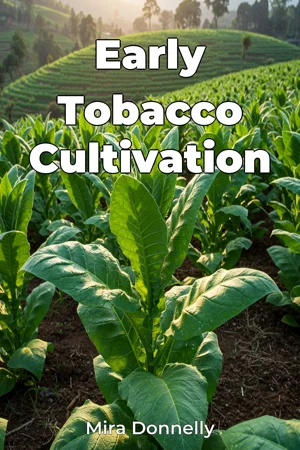
How did a plant, initially revered for its spiritual and medicinal properties, become a global commodity with profound social and economic consequences? "Early Tobacco Cultivation" delves into the intricate history of tobacco, focusing on its origins and early uses within indigenous cultures of the Americas. This book seeks to illuminate the pivotal role that tobacco played in shaping these societies long before European contact transformed its destiny. The central argument of this book is that understanding the indigenous relationship with tobacco is crucial for comprehending its subsequent global trajectory. We aim to demonstrate that tobacco was not merely a recreational substance, but a deeply integrated element of spiritual, medicinal, and social life for many native populations. Analyzing these early cultivation practices and belief systems provides a vital context for understanding the complex history of tobacco's global spread and its far-reaching impacts. This book navigates the following key themes: the botanical origins and early cultivation techniques of tobacco; its central place in indigenous spiritual practices, including ceremonies, rituals, and shamanic traditions; and its medicinal applications for treating various ailments and promoting overall well-being. These topics are vital because they provide a counter-narrative to the dominant perspective that often overlooks or minimizes the sophisticated understanding and sustainable practices employed by indigenous peoples in their cultivation and use of this powerful plant. "Early Tobacco Cultivation" will explore these themes through a combination of archaeological evidence, ethnobotanical studies, and historical accounts from early European explorers and missionaries. We draw upon primary sources, including indigenous oral traditions (where available and ethically appropriate), early colonial documents, and botanical analyses of ancient tobacco remains recovered from archaeological sites. This multidisciplinary approach allows for a comprehensive understanding of tobacco's significance in pre-Columbian America. The book is structured in three parts. First, we introduce readers to the botanical origins of tobacco and its early cultivation. This section examines the diverse varieties of tobacco and their unique properties. The second part explores the spiritual dimensions of tobacco use, revealing how it was employed in sacred ceremonies, as a conduit for communication with the spirit world, and as an integral component of indigenous cosmology. The third section is dedicated to the medicinal applications of tobacco, detailing how it was used to treat wounds, alleviate pain, and address a range of health conditions. The book culminates by considering the long-term implications of indigenous tobacco cultivation practices and how these practices contrast with later industrial approaches, setting the stage for understanding the global tobacco industry's ecological and social impact. "Early Tobacco Cultivation" connects to various fields, including anthropology, botany, religious studies, and medical history. This interdisciplinary approach enhances the book's argument by providing a more holistic view of tobacco's influence on indigenous societies. The book's unique perspective lies in its focus on indigenous knowledge and practices, challenging Eurocentric narratives that often dominate discussions about tobacco's history. Written in an accessible yet scholarly style, this book is aimed at students, researchers, and anyone interested in the history of tobacco, indigenous cultures, or ethnobotany. It offers valuable insights into the complex relationship between humans and plants and prompts readers to reconsider their understanding of tobacco's past and present. While the book focuses on the pre-Columbian era and the early contact period, it acknowledges the limitations of available data for certain regions and cultural groups. It does not delve into the details of tobacco cultivation after the Columbian Exchange. By exploring the early history of tobacco cultivation and use, "Early Tobacco Cultivation" provides a foundation for understanding its lasting impact on global health, economies, and cultures. It addresses the ongoing debates surrounding cultural appropriation and the importance of recognizing indigenous intellectual property rights in the context of plant-based knowledge.
How did a plant, initially revered for its spiritual and medicinal properties, become a global commodity with profound social and economic consequences? "Early Tobacco Cultivation" delves into the intricate history of tobacco, focusing on its origins and early uses within indigenous cultures of the Americas. This book seeks to illuminate the pivotal role that tobacco played in shaping these societies long before European contact transformed its destiny. The central argument of this book is that understanding the indigenous relationship with tobacco is crucial for comprehending its subsequent global trajectory. We aim to demonstrate that tobacco was not merely a recreational substance, but a deeply integrated element of spiritual, medicinal, and social life for many native populations. Analyzing these early cultivation practices and belief systems provides a vital context for understanding the complex history of tobacco's global spread and its far-reaching impacts. This book navigates the following key themes: the botanical origins and early cultivation techniques of tobacco; its central place in indigenous spiritual practices, including ceremonies, rituals, and shamanic traditions; and its medicinal applications for treating various ailments and promoting overall well-being. These topics are vital because they provide a counter-narrative to the dominant perspective that often overlooks or minimizes the sophisticated understanding and sustainable practices employed by indigenous peoples in their cultivation and use of this powerful plant. "Early Tobacco Cultivation" will explore these themes through a combination of archaeological evidence, ethnobotanical studies, and historical accounts from early European explorers and missionaries. We draw upon primary sources, including indigenous oral traditions (where available and ethically appropriate), early colonial documents, and botanical analyses of ancient tobacco remains recovered from archaeological sites. This multidisciplinary approach allows for a comprehensive understanding of tobacco's significance in pre-Columbian America. The book is structured in three parts. First, we introduce readers to the botanical origins of tobacco and its early cultivation. This section examines the diverse varieties of tobacco and their unique properties. The second part explores the spiritual dimensions of tobacco use, revealing how it was employed in sacred ceremonies, as a conduit for communication with the spirit world, and as an integral component of indigenous cosmology. The third section is dedicated to the medicinal applications of tobacco, detailing how it was used to treat wounds, alleviate pain, and address a range of health conditions. The book culminates by considering the long-term implications of indigenous tobacco cultivation practices and how these practices contrast with later industrial approaches, setting the stage for understanding the global tobacco industry's ecological and social impact. "Early Tobacco Cultivation" connects to various fields, including anthropology, botany, religious studies, and medical history. This interdisciplinary approach enhances the book's argument by providing a more holistic view of tobacco's influence on indigenous societies. The book's unique perspective lies in its focus on indigenous knowledge and practices, challenging Eurocentric narratives that often dominate discussions about tobacco's history. Written in an accessible yet scholarly style, this book is aimed at students, researchers, and anyone interested in the history of tobacco, indigenous cultures, or ethnobotany. It offers valuable insights into the complex relationship between humans and plants and prompts readers to reconsider their understanding of tobacco's past and present. While the book focuses on the pre-Columbian era and the early contact period, it acknowledges the limitations of available data for certain regions and cultural groups. It does not delve into the details of tobacco cultivation after the Columbian Exchange. By exploring the early history of tobacco cultivation and use, "Early Tobacco Cultivation" provides a foundation for understanding its lasting impact on global health, economies, and cultures. It addresses the ongoing debates surrounding cultural appropriation and the importance of recognizing indigenous intellectual property rights in the context of plant-based knowledge.
"Early Tobacco Cultivation" explores the rich history of tobacco, focusing on its central role in pre-Columbian indigenous cultures. Far from being simply a recreational substance, tobacco was deeply embedded in the spiritual, medicinal, and social fabrics of these societies. The book argues that understanding this indigenous relationship is crucial for comprehending tobacco's subsequent global trajectory. The book examines tobacco's botanical origins and early cultivation techniques, highlighting the diverse varieties and their unique properties. It uncovers how tobacco served as a conduit for communication with the spirit world and was integral to indigenous cosmology. It also details the medicinal uses of tobacco, from treating wounds to alleviating pain, revealing a sophisticated understanding of the plant's properties. Through archaeological evidence, ethnobotanical studies, and historical accounts, "Early Tobacco Cultivation" presents a comprehensive view of tobacco's significance in pre-Columbian America. Structured in three parts, the book progresses from botanical origins to spiritual dimensions and medicinal applications, contrasting indigenous practices with later industrial approaches. Ultimately, this approach provides crucial context for understanding the complex history and far-reaching impacts of tobacco.
Book Details
ISBN
9788235245328
Publisher
Publifye AS
Your Licenses
You don't own any licenses for this book
Purchase a license below to unlock this book and download the EPUB.
Purchase License
Select a tier to unlock this book
Need bulk licensing?
Contact us for enterprise agreements.