
About This Book
Can the world feed itself in the face of climate change, population growth, and geopolitical instability? "Food Scarcity" delves into this pressing question, examining the complex web of factors that contribute to food shortages around the globe and exploring potential pathways toward sustainable food security. This book aims to provide a comprehensive understanding of the multifaceted challenges and potential solutions to one of the most critical issues facing humanity. The book focuses on three key areas: the causes of food shortages, their global impact, and long-term solutions for ensuring food security. Understanding the root causes – from environmental degradation and climate change to socioeconomic inequalities and political conflicts – is paramount. This understanding allows us to grasp the profound and far-reaching effects of food scarcity, which extend beyond mere hunger to encompass economic instability, social unrest, and health crises. Ultimately, the book will address the critical need for sustainable, long-term solutions involving technological innovation, policy changes, and community-based initiatives. "Food Scarcity" provides a historical and scientific context, exploring how agricultural practices have evolved, the impact of industrialization on food production, and the growing threat of climate change. It examines the Green Revolution's promises and pitfalls, alongside contemporary issues like genetically modified organisms (GMOs) and the rise of localized food systems. Readers will gain essential background knowledge to comprehend the nuanced arguments presented throughout the book. The central argument of "Food Scarcity" is that food security is not merely a matter of increasing production, but rather a complex issue that demands a holistic, interdisciplinary approach. It argues that solutions must address the underlying causes of inequality, promote sustainable agricultural practices, and foster resilient food systems capable of withstanding future shocks. This argument is important because conventional approaches often fail to address the systemic problems that perpetuate food scarcity. The book begins by introducing the key concepts and defining food security in its various dimensions. It then develops its arguments through three major sections. The first examines the environmental factors contributing to food shortages, including climate change, soil degradation, and water scarcity. The second analyzes the socioeconomic and political drivers, such as poverty, conflict, and trade policies. The third part focuses on solutions, exploring innovative agricultural technologies, sustainable farming practices, and policy interventions aimed at building resilient food systems. The book culminates with a discussion of the practical implications of food scarcity, offering recommendations for individuals, communities, and policymakers to address this global challenge. The evidence presented in "Food Scarcity" draws upon a wide range of sources, including scientific studies, government reports, and case studies from around the world. It utilizes data from organizations like the Food and Agriculture Organization (FAO), the World Bank, and the Intergovernmental Panel on Climate Change (IPCC) to support its arguments. The book also incorporates firsthand accounts and ethnographic research to illustrate the lived experiences of individuals affected by food scarcity. "Food Scarcity" connects to several other fields, including environmental science, economics, and political science. It explores the environmental impacts of agriculture, the economic consequences of food price volatility, and the political dimensions of food aid and trade. These interdisciplinary connections enrich the analysis and provide a more complete understanding of the complex issue of food scarcity. This book distinguishes itself by offering a balanced and nuanced perspective on food scarcity, avoiding simplistic solutions and acknowledging the trade-offs involved in different approaches. It emphasizes the importance of community-based solutions and the need for participatory decision-making processes. The tone of "Food Scarcity" is both informative and engaging, presenting complex information in an accessible and thought-provoking manner. The writing style is clear and concise, making it suitable for a broad audience. "Food Scarcity" is intended for anyone interested in understanding and addressing the global challenge of food security, including students, policymakers, researchers, and concerned citizens. It offers valuable insights into the causes of food shortages, their impacts, and potential solutions. As a work of environmental and current events non-fiction, the book adheres to the genre's emphasis on factual accuracy, clear explanations, and evidence-based arguments. It aims to inform and educate readers about a critical global issue, while also inspiring action and promoting dialogue. The scope of "Food Scarcity" is global, examining food shortages in different regions of the world and exploring the interconnectedness of food systems. It intentionally limits its focus to the causes, impacts, and solutions of food scarcity, without delving into related issues such as nutrition or public health in great detail. The information presented in "Food Scarcity" can be applied practically by readers in various ways. Individuals can make informed choices about their food consumption, support sustainable agriculture practices, and advocate for policy changes that promote food security. Communities can implement local food initiatives and build resilient food systems. Policymakers can use the book's insights to develop effective strategies for addressing food scarcity at the national and international levels. "Food Scarcity" also addresses ongoing debates in the field of food security, such as the role of GMOs in increasing food production and the effectiveness of different approaches to food aid. It acknowledges these controversies and presents different perspectives, allowing readers to form their own informed opinions.
Can the world feed itself in the face of climate change, population growth, and geopolitical instability? "Food Scarcity" delves into this pressing question, examining the complex web of factors that contribute to food shortages around the globe and exploring potential pathways toward sustainable food security. This book aims to provide a comprehensive understanding of the multifaceted challenges and potential solutions to one of the most critical issues facing humanity. The book focuses on three key areas: the causes of food shortages, their global impact, and long-term solutions for ensuring food security. Understanding the root causes – from environmental degradation and climate change to socioeconomic inequalities and political conflicts – is paramount. This understanding allows us to grasp the profound and far-reaching effects of food scarcity, which extend beyond mere hunger to encompass economic instability, social unrest, and health crises. Ultimately, the book will address the critical need for sustainable, long-term solutions involving technological innovation, policy changes, and community-based initiatives. "Food Scarcity" provides a historical and scientific context, exploring how agricultural practices have evolved, the impact of industrialization on food production, and the growing threat of climate change. It examines the Green Revolution's promises and pitfalls, alongside contemporary issues like genetically modified organisms (GMOs) and the rise of localized food systems. Readers will gain essential background knowledge to comprehend the nuanced arguments presented throughout the book. The central argument of "Food Scarcity" is that food security is not merely a matter of increasing production, but rather a complex issue that demands a holistic, interdisciplinary approach. It argues that solutions must address the underlying causes of inequality, promote sustainable agricultural practices, and foster resilient food systems capable of withstanding future shocks. This argument is important because conventional approaches often fail to address the systemic problems that perpetuate food scarcity. The book begins by introducing the key concepts and defining food security in its various dimensions. It then develops its arguments through three major sections. The first examines the environmental factors contributing to food shortages, including climate change, soil degradation, and water scarcity. The second analyzes the socioeconomic and political drivers, such as poverty, conflict, and trade policies. The third part focuses on solutions, exploring innovative agricultural technologies, sustainable farming practices, and policy interventions aimed at building resilient food systems. The book culminates with a discussion of the practical implications of food scarcity, offering recommendations for individuals, communities, and policymakers to address this global challenge. The evidence presented in "Food Scarcity" draws upon a wide range of sources, including scientific studies, government reports, and case studies from around the world. It utilizes data from organizations like the Food and Agriculture Organization (FAO), the World Bank, and the Intergovernmental Panel on Climate Change (IPCC) to support its arguments. The book also incorporates firsthand accounts and ethnographic research to illustrate the lived experiences of individuals affected by food scarcity. "Food Scarcity" connects to several other fields, including environmental science, economics, and political science. It explores the environmental impacts of agriculture, the economic consequences of food price volatility, and the political dimensions of food aid and trade. These interdisciplinary connections enrich the analysis and provide a more complete understanding of the complex issue of food scarcity. This book distinguishes itself by offering a balanced and nuanced perspective on food scarcity, avoiding simplistic solutions and acknowledging the trade-offs involved in different approaches. It emphasizes the importance of community-based solutions and the need for participatory decision-making processes. The tone of "Food Scarcity" is both informative and engaging, presenting complex information in an accessible and thought-provoking manner. The writing style is clear and concise, making it suitable for a broad audience. "Food Scarcity" is intended for anyone interested in understanding and addressing the global challenge of food security, including students, policymakers, researchers, and concerned citizens. It offers valuable insights into the causes of food shortages, their impacts, and potential solutions. As a work of environmental and current events non-fiction, the book adheres to the genre's emphasis on factual accuracy, clear explanations, and evidence-based arguments. It aims to inform and educate readers about a critical global issue, while also inspiring action and promoting dialogue. The scope of "Food Scarcity" is global, examining food shortages in different regions of the world and exploring the interconnectedness of food systems. It intentionally limits its focus to the causes, impacts, and solutions of food scarcity, without delving into related issues such as nutrition or public health in great detail. The information presented in "Food Scarcity" can be applied practically by readers in various ways. Individuals can make informed choices about their food consumption, support sustainable agriculture practices, and advocate for policy changes that promote food security. Communities can implement local food initiatives and build resilient food systems. Policymakers can use the book's insights to develop effective strategies for addressing food scarcity at the national and international levels. "Food Scarcity" also addresses ongoing debates in the field of food security, such as the role of GMOs in increasing food production and the effectiveness of different approaches to food aid. It acknowledges these controversies and presents different perspectives, allowing readers to form their own informed opinions.
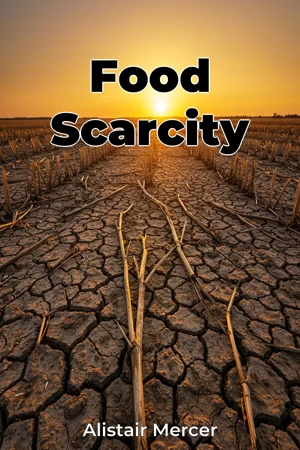
"Food Scarcity" tackles the critical global issue of how to feed the world amidst climate change, population growth, and geopolitical instability. It explores the multifaceted causes of food shortages, their widespread impacts, and potential pathways towards sustainable food security. The book reveals that food scarcity isn't solely about production quantities but also involves intricate factors like environmental degradation and socioeconomic inequalities. For example, climate change-induced droughts can devastate crop yields, while political conflicts disrupt supply chains, exacerbating food shortages. The book uniquely emphasizes a holistic, interdisciplinary approach, highlighting the need for solutions that address underlying inequalities and promote resilient food systems. It progresses by first defining food security and then examining environmental factors like climate change and socioeconomic drivers like poverty. The book then focuses on solutions, exploring innovative technologies and policy interventions. By presenting a balanced perspective and utilizing data from reputable organizations, "Food Scarcity" offers valuable insights for students, policymakers, and concerned citizens interested in understanding and addressing this pressing global challenge.
Book Details
ISBN
9788235244963
Publisher
Publifye AS
Your Licenses
You don't own any licenses for this book
Purchase a license below to unlock this book and download the EPUB.
Purchase License
Select a tier to unlock this book
Need bulk licensing?
Contact us for enterprise agreements.