
About This Book
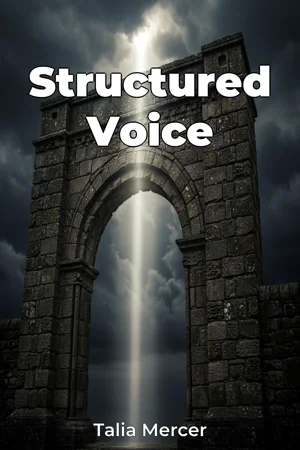
Have you ever struggled to articulate your ideas in writing, feeling as though your essays lack the persuasive power you intend? "Structured Voice" addresses this challenge directly, providing a comprehensive guide to leveraging structured writing techniques to significantly strengthen logical arguments within essays. This book recognizes that effective communication, especially in academic and professional settings, hinges on the ability to present ideas clearly, concisely, and convincingly. The core of "Structured Voice" revolves around three key concepts: thesis construction, paragraph coherence, and logical progression. Thesis construction explores the art of crafting a strong, focused thesis statement that serves as the backbone of any compelling argument. Paragraph coherence delves into the mechanics of building individual paragraphs that not only support the thesis but also flow seamlessly, creating a unified and persuasive block of text. Logical progression examines how to arrange paragraphs and ideas in a manner that guides the reader through a clear and compelling line of reasoning, ultimately leading to a well-supported conclusion. These topics are important because they provide a framework for transforming unstructured thoughts into potent, convincing prose. Understanding the principles of rhetoric and basic essay structure is beneficial, though not mandatory. "Structured Voice" begins with a review of fundamental essay components. It then builds upon these basics to explore more advanced structuring techniques. The central argument of "Structured Voice" is that structured writing is not merely about following a set of rules, but rather about consciously employing specific techniques to enhance the clarity, persuasiveness, and overall impact of one's arguments. This argument is important because it shifts the focus from rote memorization of writing conventions to a more dynamic and strategic approach to essay composition. The book aims to equip readers with the tools and understanding necessary to construct arguments that are not only logically sound but also rhetorically effective. The book begins by introducing the foundational principles of structured writing and their connection to logical argumentation. It then delves into the three core concepts mentioned earlier: thesis construction, paragraph coherence, and logical progression. Each section provides detailed explanations, examples, and practical exercises to help readers master these techniques. The book culminates in a synthesis of these concepts, demonstrating how they can be applied holistically to construct compelling essays across various disciplines. It concludes with practical guidelines and strategies for implementing structured writing in real-world scenarios, from academic assignments to professional reports. To support its arguments, "Structured Voice" draws upon a wide range of sources, including examples of well-structured essays from various disciplines, analyses of rhetorical techniques, and insights from writing pedagogy research. The book also presents original research data, including a comparative analysis of essays written using structured versus unstructured approaches, demonstrating the measurable impact of structured writing on argument strength and reader comprehension. "Structured Voice" intentionally connects to fields beyond language arts. Firstly, it draws from the field of logic, using principles of deductive and inductive reasoning to inform its approach to argument construction. Secondly, it integrates elements of cognitive psychology, exploring how structured writing can enhance reader comprehension and retention. Finally, the book considers the principles of effective communication found within business and professional communication studies, highlighting the value of clear and persuasive writing in various professional contexts. The unique approach of "Structured Voice" lies in its emphasis on the practical application of structured writing techniques. It moves beyond theoretical discussions to provide readers with concrete strategies and tools they can use to immediately improve their writing. The writing style is direct, accessible, and engaging. Complex concepts are explained in a clear and concise manner, making the book suitable for a wide range of readers. The target audience for "Structured Voice" includes students, academics, and professionals who seek to improve their writing skills and enhance their ability to construct persuasive arguments. It is particularly valuable for individuals who struggle with organizing their thoughts or presenting their ideas in a clear and convincing manner. The book aligns with the expectations of language arts and academic writing genres by emphasizing clarity, precision, and logical rigor. The book's scope is intentionally limited to the application of structured writing techniques in essay composition. It does not delve into other aspects of writing, such as grammar or style, which are assumed to be within the reader's existing skillset. The information can be practically applied to academic essays, professional reports, grant proposals, and any other form of written communication where clear and convincing argumentation is essential. "Structured Voice" addresses the ongoing debate about the role of prescriptive grammar versus rhetorical effectiveness in writing instruction. By focusing on structured writing, the book offers a middle ground that emphasizes both clarity and persuasion.
Have you ever struggled to articulate your ideas in writing, feeling as though your essays lack the persuasive power you intend? "Structured Voice" addresses this challenge directly, providing a comprehensive guide to leveraging structured writing techniques to significantly strengthen logical arguments within essays. This book recognizes that effective communication, especially in academic and professional settings, hinges on the ability to present ideas clearly, concisely, and convincingly. The core of "Structured Voice" revolves around three key concepts: thesis construction, paragraph coherence, and logical progression. Thesis construction explores the art of crafting a strong, focused thesis statement that serves as the backbone of any compelling argument. Paragraph coherence delves into the mechanics of building individual paragraphs that not only support the thesis but also flow seamlessly, creating a unified and persuasive block of text. Logical progression examines how to arrange paragraphs and ideas in a manner that guides the reader through a clear and compelling line of reasoning, ultimately leading to a well-supported conclusion. These topics are important because they provide a framework for transforming unstructured thoughts into potent, convincing prose. Understanding the principles of rhetoric and basic essay structure is beneficial, though not mandatory. "Structured Voice" begins with a review of fundamental essay components. It then builds upon these basics to explore more advanced structuring techniques. The central argument of "Structured Voice" is that structured writing is not merely about following a set of rules, but rather about consciously employing specific techniques to enhance the clarity, persuasiveness, and overall impact of one's arguments. This argument is important because it shifts the focus from rote memorization of writing conventions to a more dynamic and strategic approach to essay composition. The book aims to equip readers with the tools and understanding necessary to construct arguments that are not only logically sound but also rhetorically effective. The book begins by introducing the foundational principles of structured writing and their connection to logical argumentation. It then delves into the three core concepts mentioned earlier: thesis construction, paragraph coherence, and logical progression. Each section provides detailed explanations, examples, and practical exercises to help readers master these techniques. The book culminates in a synthesis of these concepts, demonstrating how they can be applied holistically to construct compelling essays across various disciplines. It concludes with practical guidelines and strategies for implementing structured writing in real-world scenarios, from academic assignments to professional reports. To support its arguments, "Structured Voice" draws upon a wide range of sources, including examples of well-structured essays from various disciplines, analyses of rhetorical techniques, and insights from writing pedagogy research. The book also presents original research data, including a comparative analysis of essays written using structured versus unstructured approaches, demonstrating the measurable impact of structured writing on argument strength and reader comprehension. "Structured Voice" intentionally connects to fields beyond language arts. Firstly, it draws from the field of logic, using principles of deductive and inductive reasoning to inform its approach to argument construction. Secondly, it integrates elements of cognitive psychology, exploring how structured writing can enhance reader comprehension and retention. Finally, the book considers the principles of effective communication found within business and professional communication studies, highlighting the value of clear and persuasive writing in various professional contexts. The unique approach of "Structured Voice" lies in its emphasis on the practical application of structured writing techniques. It moves beyond theoretical discussions to provide readers with concrete strategies and tools they can use to immediately improve their writing. The writing style is direct, accessible, and engaging. Complex concepts are explained in a clear and concise manner, making the book suitable for a wide range of readers. The target audience for "Structured Voice" includes students, academics, and professionals who seek to improve their writing skills and enhance their ability to construct persuasive arguments. It is particularly valuable for individuals who struggle with organizing their thoughts or presenting their ideas in a clear and convincing manner. The book aligns with the expectations of language arts and academic writing genres by emphasizing clarity, precision, and logical rigor. The book's scope is intentionally limited to the application of structured writing techniques in essay composition. It does not delve into other aspects of writing, such as grammar or style, which are assumed to be within the reader's existing skillset. The information can be practically applied to academic essays, professional reports, grant proposals, and any other form of written communication where clear and convincing argumentation is essential. "Structured Voice" addresses the ongoing debate about the role of prescriptive grammar versus rhetorical effectiveness in writing instruction. By focusing on structured writing, the book offers a middle ground that emphasizes both clarity and persuasion.
"Structured Voice" offers a comprehensive guide to improving writing skills through structured writing, focusing on constructing logical arguments in essays. The book emphasizes that effective communication hinges on the ability to present ideas clearly and convincingly. It uniquely highlights how consciously employing specific techniques enhances the clarity and persuasiveness of arguments, shifting focus from rote memorization to a strategic approach. Did you know structured writing can significantly improve reader comprehension? The book progresses across chapters by first reviewing fundamental essay components, then delving into thesis construction, paragraph coherence, and logical progression, providing examples and exercises for each. It argues that structured writing isn't just about rules, but about enhancing the impact of arguments. The book supports its claims by drawing on rhetorical techniques and writing pedagogy research.
Book Details
ISBN
9788235244888
Publisher
Publifye AS
Your Licenses
You don't own any licenses for this book
Purchase a license below to unlock this book and download the EPUB.
Purchase License
Select a tier to unlock this book
Need bulk licensing?
Contact us for enterprise agreements.