
About This Book
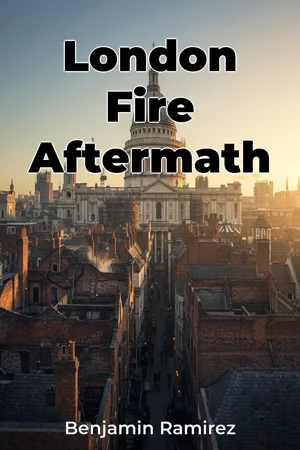
What if a city's greatest catastrophe became its most significant catalyst for progress? "London Fire Aftermath" explores the transformation of London following the devastating Great Fire of 1666, focusing not merely on the physical rebuilding, but on the profound architectural and civic reforms that reshaped the city's identity and influenced urban planning for centuries to come. We will examine the architectural innovations, the reshaping of civic governance, and the far-reaching social consequences of this pivotal moment in London’s history. These aspects are crucial because they demonstrate how disaster can spur ingenuity, how urban environments reflect societal values, and how planning decisions have lasting legacies. This book delves into the historical, social, and political context surrounding the fire and its subsequent rebuilding. While readers will benefit from a basic understanding of 17th-century London and the reign of Charles II, no specialized knowledge is required. We will provide background on the pre-fire urban landscape, the socio-political climate, and the immediate aftermath of the disaster, setting the stage for understanding the scope of the reforms. The central argument of "London Fire Aftermath" is that the rebuilding of London was not simply a restoration, but a deliberate act of urban reinvention that reflected new ideas about civic order, public health, and architectural aesthetics. It argues that the fire provided an unparalleled opportunity to implement progressive urban planning concepts, shaping London into a more functional and aesthetically coherent city, though not without significant social costs and enduring inequalities. Understanding this transformation is essential because it offers valuable lessons about resilience, adaptation, and the complex interplay between urban design and societal needs in the face of large-scale disaster. The book will initially introduce the pre-fire London, the events of 1666, and the initial responses to the crisis. It will then be divided into three major sections. First, it examines the architectural innovations, primarily focusing on the work of Sir Christopher Wren and other key architects, analyzing the new building codes, the shift towards brick and stone construction, and the design of new public spaces and churches. Second, it explores the civic reforms, including the restructuring of city governance, the implementation of new regulations regarding sanitation and fire safety, and the development of a more efficient system for property ownership and dispute resolution. Third, it assesses the social consequences, investigating how the rebuilding process affected different social classes, the displacement of communities, and the emergence of new social dynamics within the reformed urban environment. The book culminates by assessing the long-term impact of these reforms on London and their influence on subsequent urban planning initiatives worldwide. The evidence presented in "London Fire Aftermath" will draw upon a variety of primary sources, including original architectural plans, city ordinances, personal letters and diaries, and contemporary accounts of the rebuilding process. It will also incorporate secondary sources such as scholarly articles, architectural histories, and sociological analyses of urban development. We will utilize digital mapping and spatial analysis techniques to visualize the changes in London's urban fabric. This book intersects with several other fields of study, including sociology (exploring the social impact of urban renewal), political science (analyzing the role of government in urban planning), and environmental studies (examining the impact of building materials and urban design on public health). These connections enrich the analysis by providing a more holistic understanding of the rebuilding process. "London Fire Aftermath" offers a unique perspective by focusing not only on the physical reconstruction, but also on the less tangible, yet equally significant, changes in civic governance and social structures. It analyzes the complex interplay between architectural design, political decision-making, and social forces in shaping the post-fire city. The book adopts an academic yet accessible tone, aiming to engage both scholars and general readers interested in urban history, architecture, and social change. The writing style prioritizes clarity and precision while maintaining an engaging narrative flow. The target audience includes students and scholars of architecture, urban planning, and history, as well as general readers interested in the history of London and the impact of major historical events on urban development. This book provides a valuable resource for understanding the complex processes of urban transformation and the enduring legacy of the Great Fire. As a work of history, "London Fire Aftermath" adheres to the conventions of historical scholarship, including rigorous sourcing, meticulous documentation, and objective analysis. As a work of architectural history, it also includes visual analysis, architectural details, and descriptions of building techniques. The book's scope is limited to the period immediately following the fire and the subsequent decades of rebuilding. It does not delve into the long-term history of London in subsequent centuries, focusing instead on the specific reforms and innovations that arose directly from the Great Fire. The lessons gleaned from the London Fire Aftermath have direct, real-world applications today. Understanding the challenges and opportunities presented by large-scale urban disasters can inform contemporary urban planning strategies for resilience, sustainability, and social equity. While most accounts celebrate Wren's vision, "London Fire Aftermath" will also address the debates surrounding the social and economic consequences of the rebuilding, including the displacement of poorer residents and the unequal distribution of benefits. This nuanced approach acknowledges the complexities and controversies inherent in any large-scale urban transformation.
What if a city's greatest catastrophe became its most significant catalyst for progress? "London Fire Aftermath" explores the transformation of London following the devastating Great Fire of 1666, focusing not merely on the physical rebuilding, but on the profound architectural and civic reforms that reshaped the city's identity and influenced urban planning for centuries to come. We will examine the architectural innovations, the reshaping of civic governance, and the far-reaching social consequences of this pivotal moment in London’s history. These aspects are crucial because they demonstrate how disaster can spur ingenuity, how urban environments reflect societal values, and how planning decisions have lasting legacies. This book delves into the historical, social, and political context surrounding the fire and its subsequent rebuilding. While readers will benefit from a basic understanding of 17th-century London and the reign of Charles II, no specialized knowledge is required. We will provide background on the pre-fire urban landscape, the socio-political climate, and the immediate aftermath of the disaster, setting the stage for understanding the scope of the reforms. The central argument of "London Fire Aftermath" is that the rebuilding of London was not simply a restoration, but a deliberate act of urban reinvention that reflected new ideas about civic order, public health, and architectural aesthetics. It argues that the fire provided an unparalleled opportunity to implement progressive urban planning concepts, shaping London into a more functional and aesthetically coherent city, though not without significant social costs and enduring inequalities. Understanding this transformation is essential because it offers valuable lessons about resilience, adaptation, and the complex interplay between urban design and societal needs in the face of large-scale disaster. The book will initially introduce the pre-fire London, the events of 1666, and the initial responses to the crisis. It will then be divided into three major sections. First, it examines the architectural innovations, primarily focusing on the work of Sir Christopher Wren and other key architects, analyzing the new building codes, the shift towards brick and stone construction, and the design of new public spaces and churches. Second, it explores the civic reforms, including the restructuring of city governance, the implementation of new regulations regarding sanitation and fire safety, and the development of a more efficient system for property ownership and dispute resolution. Third, it assesses the social consequences, investigating how the rebuilding process affected different social classes, the displacement of communities, and the emergence of new social dynamics within the reformed urban environment. The book culminates by assessing the long-term impact of these reforms on London and their influence on subsequent urban planning initiatives worldwide. The evidence presented in "London Fire Aftermath" will draw upon a variety of primary sources, including original architectural plans, city ordinances, personal letters and diaries, and contemporary accounts of the rebuilding process. It will also incorporate secondary sources such as scholarly articles, architectural histories, and sociological analyses of urban development. We will utilize digital mapping and spatial analysis techniques to visualize the changes in London's urban fabric. This book intersects with several other fields of study, including sociology (exploring the social impact of urban renewal), political science (analyzing the role of government in urban planning), and environmental studies (examining the impact of building materials and urban design on public health). These connections enrich the analysis by providing a more holistic understanding of the rebuilding process. "London Fire Aftermath" offers a unique perspective by focusing not only on the physical reconstruction, but also on the less tangible, yet equally significant, changes in civic governance and social structures. It analyzes the complex interplay between architectural design, political decision-making, and social forces in shaping the post-fire city. The book adopts an academic yet accessible tone, aiming to engage both scholars and general readers interested in urban history, architecture, and social change. The writing style prioritizes clarity and precision while maintaining an engaging narrative flow. The target audience includes students and scholars of architecture, urban planning, and history, as well as general readers interested in the history of London and the impact of major historical events on urban development. This book provides a valuable resource for understanding the complex processes of urban transformation and the enduring legacy of the Great Fire. As a work of history, "London Fire Aftermath" adheres to the conventions of historical scholarship, including rigorous sourcing, meticulous documentation, and objective analysis. As a work of architectural history, it also includes visual analysis, architectural details, and descriptions of building techniques. The book's scope is limited to the period immediately following the fire and the subsequent decades of rebuilding. It does not delve into the long-term history of London in subsequent centuries, focusing instead on the specific reforms and innovations that arose directly from the Great Fire. The lessons gleaned from the London Fire Aftermath have direct, real-world applications today. Understanding the challenges and opportunities presented by large-scale urban disasters can inform contemporary urban planning strategies for resilience, sustainability, and social equity. While most accounts celebrate Wren's vision, "London Fire Aftermath" will also address the debates surrounding the social and economic consequences of the rebuilding, including the displacement of poorer residents and the unequal distribution of benefits. This nuanced approach acknowledges the complexities and controversies inherent in any large-scale urban transformation.
"London Fire Aftermath" examines the transformative period following the Great Fire of London in 1666, revealing how a devastating urban disaster became a catalyst for architectural innovation, civic reform, and lasting social change. This work moves beyond a simple recounting of the physical rebuilding to analyze the deeper reshaping of London's identity. The book argues that the fire provided a unique opportunity to implement progressive urban planning concepts. One intriguing aspect explored is how the shift toward brick and stone construction, driven by new building codes, not only enhanced fire safety but also redefined London's architectural aesthetics. The book also investigates the restructuring of city governance and the implementation of sanitation and fire safety regulations. These reforms aimed to create a more functional and aesthetically coherent city. By examining original architectural plans, city ordinances, and personal accounts, the book offers a detailed look into London's urban reinvention. The book progresses by first introducing pre-fire London and the immediate aftermath of the disaster. It then examines architectural innovations, civic reforms, and social consequences in three distinct sections. This approach allows readers to grasp the complex interplay between design, governance, and societal needs, providing valuable lessons about resilience and adaptation that remain relevant in contemporary urban planning.
Book Details
ISBN
9788235244604
Publisher
Publifye AS
Your Licenses
You don't own any licenses for this book
Purchase a license below to unlock this book and download the EPUB.
Purchase License
Select a tier to unlock this book
Need bulk licensing?
Contact us for enterprise agreements.