
About This Book
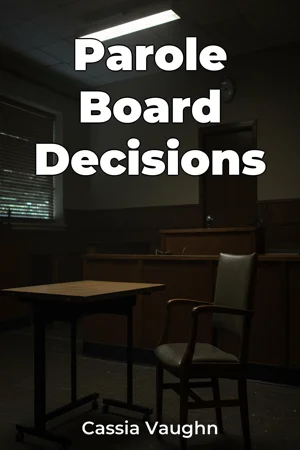
How do parole boards navigate the complex terrain of human potential and public safety? "Parole Board Decisions" delves into the multifaceted world of parole, exploring how these critical bodies evaluate cases, the inherent tensions between rehabilitation and public risk, and the profound impact their decisions have on prison populations and the reintegration of individuals back into society. This is not merely a study of legal procedures; it is an examination of human judgment under pressure, wielding the power to shape lives and communities. This book tackles three pivotal areas: the evaluation processes employed by parole boards, the philosophical and practical balancing act between rehabilitation and public safety, and the ripple effects of parole decisions on both prison systems and the reintegration prospects of formerly incarcerated individuals. Understanding these areas is crucial for anyone involved in, or affected by, the criminal justice system, from policymakers to prisoners and their families, and the general public concerned with safety and justice. The context for these decisions is rooted in historical shifts in penology, evolving definitions of justice, and ongoing debates about the goals of incarceration. Readers will gain an understanding of the historical development of parole, its original intentions, and how societal changes and evolving crime rates have shaped contemporary parole practices. The central argument of "Parole Board Decisions" is that parole board decisions, while intended to serve public safety, are often influenced by factors beyond objective risk assessment, leading to inconsistencies and inequities that undermine both rehabilitation efforts and the goal of reducing recidivism. This book asserts the need for greater transparency, standardized evaluation metrics, and a more holistic consideration of an individual's potential for successful reintegration. The book unfolds in several key parts. Initially, it introduces the core concepts of parole, risk assessment, and reintegration. Subsequently, it analyzes the factors that influence parole board decisions, including legal guidelines, political pressures, and the personal biases of board members. This section will draw on empirical data, case studies, and statistical analyses to reveal patterns and disparities in parole outcomes. The book culminates in a discussion of policy recommendations aimed at improving the parole process, fostering successful reintegration, and promoting safer communities. The evidence presented is drawn from diverse sources, including parole board hearings, statistical data on recidivism rates, interviews with parole board members and former inmates, and legal analyses of relevant court cases. A unique aspect of the research involves a comparative analysis of parole decision-making across different states, highlighting the variations in policies and outcomes. This book connects to several interdisciplinary fields, including criminology, sociology, and political science. Criminology provides the theoretical framework for understanding criminal behavior and recidivism. Sociology offers insights into the social factors that influence both criminal behavior and successful reintegration. Political science sheds light on the policy-making processes and the impact of political ideologies on parole practices. These connections enrich the analysis and provide a more comprehensive understanding of the subject matter. A key strength of "Parole Board Decisions" lies in its nuanced approach to a complex issue. It avoids simplistic narratives and instead delves into the intricacies of human judgment and the challenges of predicting future behavior. It offers a balanced perspective, acknowledging the legitimate concerns about public safety while also emphasizing the importance of rehabilitation and second chances. Written in an accessible yet scholarly style, the book is intended for a broad audience, including students, academics, policymakers, and anyone interested in the criminal justice system. Its value lies in its in-depth analysis of a critical but often overlooked aspect of the criminal justice system. The scope of the book is intentionally focused on the decision-making processes of parole boards and their direct consequences. While it acknowledges the broader context of mass incarceration and systemic inequalities, its primary focus remains on the parole process itself. The insights presented in "Parole Board Decisions" have practical applications for policymakers seeking to reform parole systems, for parole board members striving to make more informed and equitable decisions, and for individuals preparing for parole hearings. Finally, the book confronts ongoing debates surrounding parole, including questions about the effectiveness of risk assessment tools, the role of victim impact statements, and the appropriate balance between punishment and rehabilitation. By engaging with these controversies, "Parole Board Decisions" aims to stimulate constructive dialogue and contribute to a more just and effective criminal justice system.
How do parole boards navigate the complex terrain of human potential and public safety? "Parole Board Decisions" delves into the multifaceted world of parole, exploring how these critical bodies evaluate cases, the inherent tensions between rehabilitation and public risk, and the profound impact their decisions have on prison populations and the reintegration of individuals back into society. This is not merely a study of legal procedures; it is an examination of human judgment under pressure, wielding the power to shape lives and communities. This book tackles three pivotal areas: the evaluation processes employed by parole boards, the philosophical and practical balancing act between rehabilitation and public safety, and the ripple effects of parole decisions on both prison systems and the reintegration prospects of formerly incarcerated individuals. Understanding these areas is crucial for anyone involved in, or affected by, the criminal justice system, from policymakers to prisoners and their families, and the general public concerned with safety and justice. The context for these decisions is rooted in historical shifts in penology, evolving definitions of justice, and ongoing debates about the goals of incarceration. Readers will gain an understanding of the historical development of parole, its original intentions, and how societal changes and evolving crime rates have shaped contemporary parole practices. The central argument of "Parole Board Decisions" is that parole board decisions, while intended to serve public safety, are often influenced by factors beyond objective risk assessment, leading to inconsistencies and inequities that undermine both rehabilitation efforts and the goal of reducing recidivism. This book asserts the need for greater transparency, standardized evaluation metrics, and a more holistic consideration of an individual's potential for successful reintegration. The book unfolds in several key parts. Initially, it introduces the core concepts of parole, risk assessment, and reintegration. Subsequently, it analyzes the factors that influence parole board decisions, including legal guidelines, political pressures, and the personal biases of board members. This section will draw on empirical data, case studies, and statistical analyses to reveal patterns and disparities in parole outcomes. The book culminates in a discussion of policy recommendations aimed at improving the parole process, fostering successful reintegration, and promoting safer communities. The evidence presented is drawn from diverse sources, including parole board hearings, statistical data on recidivism rates, interviews with parole board members and former inmates, and legal analyses of relevant court cases. A unique aspect of the research involves a comparative analysis of parole decision-making across different states, highlighting the variations in policies and outcomes. This book connects to several interdisciplinary fields, including criminology, sociology, and political science. Criminology provides the theoretical framework for understanding criminal behavior and recidivism. Sociology offers insights into the social factors that influence both criminal behavior and successful reintegration. Political science sheds light on the policy-making processes and the impact of political ideologies on parole practices. These connections enrich the analysis and provide a more comprehensive understanding of the subject matter. A key strength of "Parole Board Decisions" lies in its nuanced approach to a complex issue. It avoids simplistic narratives and instead delves into the intricacies of human judgment and the challenges of predicting future behavior. It offers a balanced perspective, acknowledging the legitimate concerns about public safety while also emphasizing the importance of rehabilitation and second chances. Written in an accessible yet scholarly style, the book is intended for a broad audience, including students, academics, policymakers, and anyone interested in the criminal justice system. Its value lies in its in-depth analysis of a critical but often overlooked aspect of the criminal justice system. The scope of the book is intentionally focused on the decision-making processes of parole boards and their direct consequences. While it acknowledges the broader context of mass incarceration and systemic inequalities, its primary focus remains on the parole process itself. The insights presented in "Parole Board Decisions" have practical applications for policymakers seeking to reform parole systems, for parole board members striving to make more informed and equitable decisions, and for individuals preparing for parole hearings. Finally, the book confronts ongoing debates surrounding parole, including questions about the effectiveness of risk assessment tools, the role of victim impact statements, and the appropriate balance between punishment and rehabilitation. By engaging with these controversies, "Parole Board Decisions" aims to stimulate constructive dialogue and contribute to a more just and effective criminal justice system.
"Parole Board Decisions" examines the complex role of parole boards within the criminal justice system, focusing on how they balance public safety with the potential for rehabilitation. Parole boards face the difficult task of evaluating an individual's risk of recidivism and potential for successful reintegration into society. One key aspect explored is the influence of factors beyond objective risk assessment on parole board decisions, which can lead to inconsistencies in outcomes. The book delves into the historical context of parole, tracing its evolution and how societal changes have shaped current practices. It highlights how parole decisions impact prison populations and the reintegration prospects of formerly incarcerated individuals. Through empirical data, case studies, and statistical analyses, the book reveals patterns and disparities in parole outcomes across different states. The book's approach involves understanding the core concepts of parole and risk assessment, analyzing the factors that influence parole board decisions, and discussing policy recommendations. Ultimately, "Parole Board Decisions" argues for greater transparency and standardized evaluation metrics in the parole process. It aims to stimulate dialogue on improving the criminal justice system by addressing the political pressures and personal biases that can influence parole board decisions. The book progresses through an introduction of parole concepts, analysis of influencing factors, and culminates in policy recommendations for safer communities.
Book Details
ISBN
9788235244598
Publisher
Publifye AS
Your Licenses
You don't own any licenses for this book
Purchase a license below to unlock this book and download the EPUB.
Purchase License
Select a tier to unlock this book
Need bulk licensing?
Contact us for enterprise agreements.