
About This Book
Are you struggling with persistent memory lapses, unexplained fatigue, or a general feeling that your body isn't recovering as quickly as it should? The culprit may be closer than you think: your sleep. "Sleep Disruptors" delves into the often-overlooked factors that sabotage our sleep quality and, consequently, our overall well-being, offering actionable strategies to reclaim restorative rest. This book explores three primary sleep disruptors: blue light exposure, caffeine consumption, and stress management. These are critical because their impact extends far beyond mere sleepiness, affecting cognitive function, physical recovery, and long-term health. The book presents the latest research to illuminate how these elements actively interfere with the body's natural sleep-wake cycle and disrupt crucial restorative processes that occur during sleep. We begin by establishing a foundational understanding of sleep architecture, explaining the distinct stages of sleep and their respective roles in memory consolidation, physical repair, and hormonal regulation. We then examine the evolutionary context of human sleep patterns, contrasting them with the demands of modern life, which often prioritize productivity over rest. This historical and scientific context sets the stage for understanding how contemporary habits clash with our biological needs. The central argument of "Sleep Disruptors" is that optimizing sleep hygiene by addressing blue light exposure, caffeine intake, and stress levels is fundamental to improving cognitive performance, accelerating physical recovery, and safeguarding long-term health. This argument is vital because it challenges the prevalent notion that sleep is merely a passive state and instead positions it as an active, controllable process that can be strategically managed for optimal results. The book is structured to progressively build understanding and empower action. First, it introduces the core concepts of sleep science and the three primary disruptors. Next, individual chapters are dedicated to each disruptor: a) Blue Light: This section investigates the impact of artificial light, particularly blue light emitted from screens, on melatonin production and circadian rhythm disruption. It provides practical strategies for mitigating blue light exposure through screen filters, lighting adjustments, and behavioral changes. b) Caffeine: This area explores the physiological effects of caffeine on sleep, including dosage guidelines, optimal timing of consumption, and alternatives to avoid dependency and withdrawal. c) Stress Management: This section delves into the relationship between stress hormones (cortisol) and sleep disturbances. It introduces various stress-reduction techniques, such as mindfulness meditation, deep breathing exercises, and progressive muscle relaxation, with specific guidance on integrating them into a nightly routine. The book culminates by presenting a comprehensive sleep optimization plan that integrates strategies for managing each of the identified disruptors. It concludes with real-world case studies and practical tips for overcoming common sleep challenges. The evidence presented in "Sleep Disruptors" draws from a wide array of scientific studies, including peer-reviewed research articles, clinical trials, and meta-analyses. It also incorporates data from sleep studies and personal experiments to illustrate the impact of specific interventions. "Sleep Disruptors" connects to various interdisciplinary fields, including: a) Cognitive Psychology: It explores the link between sleep quality and cognitive functions such as memory, attention, and decision-making. b) Exercise Physiology: It examines the relationship between sleep and physical recovery, muscle growth, and athletic performance. c) Endocrinology: It investigates the impact of sleep on hormonal regulation, including cortisol, melatonin, and growth hormone. The book takes a proactive and practical approach, emphasizing actionable strategies and personalized solutions. It avoids overly technical jargon, making the information accessible to a broad audience while maintaining scientific rigor. The target audience includes anyone who experiences sleep difficulties, including students, professionals, athletes, and individuals seeking to improve their overall health and well-being. It is particularly valuable for those who suspect that blue light, caffeine, or stress may be contributing to their sleep problems. As a self-help book with elements of health and fitness and stress management, "Sleep Disruptors" provides evidence-based advice, practical exercises, and personalized strategies for readers to implement immediately. The scope of "Sleep Disruptors" is focused on actionable strategies for improving sleep quality through the management of blue light, caffeine, and stress. It does not delve into the diagnosis or treatment of clinical sleep disorders, such as sleep apnea or insomnia, which require professional medical attention. The information in "Sleep Disruptors" can be applied practically by readers to create a personalized sleep optimization plan, improve their cognitive function, accelerate physical recovery, and enhance their overall health and well-being. The book also discusses the ongoing debate surrounding the use of sleep aids and supplements, presenting a balanced perspective on their potential benefits and risks while emphasizing the importance of addressing underlying lifestyle factors.
Are you struggling with persistent memory lapses, unexplained fatigue, or a general feeling that your body isn't recovering as quickly as it should? The culprit may be closer than you think: your sleep. "Sleep Disruptors" delves into the often-overlooked factors that sabotage our sleep quality and, consequently, our overall well-being, offering actionable strategies to reclaim restorative rest. This book explores three primary sleep disruptors: blue light exposure, caffeine consumption, and stress management. These are critical because their impact extends far beyond mere sleepiness, affecting cognitive function, physical recovery, and long-term health. The book presents the latest research to illuminate how these elements actively interfere with the body's natural sleep-wake cycle and disrupt crucial restorative processes that occur during sleep. We begin by establishing a foundational understanding of sleep architecture, explaining the distinct stages of sleep and their respective roles in memory consolidation, physical repair, and hormonal regulation. We then examine the evolutionary context of human sleep patterns, contrasting them with the demands of modern life, which often prioritize productivity over rest. This historical and scientific context sets the stage for understanding how contemporary habits clash with our biological needs. The central argument of "Sleep Disruptors" is that optimizing sleep hygiene by addressing blue light exposure, caffeine intake, and stress levels is fundamental to improving cognitive performance, accelerating physical recovery, and safeguarding long-term health. This argument is vital because it challenges the prevalent notion that sleep is merely a passive state and instead positions it as an active, controllable process that can be strategically managed for optimal results. The book is structured to progressively build understanding and empower action. First, it introduces the core concepts of sleep science and the three primary disruptors. Next, individual chapters are dedicated to each disruptor: a) Blue Light: This section investigates the impact of artificial light, particularly blue light emitted from screens, on melatonin production and circadian rhythm disruption. It provides practical strategies for mitigating blue light exposure through screen filters, lighting adjustments, and behavioral changes. b) Caffeine: This area explores the physiological effects of caffeine on sleep, including dosage guidelines, optimal timing of consumption, and alternatives to avoid dependency and withdrawal. c) Stress Management: This section delves into the relationship between stress hormones (cortisol) and sleep disturbances. It introduces various stress-reduction techniques, such as mindfulness meditation, deep breathing exercises, and progressive muscle relaxation, with specific guidance on integrating them into a nightly routine. The book culminates by presenting a comprehensive sleep optimization plan that integrates strategies for managing each of the identified disruptors. It concludes with real-world case studies and practical tips for overcoming common sleep challenges. The evidence presented in "Sleep Disruptors" draws from a wide array of scientific studies, including peer-reviewed research articles, clinical trials, and meta-analyses. It also incorporates data from sleep studies and personal experiments to illustrate the impact of specific interventions. "Sleep Disruptors" connects to various interdisciplinary fields, including: a) Cognitive Psychology: It explores the link between sleep quality and cognitive functions such as memory, attention, and decision-making. b) Exercise Physiology: It examines the relationship between sleep and physical recovery, muscle growth, and athletic performance. c) Endocrinology: It investigates the impact of sleep on hormonal regulation, including cortisol, melatonin, and growth hormone. The book takes a proactive and practical approach, emphasizing actionable strategies and personalized solutions. It avoids overly technical jargon, making the information accessible to a broad audience while maintaining scientific rigor. The target audience includes anyone who experiences sleep difficulties, including students, professionals, athletes, and individuals seeking to improve their overall health and well-being. It is particularly valuable for those who suspect that blue light, caffeine, or stress may be contributing to their sleep problems. As a self-help book with elements of health and fitness and stress management, "Sleep Disruptors" provides evidence-based advice, practical exercises, and personalized strategies for readers to implement immediately. The scope of "Sleep Disruptors" is focused on actionable strategies for improving sleep quality through the management of blue light, caffeine, and stress. It does not delve into the diagnosis or treatment of clinical sleep disorders, such as sleep apnea or insomnia, which require professional medical attention. The information in "Sleep Disruptors" can be applied practically by readers to create a personalized sleep optimization plan, improve their cognitive function, accelerate physical recovery, and enhance their overall health and well-being. The book also discusses the ongoing debate surrounding the use of sleep aids and supplements, presenting a balanced perspective on their potential benefits and risks while emphasizing the importance of addressing underlying lifestyle factors.
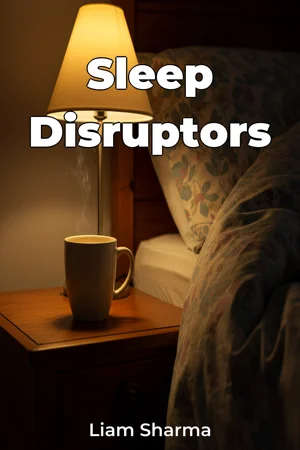
"Sleep Disruptors" explores often-overlooked factors that sabotage sleep, like blue light exposure from screens, caffeine consumption, and unmanaged stress. These disruptors impact not only how rested we feel, but also our cognitive function and physical recovery. The book presents the latest research, showing how these elements interfere with the body's natural sleep-wake cycle and crucial restorative processes, such as memory consolidation and hormonal regulation. The book begins by establishing a foundational understanding of sleep architecture before contrasting modern habits with our biological needs. Individual chapters are then dedicated to each disruptor, providing actionable strategies for mitigation. For example, it offers practical tips for managing blue light through screen filters and lighting adjustments, and explores stress-reduction techniques, such as mindfulness meditation. Ultimately, "Sleep Disruptors" culminates in a comprehensive sleep optimization plan, integrating strategies for managing each of the identified disruptors. With its proactive and practical approach, the book empowers readers to implement immediate changes to improve sleep quality, cognitive performance, and overall well-being.
Book Details
ISBN
9788235244536
Publisher
Publifye AS
Your Licenses
You don't own any licenses for this book
Purchase a license below to unlock this book and download the EPUB.
Purchase License
Select a tier to unlock this book
Need bulk licensing?
Contact us for enterprise agreements.