
About This Book
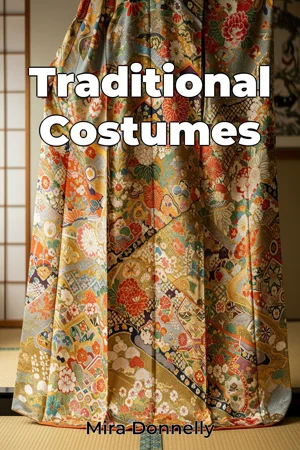
Have you ever considered how deeply intertwined your clothing is with your identity, your history, and your culture? "Traditional Costumes" explores the multifaceted role of clothing as a powerful form of cultural expression across the globe. This book examines how various societies use traditional garments to communicate identity, preserve heritage, and navigate social norms. The significance lies in understanding clothing not merely as functional attire but as a rich visual language reflecting a community's values, beliefs, and historical experiences. This exploration necessitates an understanding of world history, social science principles, and the evolution of cultural traditions. While familiarity with basic anthropological concepts will be beneficial, the book provides sufficient context to ensure accessibility for a broad audience. The central argument of "Traditional Costumes" is that traditional clothing serves as a tangible and enduring representation of cultural identity, acting as a vital link between past and present. This argument is important because it highlights the often-overlooked significance of material culture in shaping and maintaining social cohesion and cultural distinctiveness in an increasingly globalized world. The book begins with an introduction to the core concepts of cultural identity and the semiotics of clothing. It then delves into specific case studies, examining several cultures and their defining garments. The second section focuses on the Japanese kimono, tracing its historical development, social significance, and contemporary interpretations. The third section shifts focus to the Mexican charro suit, exploring its origins in equestrian traditions, its role in national identity, and its evolution as a symbol of Mexican pride. Additional examples from Africa, Asia, and Europe illustrate the breadth of cultural expression through clothing. The book culminates by analyzing the impact of globalization on traditional costumes, discussing the challenges of cultural preservation and the emergence of new hybrid identities. The evidence presented draws upon historical records, ethnographic studies, visual analysis of garments, and interviews with cultural practitioners. Unique data sources include museum archives, textile collections, and oral histories from artisans and community elders. "Traditional Costumes" connects to several other fields, including anthropology, sociology, and art history. Anthropological perspectives inform the analysis of cultural practices; sociological theories illuminate the social functions of clothing; and art historical methods provide tools for interpreting the visual aesthetics of traditional garments. These interdisciplinary connections enrich the book's argument by offering multiple lenses through which to understand the complex relationship between clothing and culture. The book adopts a fact-based and analytical approach, presenting information in a clear and accessible manner, avoiding anecdotal embellishments. The writing style is designed to engage the reader while maintaining academic rigor. The target audience includes students of history, anthropology, fashion studies, and anyone interested in learning more about the world's diverse cultures. This book offers a valuable resource for understanding the cultural significance of clothing and its role in shaping identity. As a work of world history and social science, "Traditional Costumes" adheres to the genre's expectations of factual accuracy, scholarly research, and objective analysis. The scope of the book is broad, encompassing a variety of cultures and garments. However, it intentionally limits its focus to traditional costumes, recognizing that contemporary fashion trends warrant separate exploration. The information presented has real-world applications for museum curators, fashion designers, cultural heritage organizations, and anyone seeking to promote cross-cultural understanding. By understanding the cultural significance of clothing, readers can develop a greater appreciation for the diversity of human expression and the importance of preserving cultural heritage. While the book strives to present a balanced perspective, it acknowledges that interpretations of cultural symbols can be contested. Ongoing debates about cultural appropriation, authenticity, and the commercialization of traditional garments are addressed, encouraging readers to critically engage with these complex issues.
Have you ever considered how deeply intertwined your clothing is with your identity, your history, and your culture? "Traditional Costumes" explores the multifaceted role of clothing as a powerful form of cultural expression across the globe. This book examines how various societies use traditional garments to communicate identity, preserve heritage, and navigate social norms. The significance lies in understanding clothing not merely as functional attire but as a rich visual language reflecting a community's values, beliefs, and historical experiences. This exploration necessitates an understanding of world history, social science principles, and the evolution of cultural traditions. While familiarity with basic anthropological concepts will be beneficial, the book provides sufficient context to ensure accessibility for a broad audience. The central argument of "Traditional Costumes" is that traditional clothing serves as a tangible and enduring representation of cultural identity, acting as a vital link between past and present. This argument is important because it highlights the often-overlooked significance of material culture in shaping and maintaining social cohesion and cultural distinctiveness in an increasingly globalized world. The book begins with an introduction to the core concepts of cultural identity and the semiotics of clothing. It then delves into specific case studies, examining several cultures and their defining garments. The second section focuses on the Japanese kimono, tracing its historical development, social significance, and contemporary interpretations. The third section shifts focus to the Mexican charro suit, exploring its origins in equestrian traditions, its role in national identity, and its evolution as a symbol of Mexican pride. Additional examples from Africa, Asia, and Europe illustrate the breadth of cultural expression through clothing. The book culminates by analyzing the impact of globalization on traditional costumes, discussing the challenges of cultural preservation and the emergence of new hybrid identities. The evidence presented draws upon historical records, ethnographic studies, visual analysis of garments, and interviews with cultural practitioners. Unique data sources include museum archives, textile collections, and oral histories from artisans and community elders. "Traditional Costumes" connects to several other fields, including anthropology, sociology, and art history. Anthropological perspectives inform the analysis of cultural practices; sociological theories illuminate the social functions of clothing; and art historical methods provide tools for interpreting the visual aesthetics of traditional garments. These interdisciplinary connections enrich the book's argument by offering multiple lenses through which to understand the complex relationship between clothing and culture. The book adopts a fact-based and analytical approach, presenting information in a clear and accessible manner, avoiding anecdotal embellishments. The writing style is designed to engage the reader while maintaining academic rigor. The target audience includes students of history, anthropology, fashion studies, and anyone interested in learning more about the world's diverse cultures. This book offers a valuable resource for understanding the cultural significance of clothing and its role in shaping identity. As a work of world history and social science, "Traditional Costumes" adheres to the genre's expectations of factual accuracy, scholarly research, and objective analysis. The scope of the book is broad, encompassing a variety of cultures and garments. However, it intentionally limits its focus to traditional costumes, recognizing that contemporary fashion trends warrant separate exploration. The information presented has real-world applications for museum curators, fashion designers, cultural heritage organizations, and anyone seeking to promote cross-cultural understanding. By understanding the cultural significance of clothing, readers can develop a greater appreciation for the diversity of human expression and the importance of preserving cultural heritage. While the book strives to present a balanced perspective, it acknowledges that interpretations of cultural symbols can be contested. Ongoing debates about cultural appropriation, authenticity, and the commercialization of traditional garments are addressed, encouraging readers to critically engage with these complex issues.
"Traditional Costumes" explores the profound connection between clothing and cultural identity across the globe. It reveals how garments serve not only as functional attire but also as powerful expressions of cultural heritage and social norms. Intriguingly, traditional costumes often act as a visual language, communicating a community's values and historical experiences. By examining clothing through the lens of world history and social science, the study highlights the significance of understanding material culture in shaping social cohesion. The book begins by introducing core concepts like cultural identity and the semiotics of clothing, then delves into specific case studies. For example, the Japanese kimono and the Mexican charro suit offer detailed insights into how garments evolve and embody national pride. Through historical records, ethnographic studies, and visual analysis, the book progresses across chapters to analyze the impact of globalization on traditional costumes, addressing challenges in cultural preservation and the emergence of hybrid identities. This approach provides a valuable resource for students of history, anthropology, and fashion studies, enriching their understanding of the world's diverse cultures.
Book Details
ISBN
9788235244284
Publisher
Publifye AS
Your Licenses
You don't own any licenses for this book
Purchase a license below to unlock this book and download the EPUB.
Purchase License
Select a tier to unlock this book
Need bulk licensing?
Contact us for enterprise agreements.