
About This Book
Why do we laugh? Is it merely a reflex, or does it serve a deeper social and cognitive purpose? "Laughter Triggers" delves into the science of laughter, exploring the common social and cognitive factors that consistently elicit this universal human response. This book examines the multifaceted nature of laughter, arguing that it is a crucial element in social bonding, communication, and cognitive processing. We will explore laughter through three key lenses: social context, cognitive triggers, and emotional underpinnings. Understanding these topics is crucial, as laughter plays a significant role in our daily interactions, influencing everything from workplace dynamics to personal relationships. Furthermore, a deeper understanding of laughter can provide insights into the complexities of human psychology and social behavior. The book begins by establishing a historical and social context for the study of laughter, tracing its evolution from philosophical musings to scientific inquiry. It examines the theories of prominent thinkers, such as Henri Bergson and Sigmund Freud, while acknowledging the limitations of early approaches. Readers do not need prior expertise in psychology or sociology to grasp the concepts discussed. The central argument of "Laughter Triggers" is that laughter is not merely a spontaneous reaction but a complex interplay of social cues, cognitive appraisals, and emotional states. This perspective challenges simplified views of laughter as solely a response to humor. Understanding these triggers can lead to improvements in communication, conflict resolution, and overall well-being. The book is structured in three parts. First, we introduce the core concepts of social laughter, cognitive incongruity, and emotional contagion. Second, we delve into the social dimensions of laughter, examining its role in group cohesion, power dynamics, and social signaling. This section explores how laughter reinforces social norms and strengthens relationships. Third, the cognitive processes that trigger laughter, such as incongruity resolution, surprise, and schadenfreude, will be dissected. We also look at how emotional states, such as joy, relief, and even anxiety, can manifest as laughter. The book culminates by synthesizing these elements and exploring practical applications, such as using humor to enhance communication or manage stress. Evidence will be drawn from a variety of sources, including observational studies of social interactions, experimental research on cognitive processing, and neurological studies that map brain activity during laughter. In addition, unique data from cross-cultural studies will be presented to explore the universality and cultural specificity of laughter triggers. This book draws interdisciplinary connections between psychology, sociology, and communication studies. By integrating insights from these fields, "Laughter Triggers" provides a more holistic understanding of laughter. We also look at how understanding laughter can be applied in therapeutic settings, potentially aiding in the treatment of depression or anxiety. "Laughter Triggers" offers a unique approach by integrating social and cognitive perspectives on laughter. Rather than focusing solely on humor, it examines the broader range of factors that can elicit laughter, even in the absence of jokes or comedic material. We aim to provide a balanced and nuanced perspective, avoiding oversimplified explanations. The book is written in a clear, accessible style, avoiding technical jargon where possible. While grounded in scientific research, the tone is conversational and engaging, making it suitable for a broad audience. The target audience includes students and researchers in social sciences, as well as anyone interested in understanding human behavior and social interaction. Professionals in fields such as communication, education, and management may also find valuable insights in this book. As a work of social science and psychology, the book maintains a rigorous and evidence-based approach. We present theories and findings in a balanced and objective manner, acknowledging alternative perspectives and limitations. The scope of "Laughter Triggers" is intentionally broad, encompassing a wide range of social and cognitive factors that influence laughter. However, it does not delve into the neurobiological mechanisms of laughter in detail, focusing instead on the psychological and social aspects. Understanding the principles outlined in "Laughter Triggers" can be applied in numerous real-world settings. For example, it can help improve team dynamics in the workplace, enhance communication in interpersonal relationships, and foster a more positive and engaging learning environment in educational settings. Throughout the book, we address ongoing debates in the field, such as the relative importance of social versus cognitive factors in triggering laughter. We also explore the ethical considerations of using humor and laughter in various contexts, such as advertising or political discourse.
Why do we laugh? Is it merely a reflex, or does it serve a deeper social and cognitive purpose? "Laughter Triggers" delves into the science of laughter, exploring the common social and cognitive factors that consistently elicit this universal human response. This book examines the multifaceted nature of laughter, arguing that it is a crucial element in social bonding, communication, and cognitive processing. We will explore laughter through three key lenses: social context, cognitive triggers, and emotional underpinnings. Understanding these topics is crucial, as laughter plays a significant role in our daily interactions, influencing everything from workplace dynamics to personal relationships. Furthermore, a deeper understanding of laughter can provide insights into the complexities of human psychology and social behavior. The book begins by establishing a historical and social context for the study of laughter, tracing its evolution from philosophical musings to scientific inquiry. It examines the theories of prominent thinkers, such as Henri Bergson and Sigmund Freud, while acknowledging the limitations of early approaches. Readers do not need prior expertise in psychology or sociology to grasp the concepts discussed. The central argument of "Laughter Triggers" is that laughter is not merely a spontaneous reaction but a complex interplay of social cues, cognitive appraisals, and emotional states. This perspective challenges simplified views of laughter as solely a response to humor. Understanding these triggers can lead to improvements in communication, conflict resolution, and overall well-being. The book is structured in three parts. First, we introduce the core concepts of social laughter, cognitive incongruity, and emotional contagion. Second, we delve into the social dimensions of laughter, examining its role in group cohesion, power dynamics, and social signaling. This section explores how laughter reinforces social norms and strengthens relationships. Third, the cognitive processes that trigger laughter, such as incongruity resolution, surprise, and schadenfreude, will be dissected. We also look at how emotional states, such as joy, relief, and even anxiety, can manifest as laughter. The book culminates by synthesizing these elements and exploring practical applications, such as using humor to enhance communication or manage stress. Evidence will be drawn from a variety of sources, including observational studies of social interactions, experimental research on cognitive processing, and neurological studies that map brain activity during laughter. In addition, unique data from cross-cultural studies will be presented to explore the universality and cultural specificity of laughter triggers. This book draws interdisciplinary connections between psychology, sociology, and communication studies. By integrating insights from these fields, "Laughter Triggers" provides a more holistic understanding of laughter. We also look at how understanding laughter can be applied in therapeutic settings, potentially aiding in the treatment of depression or anxiety. "Laughter Triggers" offers a unique approach by integrating social and cognitive perspectives on laughter. Rather than focusing solely on humor, it examines the broader range of factors that can elicit laughter, even in the absence of jokes or comedic material. We aim to provide a balanced and nuanced perspective, avoiding oversimplified explanations. The book is written in a clear, accessible style, avoiding technical jargon where possible. While grounded in scientific research, the tone is conversational and engaging, making it suitable for a broad audience. The target audience includes students and researchers in social sciences, as well as anyone interested in understanding human behavior and social interaction. Professionals in fields such as communication, education, and management may also find valuable insights in this book. As a work of social science and psychology, the book maintains a rigorous and evidence-based approach. We present theories and findings in a balanced and objective manner, acknowledging alternative perspectives and limitations. The scope of "Laughter Triggers" is intentionally broad, encompassing a wide range of social and cognitive factors that influence laughter. However, it does not delve into the neurobiological mechanisms of laughter in detail, focusing instead on the psychological and social aspects. Understanding the principles outlined in "Laughter Triggers" can be applied in numerous real-world settings. For example, it can help improve team dynamics in the workplace, enhance communication in interpersonal relationships, and foster a more positive and engaging learning environment in educational settings. Throughout the book, we address ongoing debates in the field, such as the relative importance of social versus cognitive factors in triggering laughter. We also explore the ethical considerations of using humor and laughter in various contexts, such as advertising or political discourse.
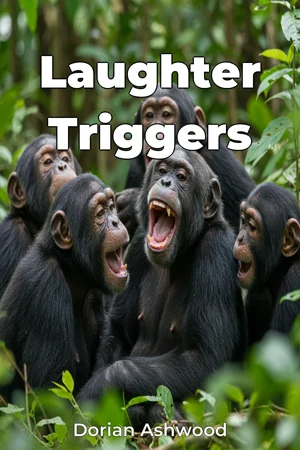
"Laughter Triggers" explores the multifaceted science of laughter, moving beyond simple humor to examine the complex interplay of social context, cognitive triggers, and emotional states that elicit this universal human response. The book argues that laughter is more than just a reflex; it's a crucial element in social bonding and communication, influencing workplace dynamics and interpersonal relationships. Did you know that laughter can actually reinforce social norms and strengthen relationships? Or that even negative emotions like anxiety can manifest as laughter? The book begins by establishing the historical and social context of laughter, then progresses through three key sections: social laughter, cognitive incongruity, and emotional contagion. Drawing on observational studies, experimental research, and cross-cultural data, it provides a holistic understanding of laughter by integrating insights from psychology, sociology, and communication studies. It uniquely examines factors beyond humor that trigger laughter and offers practical applications for improving communication and managing stress.
Book Details
ISBN
9788235244277
Publisher
Publifye AS
Your Licenses
You don't own any licenses for this book
Purchase a license below to unlock this book and download the EPUB.
Purchase License
Select a tier to unlock this book
Need bulk licensing?
Contact us for enterprise agreements.