
About This Book
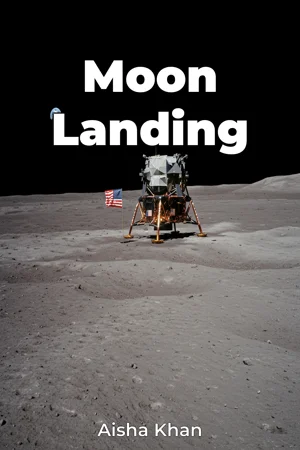
What drove humanity to risk everything in a quest to reach the moon, and what did that journey reveal about our technological prowess and collective ambition? "Moon Landing" delves into the heart of the Apollo 11 mission, providing a comprehensive examination of the astronauts, the groundbreaking technology, and the historical context that culminated in humankind's first steps on another celestial body. This book explores not just the "what" of the moon landing but also the "how" and "why," revealing the intricate web of innovation, political will, and human courage that made the impossible a reality. The central argument of "Moon Landing" is that the Apollo 11 mission represents a pivotal moment in human history, demonstrating the transformative power of focused technological development and international collaboration during the Cold War era. This event transcends mere scientific achievement; it embodies the spirit of exploration and the relentless pursuit of knowledge that defines our species. Understanding the intricacies of Apollo 11 provides invaluable insight into the process of innovation and the management of complex technological projects. The book unfolds in three major sections. Initially, it establishes the sociopolitical climate of the 1960s, highlighting the Space Race between the United States and the Soviet Union. It details President Kennedy's ambitious challenge to land a man on the moon before the end of the decade and the subsequent mobilization of resources and scientific talent. The second section focuses on the technological innovations required for the mission's success. This includes detailed descriptions of the Saturn V rocket, the Apollo spacecraft, the lunar module, and the sophisticated communications and navigation systems. We analyze the engineering challenges overcome and the scientific principles underlying each technological advancement. The final section examines the mission itself, from the selection and training of the astronauts – Neil Armstrong, Buzz Aldrin, and Michael Collins – to the historic landing on July 20, 1969, and the return to Earth. "Moon Landing" draws upon a wide range of primary and secondary sources, including NASA mission transcripts, technical reports, astronaut biographies, and historical analyses. It incorporates recently declassified documentation and utilizes advanced computer simulations to recreate key events and challenges faced by the Apollo 11 team. The book bridges the fields of history and technology, demonstrating how social and political forces drive technological innovation. It connects to the field of engineering by analyzing the design and functionality of the equipment used, and it establishes relevance to political science by exploring the impact of the Space Race on global politics. "Moon Landing" adopts a narrative non-fiction style, blending historical accuracy with engaging storytelling to capture the drama and excitement of the Apollo 11 mission. It targets a broad audience, from space enthusiasts and history buffs to students and professionals interested in technological innovation and project management. Readers will gain a deeper appreciation for the complexity and ingenuity required to achieve this monumental goal. The scope of "Moon Landing" is limited to the Apollo 11 mission, focusing on the technological, historical, and human elements directly associated with its success. While acknowledging the broader context of the Apollo program, the book deliberately avoids speculating on conspiracy theories or alternative historical narratives. Understanding the technical challenges overcome during Apollo 11 has real-world applications in modern engineering and project management. The processes and strategies employed to manage the Apollo program serve as a case study for large-scale, technologically ambitious projects in fields such as renewable energy, space exploration, and infrastructure development. "Moon Landing" acknowledges ongoing debates about the legacy and long-term impact of the Apollo program. While celebrating the technological achievements, it also considers the ethical and environmental implications of space exploration and the allocation of resources to scientific endeavors.
What drove humanity to risk everything in a quest to reach the moon, and what did that journey reveal about our technological prowess and collective ambition? "Moon Landing" delves into the heart of the Apollo 11 mission, providing a comprehensive examination of the astronauts, the groundbreaking technology, and the historical context that culminated in humankind's first steps on another celestial body. This book explores not just the "what" of the moon landing but also the "how" and "why," revealing the intricate web of innovation, political will, and human courage that made the impossible a reality. The central argument of "Moon Landing" is that the Apollo 11 mission represents a pivotal moment in human history, demonstrating the transformative power of focused technological development and international collaboration during the Cold War era. This event transcends mere scientific achievement; it embodies the spirit of exploration and the relentless pursuit of knowledge that defines our species. Understanding the intricacies of Apollo 11 provides invaluable insight into the process of innovation and the management of complex technological projects. The book unfolds in three major sections. Initially, it establishes the sociopolitical climate of the 1960s, highlighting the Space Race between the United States and the Soviet Union. It details President Kennedy's ambitious challenge to land a man on the moon before the end of the decade and the subsequent mobilization of resources and scientific talent. The second section focuses on the technological innovations required for the mission's success. This includes detailed descriptions of the Saturn V rocket, the Apollo spacecraft, the lunar module, and the sophisticated communications and navigation systems. We analyze the engineering challenges overcome and the scientific principles underlying each technological advancement. The final section examines the mission itself, from the selection and training of the astronauts – Neil Armstrong, Buzz Aldrin, and Michael Collins – to the historic landing on July 20, 1969, and the return to Earth. "Moon Landing" draws upon a wide range of primary and secondary sources, including NASA mission transcripts, technical reports, astronaut biographies, and historical analyses. It incorporates recently declassified documentation and utilizes advanced computer simulations to recreate key events and challenges faced by the Apollo 11 team. The book bridges the fields of history and technology, demonstrating how social and political forces drive technological innovation. It connects to the field of engineering by analyzing the design and functionality of the equipment used, and it establishes relevance to political science by exploring the impact of the Space Race on global politics. "Moon Landing" adopts a narrative non-fiction style, blending historical accuracy with engaging storytelling to capture the drama and excitement of the Apollo 11 mission. It targets a broad audience, from space enthusiasts and history buffs to students and professionals interested in technological innovation and project management. Readers will gain a deeper appreciation for the complexity and ingenuity required to achieve this monumental goal. The scope of "Moon Landing" is limited to the Apollo 11 mission, focusing on the technological, historical, and human elements directly associated with its success. While acknowledging the broader context of the Apollo program, the book deliberately avoids speculating on conspiracy theories or alternative historical narratives. Understanding the technical challenges overcome during Apollo 11 has real-world applications in modern engineering and project management. The processes and strategies employed to manage the Apollo program serve as a case study for large-scale, technologically ambitious projects in fields such as renewable energy, space exploration, and infrastructure development. "Moon Landing" acknowledges ongoing debates about the legacy and long-term impact of the Apollo program. While celebrating the technological achievements, it also considers the ethical and environmental implications of space exploration and the allocation of resources to scientific endeavors.
"Moon Landing" explores the Apollo 11 mission, revealing the technological marvels and historical context behind humanity's first steps on the moon. It examines the driving forces behind this ambitious endeavor, highlighting the intricate blend of technological innovation, political will, and human courage. The book argues that the Apollo 11 mission represents a pivotal moment, showcasing the transformative power of focused technological development and international collaboration, particularly during the Cold War's Space Race. The book delves into the sociopolitical climate of the 1960s, detailing President Kennedy's challenge and the subsequent mobilization of resources. It meticulously describes the Saturn V rocket, Apollo spacecraft, and lunar module, analyzing the engineering challenges overcome. The reader gains insight into the selection and training of astronauts like Neil Armstrong and Buzz Aldrin, culminating in the historic landing on July 20, 1969. Using primary sources like NASA mission transcripts and advanced computer simulations, "Moon Landing" adopts a narrative non-fiction style, blending historical accuracy with engaging storytelling. The book progresses through the Space Race's origins to the technological innovations required and finally, the mission itself. It bridges history and technology, making it valuable for space enthusiasts, history buffs, students, and professionals interested in technological innovation and project management.
Book Details
ISBN
9788235244185
Publisher
Publifye AS
Your Licenses
You don't own any licenses for this book
Purchase a license below to unlock this book and download the EPUB.
Purchase License
Select a tier to unlock this book
Need bulk licensing?
Contact us for enterprise agreements.