
About This Book
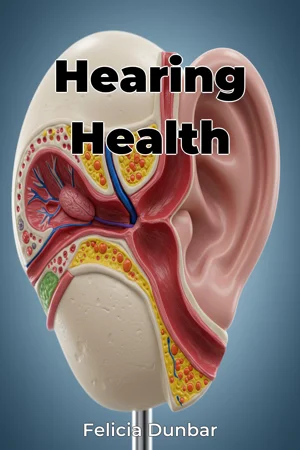
Are you aware that noise-induced hearing loss is entirely preventable? This book, 'Hearing Health,' serves as a comprehensive guide to understanding, protecting, and maintaining your auditory health in an increasingly noisy world. We delve into the critical aspects of hearing, from the delicate mechanics of sound processing to the pervasive threats posed by environmental noise. Understanding these elements is paramount, given the escalating prevalence of preventable hearing damage across all age groups. This book systematically explores three key areas: the fundamentals of hearing and its vulnerability, the identification and prevention of hearing loss, and the proactive maintenance of optimal ear health. These topics are vital because hearing loss significantly impacts communication, cognitive functions, and overall quality of life. Recognizing early signs and implementing preventative measures can dramatically alter the trajectory of auditory health. We begin by establishing a solid foundation in the anatomy and physiology of the ear, detailing how sound waves are converted into neural signals. This section also covers common causes of hearing impairment, contextualizing them within both historical trends of noise exposure and current public health concerns related to recreational and occupational noise. Readers will gain an understanding of the baseline knowledge necessary to appreciate the complexities of hearing damage. Our central argument is that informed awareness and proactive strategies are the most effective tools in combating hearing loss. We champion the adoption of hearing-conscious behaviors and environmental modifications to preserve auditory function throughout life. This thesis is supported by epidemiological data demonstrating the direct correlation between noise exposure and hearing impairment, reinforcing the need for preventative action. The book's structure unfolds as follows: First, it introduces the basic science of hearing and common conditions that affect it. Next, it develops into a thorough examination of noise-induced hearing loss, including detailed discussions on safe listening levels, ear protection devices, and strategies for mitigating noise exposure in various settings. It culminates in a section dedicated to hearing health maintenance, covering topics such as regular hearing checks, dietary influences on hearing, and the management of age-related hearing changes. Practical applications are emphasized throughout, empowering readers to take immediate steps to safeguard their hearing. The evidence presented is derived from a wide range of sources, including audiological studies, epidemiological surveys, and clinical research. We incorporate data from organizations like the World Health Organization (WHO) and the National Institute on Deafness and Other Communication Disorders (NIDCD). We also utilize case studies and practical examples to illustrate key concepts and make the information accessible. 'Hearing Health' draws connections to several interdisciplinary fields. Firstly, it intersects with public health through the discussion and promotion of hearing conservation programs. Secondly, it relates to occupational safety by addressing workplace noise hazards and hearing protection guidelines. Thirdly, it connects with the field of gerontology by examining the age-related changes in hearing and strategies for mitigating their impact. A unique aspect of this book lies in its holistic approach to hearing health. Beyond simply addressing noise-induced hearing loss, it incorporates insights into the impact of diet, lifestyle, and overall health on auditory function. This comprehensive perspective provides readers with a well-rounded understanding of how to optimize their hearing potential. The book adopts a clear, concise, and informative tone. Complex scientific concepts are explained in accessible language, avoiding jargon while maintaining accuracy. We aim to empower readers with knowledge without overwhelming them with technical details. The target audience is broad, encompassing anyone concerned about their hearing health. This includes individuals with existing hearing loss, those at risk due to occupational or recreational noise exposure, parents seeking to protect their children's hearing, and healthcare professionals looking for a comprehensive resource on auditory health. As a work in the 'Medical General, Health & Fitness, Health Fitness' genres, 'Hearing Health' adheres to the conventions of providing evidence-based information, practical advice, and actionable strategies for improving health outcomes. It is written to be accessible to the educated layperson, while still providing sufficient depth for those with a professional interest in the subject. While this book covers a wide range of topics related to hearing health, it does not delve into the specifics of surgical interventions or advanced audiological treatments. The focus remains on prevention, early detection, and proactive management of hearing health. The information within these pages translates directly into real-world applications. Readers will learn how to assess their risk of hearing loss, implement effective noise reduction strategies, choose appropriate hearing protection, and advocate for hearing-friendly environments in their communities. While there is general agreement on the harmful effects of excessive noise, debates persist regarding optimal noise exposure standards and the effectiveness of certain hearing protection devices. We present a balanced view of these controversies, highlighting the evidence on both sides and empowering readers to make informed decisions.
Are you aware that noise-induced hearing loss is entirely preventable? This book, 'Hearing Health,' serves as a comprehensive guide to understanding, protecting, and maintaining your auditory health in an increasingly noisy world. We delve into the critical aspects of hearing, from the delicate mechanics of sound processing to the pervasive threats posed by environmental noise. Understanding these elements is paramount, given the escalating prevalence of preventable hearing damage across all age groups. This book systematically explores three key areas: the fundamentals of hearing and its vulnerability, the identification and prevention of hearing loss, and the proactive maintenance of optimal ear health. These topics are vital because hearing loss significantly impacts communication, cognitive functions, and overall quality of life. Recognizing early signs and implementing preventative measures can dramatically alter the trajectory of auditory health. We begin by establishing a solid foundation in the anatomy and physiology of the ear, detailing how sound waves are converted into neural signals. This section also covers common causes of hearing impairment, contextualizing them within both historical trends of noise exposure and current public health concerns related to recreational and occupational noise. Readers will gain an understanding of the baseline knowledge necessary to appreciate the complexities of hearing damage. Our central argument is that informed awareness and proactive strategies are the most effective tools in combating hearing loss. We champion the adoption of hearing-conscious behaviors and environmental modifications to preserve auditory function throughout life. This thesis is supported by epidemiological data demonstrating the direct correlation between noise exposure and hearing impairment, reinforcing the need for preventative action. The book's structure unfolds as follows: First, it introduces the basic science of hearing and common conditions that affect it. Next, it develops into a thorough examination of noise-induced hearing loss, including detailed discussions on safe listening levels, ear protection devices, and strategies for mitigating noise exposure in various settings. It culminates in a section dedicated to hearing health maintenance, covering topics such as regular hearing checks, dietary influences on hearing, and the management of age-related hearing changes. Practical applications are emphasized throughout, empowering readers to take immediate steps to safeguard their hearing. The evidence presented is derived from a wide range of sources, including audiological studies, epidemiological surveys, and clinical research. We incorporate data from organizations like the World Health Organization (WHO) and the National Institute on Deafness and Other Communication Disorders (NIDCD). We also utilize case studies and practical examples to illustrate key concepts and make the information accessible. 'Hearing Health' draws connections to several interdisciplinary fields. Firstly, it intersects with public health through the discussion and promotion of hearing conservation programs. Secondly, it relates to occupational safety by addressing workplace noise hazards and hearing protection guidelines. Thirdly, it connects with the field of gerontology by examining the age-related changes in hearing and strategies for mitigating their impact. A unique aspect of this book lies in its holistic approach to hearing health. Beyond simply addressing noise-induced hearing loss, it incorporates insights into the impact of diet, lifestyle, and overall health on auditory function. This comprehensive perspective provides readers with a well-rounded understanding of how to optimize their hearing potential. The book adopts a clear, concise, and informative tone. Complex scientific concepts are explained in accessible language, avoiding jargon while maintaining accuracy. We aim to empower readers with knowledge without overwhelming them with technical details. The target audience is broad, encompassing anyone concerned about their hearing health. This includes individuals with existing hearing loss, those at risk due to occupational or recreational noise exposure, parents seeking to protect their children's hearing, and healthcare professionals looking for a comprehensive resource on auditory health. As a work in the 'Medical General, Health & Fitness, Health Fitness' genres, 'Hearing Health' adheres to the conventions of providing evidence-based information, practical advice, and actionable strategies for improving health outcomes. It is written to be accessible to the educated layperson, while still providing sufficient depth for those with a professional interest in the subject. While this book covers a wide range of topics related to hearing health, it does not delve into the specifics of surgical interventions or advanced audiological treatments. The focus remains on prevention, early detection, and proactive management of hearing health. The information within these pages translates directly into real-world applications. Readers will learn how to assess their risk of hearing loss, implement effective noise reduction strategies, choose appropriate hearing protection, and advocate for hearing-friendly environments in their communities. While there is general agreement on the harmful effects of excessive noise, debates persist regarding optimal noise exposure standards and the effectiveness of certain hearing protection devices. We present a balanced view of these controversies, highlighting the evidence on both sides and empowering readers to make informed decisions.
"Hearing Health" offers a comprehensive guide to understanding and preserving your auditory health, especially in today's noisy environments. It emphasizes that noise-induced hearing loss is largely preventable through awareness and proactive strategies. The book uniquely highlights the intricate mechanics of sound processing and underscores the pervasive threats of environmental noise, revealing how these factors impact communication, cognitive function, and overall well-being. The book systematically explores the fundamentals of hearing, methods for identifying and preventing hearing loss, and techniques for maintaining optimal ear health. Beginning with the anatomy and physiology of the ear, it progresses to detailed discussions on safe listening levels and hearing protection. It also covers dietary influences and managing age-related hearing changes. Readers discover practical steps to safeguard their hearing, such as assessing their risk of hearing loss and advocating for quieter environments.
Book Details
ISBN
9788235244017
Publisher
Publifye AS
Your Licenses
You don't own any licenses for this book
Purchase a license below to unlock this book and download the EPUB.
Purchase License
Select a tier to unlock this book
Need bulk licensing?
Contact us for enterprise agreements.