
About This Book
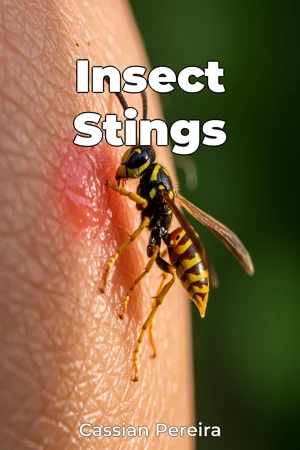
Have you ever wondered what’s really happening when an insect bites or stings you? This book, 'Insect Stings', is designed to provide a comprehensive exploration of insect bites and stings, covering everything from identifying the culprits to understanding the body's reactions and how to manage them. Understanding these reactions is crucial not only for personal safety but also for public health, as insect-borne diseases are a significant global concern. This book delves into three key areas: identifying the diverse range of insect bites and stings, detailing comprehensive treatment options, and explaining strategies to mitigate allergic reactions and prevent infections. These topics are vital because insect encounters are common, and while many are harmless, some can lead to severe health complications. Understanding how to differentiate between various bites and stings, implement appropriate treatments, and reduce the risk of adverse reactions can significantly improve health outcomes. From a historical perspective, understanding and treating insect bites has evolved significantly. Early remedies often involved folklore and anecdotal evidence, while modern approaches rely on scientific understanding of venom composition, immune responses, and effective medications. Socially, awareness of insect-borne diseases influences public health policies and personal protective measures. Scientifically, ongoing research continues to refine our understanding of insect venoms and the body's complex reactions to them. The central argument of this book is that a thorough understanding of insect bites and stings empowers individuals to respond effectively, minimizing health risks and improving quality of life. This knowledge is essential for healthcare professionals, outdoor enthusiasts, and anyone seeking to be well-informed about potential health hazards in their environment. The book begins by introducing the main concepts, classifying common biting and stinging insects like mosquitoes, bees, wasps, ants, spiders, and ticks. Each insect's bite or sting is examined in detail, describing the immediate and subsequent symptoms associated with each type. Different symptoms are shown for each insect and bite type. The development of ideas includes major sections on treatment options for mild to severe reactions, including first aid measures, over-the-counter medications, and when to seek professional medical care. Moreover, the book explores techniques for reducing allergic reactions, such as identifying potential allergens, understanding the use of epinephrine auto-injectors (EpiPens), and considering venom immunotherapy. The book culminates with a discussion of preventive measures to avoid insect bites and stings, including the use of repellents, protective clothing, and modifying environments to reduce insect populations. It also covers the importance of preventing secondary infections through proper wound care and hygiene. The evidence presented in this book is drawn from a variety of sources, including peer-reviewed scientific articles, clinical studies, and expert opinions from medical entomologists and allergists. The book also references guidelines from public health organizations such as the Centers for Disease Control and Prevention (CDC) and the World Health Organization (WHO). This book connects to several interdisciplinary fields, including entomology, immunology, and public health. Entomology provides the foundation for understanding insect behavior and venom composition. Immunology elucidates the body's immune response to insect bites and stings. Public health informs strategies for preventing insect-borne diseases and managing outbreaks. These interdisciplinary connections enhance the book’s argument by providing a holistic view of the topic. This book stands out by offering a practical, evidence-based approach to managing insect bites and stings. Unlike many sources that provide general information, this book offers specific identification tips, treatment protocols, and prevention strategies grounded in scientific research. The tone and writing style are accessible and informative, designed to be easily understood by a broad audience while maintaining scientific accuracy. The book uses clear language, illustrative examples, and helpful visuals to make complex information more approachable. The target audience includes healthcare professionals, such as nurses, physicians, and paramedics, who need to diagnose and treat insect bite-related conditions. It also appeals to outdoor enthusiasts, travelers, parents, and anyone interested in learning how to protect themselves and their families from insect bites and stings. As a work of non-fiction in the medical and scientific genres, this book adheres to the conventions of accuracy, objectivity, and clarity. It avoids sensationalism and instead focuses on providing reliable information supported by scientific evidence. The scope of this book is limited to the medical aspects of insect bites and stings, focusing on identification, treatment, and prevention. It does not delve into the ecological or evolutionary aspects of insects in detail, but it does provide enough entomological background to contextualize the medical information. The real-world applications of this book are numerous. Readers can use the information to identify potentially dangerous bites and stings, implement appropriate first aid measures, and make informed decisions about seeking medical care. The book also provides practical advice for preventing insect bites and stings in various settings, such as at home, while traveling, or during outdoor activities. Some ongoing debates in the field include the optimal use of antihistamines and corticosteroids for treating allergic reactions to insect stings, as well as the effectiveness of various insect repellents. The book addresses these controversies by presenting evidence from different perspectives and offering balanced recommendations based on current scientific knowledge.
Have you ever wondered what’s really happening when an insect bites or stings you? This book, 'Insect Stings', is designed to provide a comprehensive exploration of insect bites and stings, covering everything from identifying the culprits to understanding the body's reactions and how to manage them. Understanding these reactions is crucial not only for personal safety but also for public health, as insect-borne diseases are a significant global concern. This book delves into three key areas: identifying the diverse range of insect bites and stings, detailing comprehensive treatment options, and explaining strategies to mitigate allergic reactions and prevent infections. These topics are vital because insect encounters are common, and while many are harmless, some can lead to severe health complications. Understanding how to differentiate between various bites and stings, implement appropriate treatments, and reduce the risk of adverse reactions can significantly improve health outcomes. From a historical perspective, understanding and treating insect bites has evolved significantly. Early remedies often involved folklore and anecdotal evidence, while modern approaches rely on scientific understanding of venom composition, immune responses, and effective medications. Socially, awareness of insect-borne diseases influences public health policies and personal protective measures. Scientifically, ongoing research continues to refine our understanding of insect venoms and the body's complex reactions to them. The central argument of this book is that a thorough understanding of insect bites and stings empowers individuals to respond effectively, minimizing health risks and improving quality of life. This knowledge is essential for healthcare professionals, outdoor enthusiasts, and anyone seeking to be well-informed about potential health hazards in their environment. The book begins by introducing the main concepts, classifying common biting and stinging insects like mosquitoes, bees, wasps, ants, spiders, and ticks. Each insect's bite or sting is examined in detail, describing the immediate and subsequent symptoms associated with each type. Different symptoms are shown for each insect and bite type. The development of ideas includes major sections on treatment options for mild to severe reactions, including first aid measures, over-the-counter medications, and when to seek professional medical care. Moreover, the book explores techniques for reducing allergic reactions, such as identifying potential allergens, understanding the use of epinephrine auto-injectors (EpiPens), and considering venom immunotherapy. The book culminates with a discussion of preventive measures to avoid insect bites and stings, including the use of repellents, protective clothing, and modifying environments to reduce insect populations. It also covers the importance of preventing secondary infections through proper wound care and hygiene. The evidence presented in this book is drawn from a variety of sources, including peer-reviewed scientific articles, clinical studies, and expert opinions from medical entomologists and allergists. The book also references guidelines from public health organizations such as the Centers for Disease Control and Prevention (CDC) and the World Health Organization (WHO). This book connects to several interdisciplinary fields, including entomology, immunology, and public health. Entomology provides the foundation for understanding insect behavior and venom composition. Immunology elucidates the body's immune response to insect bites and stings. Public health informs strategies for preventing insect-borne diseases and managing outbreaks. These interdisciplinary connections enhance the book’s argument by providing a holistic view of the topic. This book stands out by offering a practical, evidence-based approach to managing insect bites and stings. Unlike many sources that provide general information, this book offers specific identification tips, treatment protocols, and prevention strategies grounded in scientific research. The tone and writing style are accessible and informative, designed to be easily understood by a broad audience while maintaining scientific accuracy. The book uses clear language, illustrative examples, and helpful visuals to make complex information more approachable. The target audience includes healthcare professionals, such as nurses, physicians, and paramedics, who need to diagnose and treat insect bite-related conditions. It also appeals to outdoor enthusiasts, travelers, parents, and anyone interested in learning how to protect themselves and their families from insect bites and stings. As a work of non-fiction in the medical and scientific genres, this book adheres to the conventions of accuracy, objectivity, and clarity. It avoids sensationalism and instead focuses on providing reliable information supported by scientific evidence. The scope of this book is limited to the medical aspects of insect bites and stings, focusing on identification, treatment, and prevention. It does not delve into the ecological or evolutionary aspects of insects in detail, but it does provide enough entomological background to contextualize the medical information. The real-world applications of this book are numerous. Readers can use the information to identify potentially dangerous bites and stings, implement appropriate first aid measures, and make informed decisions about seeking medical care. The book also provides practical advice for preventing insect bites and stings in various settings, such as at home, while traveling, or during outdoor activities. Some ongoing debates in the field include the optimal use of antihistamines and corticosteroids for treating allergic reactions to insect stings, as well as the effectiveness of various insect repellents. The book addresses these controversies by presenting evidence from different perspectives and offering balanced recommendations based on current scientific knowledge.
"Insect Stings" offers a comprehensive guide to understanding and managing insect bites and stings, a common concern with potentially serious health implications. This book explores the identification of various culprits, details effective treatment options, and provides strategies for preventing allergic reactions and infections. It emphasizes the importance of recognizing different types of bites and stings, from mosquito bites to bee stings, and knowing when to seek professional medical care, especially concerning allergic reactions. The book progresses systematically, starting with an introduction to common biting and stinging insects and their symptoms. It then moves into treatment protocols for mild to severe reactions, including the proper use of EpiPens and venom immunotherapy for severe allergies. Crucially, it culminates with preventive measures, such as using insect repellents and modifying environments to minimize insect populations. Understanding the body's reactions, especially allergic reactions, is vital, and this book provides practical, evidence-based advice, making it an invaluable resource for healthcare professionals, outdoor enthusiasts, and anyone seeking to protect themselves from insect-related health hazards.
Book Details
ISBN
9788235243768
Publisher
Publifye AS
Your Licenses
You don't own any licenses for this book
Purchase a license below to unlock this book and download the EPUB.
Purchase License
Select a tier to unlock this book
Need bulk licensing?
Contact us for enterprise agreements.