
About This Book
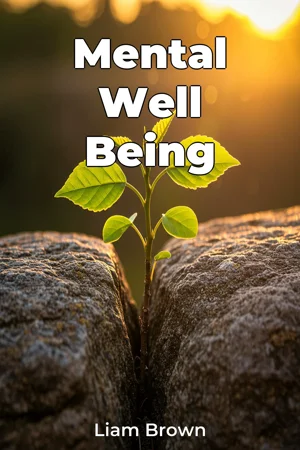
Are you concerned about the mental and emotional well-being of the children in your life? This book, "Mental Well Being," offers a comprehensive guide to fostering resilience and positive mental health in children through mindfulness, emotional awareness, and strong social connections. These three pillars form the foundation of a child's ability to navigate the complexities of life, manage stress, and develop healthy relationships. Understanding and nurturing these aspects is crucial for parents, educators, and anyone involved in a child's development. "Mental Well Being" delves into the scientific and psychological context of childhood mental health. It addresses the increasing prevalence of anxiety and depression in young people, highlighting the role of environmental factors, societal pressures, and developmental stages. This book recognizes that a child's mental health is not solely an individual issue but is influenced by a complex interplay of biological, psychological, and social factors. We navigate the complex landscape of child psychology, providing readers with the knowledge base necessary to understand the challenges children face today. The central argument of "Mental Well Being" is that proactive cultivation of mindfulness, emotional awareness, and social connections provides children with the tools they need to thrive. This book offers practical strategies and evidence-based techniques for supporting children's mental and emotional development. We argue that these skills are not innate but can be learned and strengthened through consistent effort and guidance. The book unfolds in a structured manner, beginning with an introduction to the core concepts of mindfulness, emotional literacy, and social connectedness. It explores the neurological basis of these skills and their impact on a child's brain development. The subsequent sections delve into each pillar in detail. We explore techniques for teaching mindfulness to children, helping them develop the ability to focus their attention, manage their emotions, and reduce stress. The book also provides guidance on fostering emotional awareness, enabling children to identify, understand, and express their feelings in healthy ways. Practical strategies for building strong social connections are also examined, emphasizing the importance of empathy, communication, and positive relationships. The concluding chapters synthesize these ideas, offering practical advice on integrating mindfulness, emotional awareness, and social connection strategies into daily life. Concrete examples and case studies are used throughout, grounding the theoretical concepts in real-world scenarios. The evidence presented in "Mental Well Being" draws from a wide range of sources, including psychological research, educational studies, and sociological analyses. We present data from clinical trials, longitudinal studies, and observational research to support our claims. "Mental Well Being" also connects to other fields such as education, sociology, and neuroscience. The book draws upon educational research to inform its strategies for teaching mindfulness and emotional literacy in schools. It considers sociological factors that impact children's mental health, such as poverty, inequality, and cultural norms. The book also integrates findings from neuroscience to explain the biological mechanisms underlying the effectiveness of mindfulness and emotional regulation techniques. The book stands out due to its integrated and holistic approach. It moves beyond simply defining the problems facing children, and offers actionable solutions and practical tools. This book aims to equip adults with the knowledge and skills they need to promote positive mental health outcomes for the children in their lives. Written in an accessible and engaging style, "Mental Well Being" avoids jargon and technical language, making it suitable for a broad audience. The tone is both informative and supportive, offering encouragement and guidance to readers who may be new to these concepts. The target audience includes parents, educators, therapists, and anyone interested in promoting the mental and emotional well-being of children. The book is particularly valuable for those seeking evidence-based strategies and practical tips for supporting children's mental health. As a psychology and parenting guide, "Mental Well Being" adheres to the conventions of providing evidence-based information, practical advice, and real-world examples. The scope of the book is limited to the mental and emotional well-being of children, focusing primarily on prevention and early intervention strategies. While it acknowledges the importance of addressing mental health disorders, the book does not delve into clinical diagnoses or treatment protocols. The information presented in "Mental Well Being" can be applied in various settings, including homes, schools, and community organizations. The book offers practical strategies for incorporating mindfulness into daily routines, teaching emotional literacy skills in the classroom, and fostering positive social interactions among children. We recognize that there are ongoing debates and varying perspectives within the field of child psychology. For example, different approaches exist for teaching mindfulness to children, and varying opinions exist on the role of technology in children's mental health. The book acknowledges these controversies, presenting different viewpoints and encouraging readers to critically evaluate the information presented.
Are you concerned about the mental and emotional well-being of the children in your life? This book, "Mental Well Being," offers a comprehensive guide to fostering resilience and positive mental health in children through mindfulness, emotional awareness, and strong social connections. These three pillars form the foundation of a child's ability to navigate the complexities of life, manage stress, and develop healthy relationships. Understanding and nurturing these aspects is crucial for parents, educators, and anyone involved in a child's development. "Mental Well Being" delves into the scientific and psychological context of childhood mental health. It addresses the increasing prevalence of anxiety and depression in young people, highlighting the role of environmental factors, societal pressures, and developmental stages. This book recognizes that a child's mental health is not solely an individual issue but is influenced by a complex interplay of biological, psychological, and social factors. We navigate the complex landscape of child psychology, providing readers with the knowledge base necessary to understand the challenges children face today. The central argument of "Mental Well Being" is that proactive cultivation of mindfulness, emotional awareness, and social connections provides children with the tools they need to thrive. This book offers practical strategies and evidence-based techniques for supporting children's mental and emotional development. We argue that these skills are not innate but can be learned and strengthened through consistent effort and guidance. The book unfolds in a structured manner, beginning with an introduction to the core concepts of mindfulness, emotional literacy, and social connectedness. It explores the neurological basis of these skills and their impact on a child's brain development. The subsequent sections delve into each pillar in detail. We explore techniques for teaching mindfulness to children, helping them develop the ability to focus their attention, manage their emotions, and reduce stress. The book also provides guidance on fostering emotional awareness, enabling children to identify, understand, and express their feelings in healthy ways. Practical strategies for building strong social connections are also examined, emphasizing the importance of empathy, communication, and positive relationships. The concluding chapters synthesize these ideas, offering practical advice on integrating mindfulness, emotional awareness, and social connection strategies into daily life. Concrete examples and case studies are used throughout, grounding the theoretical concepts in real-world scenarios. The evidence presented in "Mental Well Being" draws from a wide range of sources, including psychological research, educational studies, and sociological analyses. We present data from clinical trials, longitudinal studies, and observational research to support our claims. "Mental Well Being" also connects to other fields such as education, sociology, and neuroscience. The book draws upon educational research to inform its strategies for teaching mindfulness and emotional literacy in schools. It considers sociological factors that impact children's mental health, such as poverty, inequality, and cultural norms. The book also integrates findings from neuroscience to explain the biological mechanisms underlying the effectiveness of mindfulness and emotional regulation techniques. The book stands out due to its integrated and holistic approach. It moves beyond simply defining the problems facing children, and offers actionable solutions and practical tools. This book aims to equip adults with the knowledge and skills they need to promote positive mental health outcomes for the children in their lives. Written in an accessible and engaging style, "Mental Well Being" avoids jargon and technical language, making it suitable for a broad audience. The tone is both informative and supportive, offering encouragement and guidance to readers who may be new to these concepts. The target audience includes parents, educators, therapists, and anyone interested in promoting the mental and emotional well-being of children. The book is particularly valuable for those seeking evidence-based strategies and practical tips for supporting children's mental health. As a psychology and parenting guide, "Mental Well Being" adheres to the conventions of providing evidence-based information, practical advice, and real-world examples. The scope of the book is limited to the mental and emotional well-being of children, focusing primarily on prevention and early intervention strategies. While it acknowledges the importance of addressing mental health disorders, the book does not delve into clinical diagnoses or treatment protocols. The information presented in "Mental Well Being" can be applied in various settings, including homes, schools, and community organizations. The book offers practical strategies for incorporating mindfulness into daily routines, teaching emotional literacy skills in the classroom, and fostering positive social interactions among children. We recognize that there are ongoing debates and varying perspectives within the field of child psychology. For example, different approaches exist for teaching mindfulness to children, and varying opinions exist on the role of technology in children's mental health. The book acknowledges these controversies, presenting different viewpoints and encouraging readers to critically evaluate the information presented.
"Mental Well Being" explores how to nurture resilience and positive mental health in children. It focuses on three core pillars: mindfulness, emotional awareness, and social connections. These elements are presented as crucial for children to navigate life's challenges and manage stress effectively. The book highlights the increasing prevalence of anxiety and depression in youth, emphasizing the importance of proactive mental health support. The book uniquely combines scientific insights with practical strategies, offering evidence-based techniques to enhance children's well-being. It explores how mindfulness can improve focus, emotional literacy can aid in understanding feelings, and strong social bonds can foster empathy. These skills, the book argues, can be developed through consistent effort and guidance. The content progresses systematically, starting with core concepts and then delving into each pillar, concluding with integration strategies for daily life. "Mental Well Being" uses real-world examples and case studies to ground theoretical concepts, making it accessible to parents, educators, and anyone interested in child psychology. The book emphasizes that a child's mental health is influenced by biological, psychological, and social factors. It provides actionable solutions to foster positive mental health outcomes in children, drawing from research in psychology, education, and neuroscience.
Book Details
ISBN
9788235243751
Publisher
Publifye AS
Your Licenses
You don't own any licenses for this book
Purchase a license below to unlock this book and download the EPUB.
Purchase License
Select a tier to unlock this book
Need bulk licensing?
Contact us for enterprise agreements.