
About This Book
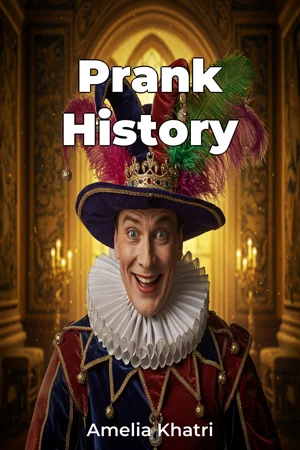
Have you ever wondered how a simple joke could topple empires or reshape industries? "Prank History" delves into the surprisingly influential world of historical hoaxes and pranks, examining how playful deceptions have triggered significant shifts in society, politics, and economics. This book explores the evolution of these elaborate schemes, from royal jesters’ antics to modern-day corporate bamboozles. "Prank History" focuses on three core themes: the psychology behind successful deceptions, the socio-political context that allows them to flourish, and the long-term consequences they engender. Understanding these pranks requires appreciating the human desire for amusement, the vulnerabilities within social structures, and the ripple effects that even seemingly harmless pranks can produce. This book provides that understanding necessary to comprehend their impact. The book begins by establishing a historical foundation, tracing pranks from ancient civilizations to the Renaissance courts. It examines how pranks were used as tools for social commentary, political protest, and even personal gain, showing how historical events set the stage for more complex deceptions. The book is structured into three main sections. The first introduces the fundamental concepts of deception and humor, analyzing the key elements that make a prank successful. It uses case studies of royal pranks to illustrate how jesters leveraged their positions to expose societal hypocrisies and challenge authority. This analysis examines psychological factors like cognitive biases and social conformity that make people susceptible to deception. The second section explores corporate hoaxes that have misled entire nations, such as the "Piltdown Man" archaeological fraud, revealing the interplay between scientific ambition, national pride, and public gullibility. It delves into the techniques used by fraudsters to manipulate public opinion and exploit institutional weaknesses. The third section analyzes the practical implications of pranks, including their impact on legal frameworks, ethical standards, and media practices, and discusses the concept of "fake news" and its origins. The book concludes with a discussion on how understanding the history of pranks can equip readers to become more critical thinkers and discerning consumers of information. The primary sources of information consist of historical archives, news reports from the time of specific events, and academic papers analyzing notable pranks. The methodological approach is interdisciplinary, blending historical analysis with insights from psychology, sociology, and media studies. The book connects to several other fields of study. Firstly, it relates to political science by exploring how pranks can serve as forms of political resistance or propaganda. Secondly, it touches on economics by examining how corporate hoaxes can lead to financial losses and regulatory changes. Thirdly, it intersects with media studies by analyzing how pranks are amplified (or debunked) through different media channels. "Prank History" offers a unique perspective by focusing on the long-term consequences of deception, rather than just the immediate amusement they provide. It also highlights the role of pranks in shaping cultural narratives and social norms. The tone is informative and engaging, appealing to a broad audience interested in history, psychology, and current events. The target audience includes general readers interested in history, students of social sciences, and professionals in fields such as journalism and public relations. "Prank History" will be valuable to them by offering a deeper understanding of human behavior and the power of deception. As a work of historical non-fiction, the book adheres to principles of accuracy, objectivity, and thorough research. While covering a wide range of pranks throughout history, the book intentionally limits its scope to those that have had a significant impact on society or culture. Understanding the history of pranks can provide valuable insights into risk management, crisis communication, and information literacy. By studying past hoaxes, professionals can learn how to better detect and prevent future deceptions. The topic of pranks and hoaxes often involves debates about free speech, artistic expression, and the limits of humor. The book addresses such controversies by presenting different perspectives and encouraging readers to critically evaluate the ethical implications of each prank.
Have you ever wondered how a simple joke could topple empires or reshape industries? "Prank History" delves into the surprisingly influential world of historical hoaxes and pranks, examining how playful deceptions have triggered significant shifts in society, politics, and economics. This book explores the evolution of these elaborate schemes, from royal jesters’ antics to modern-day corporate bamboozles. "Prank History" focuses on three core themes: the psychology behind successful deceptions, the socio-political context that allows them to flourish, and the long-term consequences they engender. Understanding these pranks requires appreciating the human desire for amusement, the vulnerabilities within social structures, and the ripple effects that even seemingly harmless pranks can produce. This book provides that understanding necessary to comprehend their impact. The book begins by establishing a historical foundation, tracing pranks from ancient civilizations to the Renaissance courts. It examines how pranks were used as tools for social commentary, political protest, and even personal gain, showing how historical events set the stage for more complex deceptions. The book is structured into three main sections. The first introduces the fundamental concepts of deception and humor, analyzing the key elements that make a prank successful. It uses case studies of royal pranks to illustrate how jesters leveraged their positions to expose societal hypocrisies and challenge authority. This analysis examines psychological factors like cognitive biases and social conformity that make people susceptible to deception. The second section explores corporate hoaxes that have misled entire nations, such as the "Piltdown Man" archaeological fraud, revealing the interplay between scientific ambition, national pride, and public gullibility. It delves into the techniques used by fraudsters to manipulate public opinion and exploit institutional weaknesses. The third section analyzes the practical implications of pranks, including their impact on legal frameworks, ethical standards, and media practices, and discusses the concept of "fake news" and its origins. The book concludes with a discussion on how understanding the history of pranks can equip readers to become more critical thinkers and discerning consumers of information. The primary sources of information consist of historical archives, news reports from the time of specific events, and academic papers analyzing notable pranks. The methodological approach is interdisciplinary, blending historical analysis with insights from psychology, sociology, and media studies. The book connects to several other fields of study. Firstly, it relates to political science by exploring how pranks can serve as forms of political resistance or propaganda. Secondly, it touches on economics by examining how corporate hoaxes can lead to financial losses and regulatory changes. Thirdly, it intersects with media studies by analyzing how pranks are amplified (or debunked) through different media channels. "Prank History" offers a unique perspective by focusing on the long-term consequences of deception, rather than just the immediate amusement they provide. It also highlights the role of pranks in shaping cultural narratives and social norms. The tone is informative and engaging, appealing to a broad audience interested in history, psychology, and current events. The target audience includes general readers interested in history, students of social sciences, and professionals in fields such as journalism and public relations. "Prank History" will be valuable to them by offering a deeper understanding of human behavior and the power of deception. As a work of historical non-fiction, the book adheres to principles of accuracy, objectivity, and thorough research. While covering a wide range of pranks throughout history, the book intentionally limits its scope to those that have had a significant impact on society or culture. Understanding the history of pranks can provide valuable insights into risk management, crisis communication, and information literacy. By studying past hoaxes, professionals can learn how to better detect and prevent future deceptions. The topic of pranks and hoaxes often involves debates about free speech, artistic expression, and the limits of humor. The book addresses such controversies by presenting different perspectives and encouraging readers to critically evaluate the ethical implications of each prank.
"Prank History" explores the profound influence of pranks and hoaxes throughout history, revealing how playful deceptions have triggered significant shifts in society, politics, and even economics. From royal jesters using humor to challenge authority to elaborate corporate schemes misleading entire nations, the book examines the psychology behind successful deceptions, the socio-political contexts that allow them to flourish, and their lasting consequences. These historical pranks demonstrate the human desire for amusement and the vulnerabilities within social structures. The book progresses chronologically, starting with a historical foundation in ancient civilizations and moving through the Renaissance, before diving into modern corporate hoaxes. It emphasizes how pranks serve as social commentary, political protest, and even personal gain. One intriguing example is the "Piltdown Man" archaeological fraud, which exposed the interplay between scientific ambition, national pride, and public gullibility. By blending historical analysis with insights from psychology, sociology, and media studies, "Prank History" offers a unique perspective on the long-term consequences of deception and its role in shaping cultural narratives. Ultimately, "Prank History" argues that understanding past deceptions equips readers to become more critical thinkers and discerning consumers of information. The book analyzes the practical implications of pranks, including their impact on legal frameworks, ethical standards, and media practices, and also touches on the origins of "fake news". By studying past hoaxes, this book will lead to a deeper understanding of human behavior and the power of deception.
Book Details
ISBN
9788235243256
Publisher
Publifye AS
Your Licenses
You don't own any licenses for this book
Purchase a license below to unlock this book and download the EPUB.
Purchase License
Select a tier to unlock this book
Need bulk licensing?
Contact us for enterprise agreements.