
About This Book
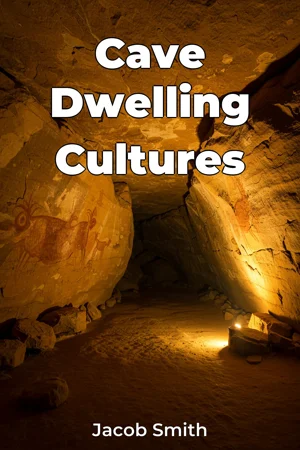
What can the depths of the earth reveal about the ingenuity and adaptability of early human societies? "Cave Dwelling Cultures" delves into the fascinating history of indigenous groups worldwide who made caves their homes, exploring how these subterranean environments shaped their societies, customs, and technologies. This book examines the profound interaction between humanity and the geological world, illuminating the resourcefulness required for survival in these unique settings. This study focuses on two primary themes: firstly, the specific adaptations – both physical and cultural – that allowed these communities to thrive underground; and secondly, the profound impact that cave environments had on their social structures, belief systems, and artistic expression. These themes are significant because they challenge conventional narratives of human development, which often overlook the critical role played by less visible, subterranean settlements. Understanding cave dwelling cultures requires a background in archaeology, anthropology, and geology. The book synthesizes findings from these disciplines to provide a holistic picture of life within caves. It considers the geological formations of caves, the availability of resources like water and minerals, and the changing climate patterns that influenced settlement. The central argument of "Cave Dwelling Cultures" is that these communities were not merely refugees or outcasts, but ingenious societies who actively adapted to and utilized their environment, creating sophisticated cultures that deserve recognition and further study. The book is structured to guide readers through a comprehensive exploration of this topic. It begins by introducing the concept of cave dwelling, establishing its significance in human history, and outlining the geographical distribution of cave-dwelling cultures across the globe. The subsequent sections delve into specific case studies of different indigenous groups: The first is the exploration of the Maya civilization within the Yucatan Peninsula, detailing their use of caves for habitation, ritual, and water storage. The second major point focuses on the Aboriginal Australians and their cave paintings in the Northern Territory, examining how these sites reveal their deep spiritual connection to the land and their ancestral stories. Finally, the book analyzes the San people of South Africa and their use of caves for shelter and artistic expression. Each case study examines the unique ways these groups modified and adapted to their cave environments. The culmination of the book draws comparisons and contrasts between these diverse cultures, highlighting common threads of adaptation, innovation, and resilience. The evidence presented in this book is drawn from archaeological excavations, ethnographic studies, geological surveys, and analyses of rock art. These data sources provide a rich and multi-faceted understanding of these societies. The book further connects to other fields such as environmental science, examining the impact of human habitation on cave ecosystems, and art history, analyzing the symbolic meanings embedded in cave paintings and other forms of material culture. "Cave Dwelling Cultures" distinguishes itself by taking an interdisciplinary approach, combining scientific analysis with cultural interpretation to offer a nuanced understanding of these often-misunderstood societies. The tone is academic yet accessible, aiming to engage both scholars and general readers with an interest in history, anthropology, and archaeology. The target audience includes students, researchers, and anyone curious about the diversity of human experience and our relationship with the natural world. The scope of the book is limited to cultures where cave dwelling was a significant and sustained aspect of their way of life. It acknowledges that while many cultures may have used caves for temporary shelter or ritual purposes, this book focuses on those who made caves central to their existence. The real-world applications of this knowledge include informing conservation efforts to protect cave sites, promoting cultural heritage tourism that respects indigenous traditions, and providing insights into sustainable living practices. While exploring these aspects, the book tackles controversies in cave archaeology and anthropology such as the interpretation of rock art. "Cave Dwelling Cultures" offers a unique perspective on human history, revealing the ingenuity, resilience, and complex social structures of indigenous groups who made caves their homes. It is a testament to the diversity of human experience and the enduring power of adaptation.
What can the depths of the earth reveal about the ingenuity and adaptability of early human societies? "Cave Dwelling Cultures" delves into the fascinating history of indigenous groups worldwide who made caves their homes, exploring how these subterranean environments shaped their societies, customs, and technologies. This book examines the profound interaction between humanity and the geological world, illuminating the resourcefulness required for survival in these unique settings. This study focuses on two primary themes: firstly, the specific adaptations – both physical and cultural – that allowed these communities to thrive underground; and secondly, the profound impact that cave environments had on their social structures, belief systems, and artistic expression. These themes are significant because they challenge conventional narratives of human development, which often overlook the critical role played by less visible, subterranean settlements. Understanding cave dwelling cultures requires a background in archaeology, anthropology, and geology. The book synthesizes findings from these disciplines to provide a holistic picture of life within caves. It considers the geological formations of caves, the availability of resources like water and minerals, and the changing climate patterns that influenced settlement. The central argument of "Cave Dwelling Cultures" is that these communities were not merely refugees or outcasts, but ingenious societies who actively adapted to and utilized their environment, creating sophisticated cultures that deserve recognition and further study. The book is structured to guide readers through a comprehensive exploration of this topic. It begins by introducing the concept of cave dwelling, establishing its significance in human history, and outlining the geographical distribution of cave-dwelling cultures across the globe. The subsequent sections delve into specific case studies of different indigenous groups: The first is the exploration of the Maya civilization within the Yucatan Peninsula, detailing their use of caves for habitation, ritual, and water storage. The second major point focuses on the Aboriginal Australians and their cave paintings in the Northern Territory, examining how these sites reveal their deep spiritual connection to the land and their ancestral stories. Finally, the book analyzes the San people of South Africa and their use of caves for shelter and artistic expression. Each case study examines the unique ways these groups modified and adapted to their cave environments. The culmination of the book draws comparisons and contrasts between these diverse cultures, highlighting common threads of adaptation, innovation, and resilience. The evidence presented in this book is drawn from archaeological excavations, ethnographic studies, geological surveys, and analyses of rock art. These data sources provide a rich and multi-faceted understanding of these societies. The book further connects to other fields such as environmental science, examining the impact of human habitation on cave ecosystems, and art history, analyzing the symbolic meanings embedded in cave paintings and other forms of material culture. "Cave Dwelling Cultures" distinguishes itself by taking an interdisciplinary approach, combining scientific analysis with cultural interpretation to offer a nuanced understanding of these often-misunderstood societies. The tone is academic yet accessible, aiming to engage both scholars and general readers with an interest in history, anthropology, and archaeology. The target audience includes students, researchers, and anyone curious about the diversity of human experience and our relationship with the natural world. The scope of the book is limited to cultures where cave dwelling was a significant and sustained aspect of their way of life. It acknowledges that while many cultures may have used caves for temporary shelter or ritual purposes, this book focuses on those who made caves central to their existence. The real-world applications of this knowledge include informing conservation efforts to protect cave sites, promoting cultural heritage tourism that respects indigenous traditions, and providing insights into sustainable living practices. While exploring these aspects, the book tackles controversies in cave archaeology and anthropology such as the interpretation of rock art. "Cave Dwelling Cultures" offers a unique perspective on human history, revealing the ingenuity, resilience, and complex social structures of indigenous groups who made caves their homes. It is a testament to the diversity of human experience and the enduring power of adaptation.
"Cave Dwelling Cultures" explores the fascinating world of subterranean settlements, revealing how indigenous groups adapted and thrived in cave environments. This book examines the unique interaction between humanity and the geological world, highlighting the resourcefulness required for survival, and challenging conventional narratives of human development that often overlook these less visible societies. From the Yucatan Maya's use of caves for habitation and ritual to the Aboriginal Australian cave paintings that reveal deep spiritual connections and ancestral stories, the book unearths compelling evidence of human ingenuity. The book synthesizes findings from archaeology, anthropology, and geology, providing a holistic picture of life within caves. It begins by establishing the significance of cave dwelling in human history and then delves into specific case studies, also including the San people of South Africa and their use of caves for shelter and artistic expression. These diverse cultures showcase common threads of adaptation, innovation, and resilience. The book distinguishes itself through its interdisciplinary approach, offering a nuanced understanding of these often-misunderstood societies and their cultural adaptation. By drawing from archaeological excavations, ethnographic studies, and geological surveys, "Cave Dwelling Cultures" presents a multi-faceted understanding of these societies. It provides insights into sustainable living practices and tackles controversies in cave archaeology, such as the interpretation of rock art. The book progresses by exploring the geographical distribution of cave-dwelling cultures, and then analyzing specific indigenous groups, before drawing comparisons and contrasts.
Book Details
ISBN
9788235243218
Publisher
Publifye AS
Your Licenses
You don't own any licenses for this book
Purchase a license below to unlock this book and download the EPUB.
Purchase License
Select a tier to unlock this book
Need bulk licensing?
Contact us for enterprise agreements.