
About This Book
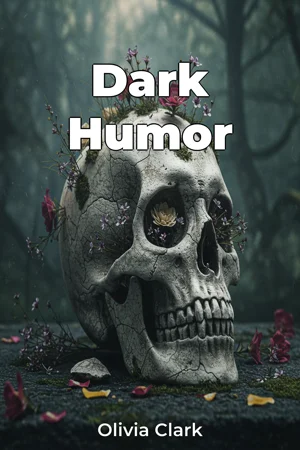
Why do we laugh at the things that scare us most? "Dark Humor" delves into the unsettling yet fascinating world where comedy intersects with tragedy, exploring how humor becomes a lens through which we process morbid, controversial, and often taboo subjects. This book navigates the complex interplay between philosophy and psychology to understand the mechanisms, motivations, and societal implications of finding humor in the face of darkness. We will unpack two key elements: first, the psychological defense mechanisms—such as sublimation and intellectualization—that dark humor employs to manage anxiety and fear; and second, the philosophical implications of laughter when directed at topics like death, violence, and social injustice. Understanding these topics is crucial for comprehending not only individual coping strategies, but also the broader cultural narratives that shape our perceptions of sensitive issues. The book provides a historical context, tracing the evolution of dark humor from ancient satire to modern stand-up comedy, examining how societal norms and taboos have influenced its expression. Readers should have a basic understanding of psychological concepts such as defense mechanisms and cognitive dissonance, as well as a general familiarity with philosophical ethics. Our central argument posits that dark humor, far from being merely offensive or insensitive, serves as a vital cognitive and emotional tool. It allows individuals and societies to confront difficult realities, challenge established power structures, and ultimately, to find resilience in the face of adversity. This argument is important because it challenges conventional views of humor as purely lighthearted entertainment, revealing its potential as a complex form of social commentary and psychological coping. The book is structured in four parts. First, introducing the core concepts of dark humor, its definition, and its differentiation from other forms of comedy. Second, developing the psychological underpinnings by examining theories of humor, defense mechanisms, and the role of the amygdala in processing threatening stimuli. Third, building upon philosophical dimensions, exploring ethical considerations, the nature of offense, and the potential for dark humor to promote social change. Finally, examining real-world applications of dark humor in various contexts, such as coping with trauma, navigating political polarization, and fostering difficult conversations. Evidence will be drawn from a wide range of sources, including psychological studies on humor and coping, philosophical treatises on ethics and aesthetics, sociological analyses of comedy and culture, and case studies of individuals and communities using dark humor to navigate challenging situations. The book makes connections to several other fields, including sociology, political science, and media studies. Sociological perspectives will illuminate the role of dark humor in shaping social norms and challenging power structures. Political science will explore its use as a tool for satire and social commentary. Media studies will analyze its representation in various forms of popular culture. A unique aspect of this book is its interdisciplinary approach, combining insights from psychology and philosophy to offer a nuanced understanding of dark humor that goes beyond simple classifications of "good" or "bad" taste. It offers a framework for analyzing and appreciating dark humor, not as a sign of malice or insensitivity, but as a complex and multifaceted phenomenon with significant psychological and social implications. The book adopts an accessible yet academic tone, balancing rigorous research with engaging prose to make complex ideas understandable to a broad audience. It avoids sensationalism and instead presents a thoughtful and balanced exploration of a controversial topic. The target audience includes students and scholars of psychology, philosophy, and communication, as well as anyone interested in understanding the complexities of human behavior and the power of humor. This book would be valuable to them because it offers a fresh perspective on a topic that is often misunderstood or dismissed. In line with the conventions of non-fiction, the book will maintain a fact-based approach, grounding its arguments in empirical evidence and philosophical reasoning. It will also adhere to ethical guidelines for discussing sensitive topics, avoiding gratuitous offense and promoting respectful dialogue. The scope of the book is limited to the theoretical and practical aspects of dark humor, with less emphasis on specific examples or comedic performances. This focus allows for a deeper exploration of the underlying psychological and philosophical principles. The information in the book can be applied to various real-world situations, such as improving communication skills, coping with stress and adversity, and fostering more inclusive and understanding communities. It provides readers with the tools to analyze and appreciate dark humor, not just as consumers, but also as critical thinkers. The book addresses ongoing debates about the ethics of dark humor, including questions of whether certain topics are inherently off-limits, and whether humor can ever be truly harmless. By exploring these controversies, the book encourages readers to engage in thoughtful and informed discussions about the role of humor in society.
Why do we laugh at the things that scare us most? "Dark Humor" delves into the unsettling yet fascinating world where comedy intersects with tragedy, exploring how humor becomes a lens through which we process morbid, controversial, and often taboo subjects. This book navigates the complex interplay between philosophy and psychology to understand the mechanisms, motivations, and societal implications of finding humor in the face of darkness. We will unpack two key elements: first, the psychological defense mechanisms—such as sublimation and intellectualization—that dark humor employs to manage anxiety and fear; and second, the philosophical implications of laughter when directed at topics like death, violence, and social injustice. Understanding these topics is crucial for comprehending not only individual coping strategies, but also the broader cultural narratives that shape our perceptions of sensitive issues. The book provides a historical context, tracing the evolution of dark humor from ancient satire to modern stand-up comedy, examining how societal norms and taboos have influenced its expression. Readers should have a basic understanding of psychological concepts such as defense mechanisms and cognitive dissonance, as well as a general familiarity with philosophical ethics. Our central argument posits that dark humor, far from being merely offensive or insensitive, serves as a vital cognitive and emotional tool. It allows individuals and societies to confront difficult realities, challenge established power structures, and ultimately, to find resilience in the face of adversity. This argument is important because it challenges conventional views of humor as purely lighthearted entertainment, revealing its potential as a complex form of social commentary and psychological coping. The book is structured in four parts. First, introducing the core concepts of dark humor, its definition, and its differentiation from other forms of comedy. Second, developing the psychological underpinnings by examining theories of humor, defense mechanisms, and the role of the amygdala in processing threatening stimuli. Third, building upon philosophical dimensions, exploring ethical considerations, the nature of offense, and the potential for dark humor to promote social change. Finally, examining real-world applications of dark humor in various contexts, such as coping with trauma, navigating political polarization, and fostering difficult conversations. Evidence will be drawn from a wide range of sources, including psychological studies on humor and coping, philosophical treatises on ethics and aesthetics, sociological analyses of comedy and culture, and case studies of individuals and communities using dark humor to navigate challenging situations. The book makes connections to several other fields, including sociology, political science, and media studies. Sociological perspectives will illuminate the role of dark humor in shaping social norms and challenging power structures. Political science will explore its use as a tool for satire and social commentary. Media studies will analyze its representation in various forms of popular culture. A unique aspect of this book is its interdisciplinary approach, combining insights from psychology and philosophy to offer a nuanced understanding of dark humor that goes beyond simple classifications of "good" or "bad" taste. It offers a framework for analyzing and appreciating dark humor, not as a sign of malice or insensitivity, but as a complex and multifaceted phenomenon with significant psychological and social implications. The book adopts an accessible yet academic tone, balancing rigorous research with engaging prose to make complex ideas understandable to a broad audience. It avoids sensationalism and instead presents a thoughtful and balanced exploration of a controversial topic. The target audience includes students and scholars of psychology, philosophy, and communication, as well as anyone interested in understanding the complexities of human behavior and the power of humor. This book would be valuable to them because it offers a fresh perspective on a topic that is often misunderstood or dismissed. In line with the conventions of non-fiction, the book will maintain a fact-based approach, grounding its arguments in empirical evidence and philosophical reasoning. It will also adhere to ethical guidelines for discussing sensitive topics, avoiding gratuitous offense and promoting respectful dialogue. The scope of the book is limited to the theoretical and practical aspects of dark humor, with less emphasis on specific examples or comedic performances. This focus allows for a deeper exploration of the underlying psychological and philosophical principles. The information in the book can be applied to various real-world situations, such as improving communication skills, coping with stress and adversity, and fostering more inclusive and understanding communities. It provides readers with the tools to analyze and appreciate dark humor, not just as consumers, but also as critical thinkers. The book addresses ongoing debates about the ethics of dark humor, including questions of whether certain topics are inherently off-limits, and whether humor can ever be truly harmless. By exploring these controversies, the book encourages readers to engage in thoughtful and informed discussions about the role of humor in society.
"Dark Humor" explores the intriguing intersection of comedy and tragedy, examining why we laugh at subjects that often scare us. Delving into philosophical and psychological underpinnings, the book uncovers how dark humor acts as a lens for processing morbid, taboo, and controversial topics. It sheds light on psychological defense mechanisms like sublimation, which help manage anxiety, and analyzes laughter's philosophical implications when directed at sensitive issues like death or injustice. This interdisciplinary approach uniquely combines insights from psychology and philosophy, moving beyond simplistic notions of good or bad taste. The book argues that dark humor isn't just offensive, but a vital tool for coping and social commentary. Chapters progress from defining dark humor and exploring psychological theories to examining ethical considerations and real-world applications in trauma, political discourse, and difficult conversations. Ultimately, "Dark Humor" challenges traditional views of humor, revealing its potential as a complex form of social commentary and psychological coping mechanism. By understanding its mechanisms, motivations, and societal implications, readers can appreciate dark humor as a multifaceted phenomenon with significant psychological and social value.
Book Details
ISBN
9788235243065
Publisher
Publifye AS
Your Licenses
You don't own any licenses for this book
Purchase a license below to unlock this book and download the EPUB.
Purchase License
Select a tier to unlock this book
Need bulk licensing?
Contact us for enterprise agreements.