
About This Book
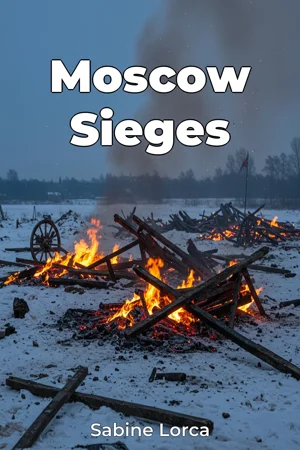
How has Moscow, a city repeatedly targeted for conquest, managed to not only endure but also emerge as a symbol of Russian resilience? "Moscow Sieges" delves into the military history of Moscow, exploring the strategies employed by its defenders and the invaders who sought to claim it. This book examines Moscow's resilience not just as a result of military strength, but as a consequence of intricate interwoven factors, including urban planning, societal structure, and political maneuvering during periods of intense conflict. These topics are essential to understanding Moscow's central place in Russian identity and the recurring threats to its existence throughout history. The book contextualizes these sieges within the broader framework of Russian history, examining the sociopolitical climate that shaped each event. It provides an understanding of the military doctrines and technologies prevalent in each era, from medieval warfare to early modern campaigns. The central argument of "Moscow Sieges" is that Moscow's survival was contingent upon the city's adaptive capacity, its ability to learn from each assault and integrate those lessons into its defense strategies and civic identity. This argument highlights the dynamic interaction between military tactics and societal resilience, underscoring the city's role as a crucible where Russian identity was forged through conflict. The book begins by introducing the geographical and strategic importance of Moscow, followed by an examination of early sieges, such as the Mongol invasion and the sieges during the Time of Troubles. It then develops an analysis of the military strategies employed by both the attackers and the defenders. A major point explored is the evolution of Moscow's fortifications and the tactics used to overcome them. The book culminates with an analysis of the 1812 siege, demonstrating how past experiences contributed to the city's defense. It also considers the practical implications for urban planning and defense strategies applicable to modern cities facing analogous threats. Evidence presented includes archival documents, siege plans, contemporary accounts, and archaeological findings. The book uses comparative analysis, contrasting the different siege tactics and defense mechanisms employed across various historical periods. "Moscow Sieges" connects to other fields such as urban studies, political science, and sociology, illustrating how urban environments influence military strategies and vice versa. It also illustrates how siege warfare affected social structures and political dynamics within the city and the surrounding regions. This book offers a unique perspective by framing the sieges not merely as military engagements, but as pivotal moments in the formation and evolution of Russian identity. It will adopt an academic yet accessible tone, making it suitable for both scholars and general readers interested in military history and Russian studies. The intended audience includes students, academics, and anyone with an interest in military history, Russian history, or urban studies. The book aligns with the conventions of military history by providing detailed analyses of battles and campaigns, while connecting to world history by placing these events within a global context. The book's scope is limited geographically to the sieges of Moscow and chronologically to significant historical sieges ending with 1812. This focus allows for an in-depth analysis of the city's unique experience. From a real-world application perspective, understanding the historical dynamics of urban sieges can inform modern urban planning and security strategies in cities vulnerable to attack or natural disasters. This book also touches on the historical debates regarding the effectiveness of different siege tactics and defense strategies, offering new insights based on the Moscow experience.
How has Moscow, a city repeatedly targeted for conquest, managed to not only endure but also emerge as a symbol of Russian resilience? "Moscow Sieges" delves into the military history of Moscow, exploring the strategies employed by its defenders and the invaders who sought to claim it. This book examines Moscow's resilience not just as a result of military strength, but as a consequence of intricate interwoven factors, including urban planning, societal structure, and political maneuvering during periods of intense conflict. These topics are essential to understanding Moscow's central place in Russian identity and the recurring threats to its existence throughout history. The book contextualizes these sieges within the broader framework of Russian history, examining the sociopolitical climate that shaped each event. It provides an understanding of the military doctrines and technologies prevalent in each era, from medieval warfare to early modern campaigns. The central argument of "Moscow Sieges" is that Moscow's survival was contingent upon the city's adaptive capacity, its ability to learn from each assault and integrate those lessons into its defense strategies and civic identity. This argument highlights the dynamic interaction between military tactics and societal resilience, underscoring the city's role as a crucible where Russian identity was forged through conflict. The book begins by introducing the geographical and strategic importance of Moscow, followed by an examination of early sieges, such as the Mongol invasion and the sieges during the Time of Troubles. It then develops an analysis of the military strategies employed by both the attackers and the defenders. A major point explored is the evolution of Moscow's fortifications and the tactics used to overcome them. The book culminates with an analysis of the 1812 siege, demonstrating how past experiences contributed to the city's defense. It also considers the practical implications for urban planning and defense strategies applicable to modern cities facing analogous threats. Evidence presented includes archival documents, siege plans, contemporary accounts, and archaeological findings. The book uses comparative analysis, contrasting the different siege tactics and defense mechanisms employed across various historical periods. "Moscow Sieges" connects to other fields such as urban studies, political science, and sociology, illustrating how urban environments influence military strategies and vice versa. It also illustrates how siege warfare affected social structures and political dynamics within the city and the surrounding regions. This book offers a unique perspective by framing the sieges not merely as military engagements, but as pivotal moments in the formation and evolution of Russian identity. It will adopt an academic yet accessible tone, making it suitable for both scholars and general readers interested in military history and Russian studies. The intended audience includes students, academics, and anyone with an interest in military history, Russian history, or urban studies. The book aligns with the conventions of military history by providing detailed analyses of battles and campaigns, while connecting to world history by placing these events within a global context. The book's scope is limited geographically to the sieges of Moscow and chronologically to significant historical sieges ending with 1812. This focus allows for an in-depth analysis of the city's unique experience. From a real-world application perspective, understanding the historical dynamics of urban sieges can inform modern urban planning and security strategies in cities vulnerable to attack or natural disasters. This book also touches on the historical debates regarding the effectiveness of different siege tactics and defense strategies, offering new insights based on the Moscow experience.
"Moscow Sieges" explores the military history of Moscow through the lens of its most significant sieges, revealing how these conflicts shaped Russian resilience and identity. The book argues that Moscow's survival was not solely due to military might, but also its adaptive urban planning, societal structure, and astute political maneuvering. Interestingly, the book highlights how Moscow learned from each assault, integrating those lessons into its evolving defense strategies and civic identity. The book begins by establishing Moscow's geographical and strategic importance before delving into early sieges, such as the Mongol invasion and the tumultuous Time of Troubles. It then progresses to analyze military strategies used by both attackers and defenders, with a particular focus on the evolution of Moscow's fortifications. A key aspect is the detailed examination of the 1812 siege, illustrating how previous experiences informed the city's defense. By examining archival documents, siege plans, and contemporary accounts, "Moscow Sieges" offers a unique perspective, framing these events as crucial moments in the formation of Russian identity. It connects military history with urban studies and political science, illustrating how urban environments influence military strategies. This approach makes it valuable for those interested in military history, Russian history, and urban studies, offering insights into siege warfare tactics and urban resilience applicable even to modern cities.
Book Details
ISBN
9788235243034
Publisher
Publifye AS
Your Licenses
You don't own any licenses for this book
Purchase a license below to unlock this book and download the EPUB.
Purchase License
Select a tier to unlock this book
Need bulk licensing?
Contact us for enterprise agreements.