
About This Book
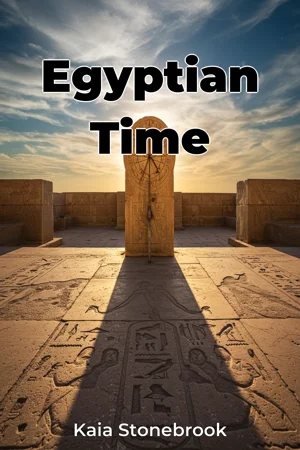
Imagine a world without standardized time, where the rhythm of life is dictated solely by the sun and the river. This is the world of ancient Egypt, a civilization whose ingenuity in observing and codifying the passage of time continues to resonate in our modern lives. "Egyptian Time" delves into the intricate relationship between the ancient Egyptians and their perception of time, exploring how they structured their calendar, tracked the annual Nile flood, and ultimately influenced modern timekeeping with their solar-based system. This book primarily addresses the genesis and evolution of the Egyptian calendar system, the profound impact of the Nile's cyclical flooding on their temporal understanding, and Egypt's contribution to the very foundation of our contemporary methods of measuring time. These topics are pivotal because the Egyptian civilization, a cornerstone of human history, developed a practical and sophisticated system to manage their agricultural society, religious observances, and administrative duties, all deeply intertwined with their accurate comprehension of time's relentless march. Understanding the ancient Egyptian timeline requires a basic familiarity with their religious beliefs, agricultural practices, and social structure. Their polytheistic religion, centered on gods like Ra (the sun god) and Hapi (the god of the Nile), profoundly shaped their understanding of the universe and the cyclical nature of life. The Nile’s annual flood, essential for agriculture, provided a natural rhythm that dictated their calendar. "Egyptian Time" argues that the Egyptians were not merely passive recipients of natural cycles but active architects of a timekeeping system that reflected their worldview and practical needs, a system whose underlying structure still echoes in our modern calendar. "Egyptian Time" is structured to provide a comprehensive understanding of this fascinating topic. It begins by introducing the fundamental principles of Egyptian astronomy and mathematics, crucial for constructing their calendar. The book then explores the development of the Egyptian civil calendar, consisting of 365 days divided into twelve months of thirty days each, with an additional five epagomenal days. It also explains how the Egyptians tracked the Nile’s inundation through the Sothic cycle, demonstrating how this knowledge was integrated into their calendar system. The book culminates by tracing the influence of Egyptian timekeeping on subsequent civilizations, including the Greeks and Romans, and ultimately its contribution to the Gregorian calendar used worldwide today. The book draws upon a wide range of evidence, including hieroglyphic texts, astronomical records from temple walls, and archaeological findings of timekeeping devices like water clocks and sundials. It also incorporates recent scholarship in Egyptology, astronomy, and the history of science to present a nuanced and up-to-date account. "Egyptian Time" connects to several interdisciplinary fields. Firstly, it ties into astronomy, exploring how the Egyptians used celestial observations to develop their calendar. Secondly, it has connections to hydrology, examining how the Nile’s flood influenced their understanding of cyclical time. Lastly, it intersects with religious studies, as the Egyptian calendar was intimately linked to their religious festivals and beliefs. These interdisciplinary connections enrich the book by providing a holistic view of ancient Egyptian civilization. This book adopts a unique perspective by emphasizing the practical and adaptive nature of Egyptian timekeeping. Rather than viewing it as a primitive or inaccurate system, "Egyptian Time" highlights its effectiveness in managing their society and its lasting impact on the development of modern timekeeping. The tone of the book is informative and accessible, aiming to engage both general readers and those with a specific interest in ancient Egypt. It follows the conventions of a non-fiction history book, providing clear explanations, detailed evidence, and a well-structured narrative. The target audience includes anyone interested in ancient history, astronomy, or the history of science. The book would also appeal to those curious about the origins of our modern calendar and timekeeping systems. This book offers valuable insight into a civilization that laid many of the foundations for our modern world. The scope of "Egyptian Time" is limited to the period of ancient Egyptian civilization, from the Early Dynastic Period to the Roman conquest. It does not delve into the timekeeping systems of other ancient cultures in significant detail, focusing primarily on the Egyptian system and its direct influence on later civilizations. The principles of Egyptian timekeeping, particularly their meticulous observation of natural cycles, remain relevant today. In an age of increasing environmental awareness, the Egyptian example serves as a reminder of the importance of aligning our activities with the rhythms of nature as they did in the past, but also by thinking about how they influenced modern timekeeping. While the basic structure of the Egyptian calendar is well-established, there are ongoing debates among scholars regarding the precise dating of certain events and the interpretation of some astronomical records. "Egyptian Time" addresses these controversies by presenting different perspectives and critically evaluating the available evidence.
Imagine a world without standardized time, where the rhythm of life is dictated solely by the sun and the river. This is the world of ancient Egypt, a civilization whose ingenuity in observing and codifying the passage of time continues to resonate in our modern lives. "Egyptian Time" delves into the intricate relationship between the ancient Egyptians and their perception of time, exploring how they structured their calendar, tracked the annual Nile flood, and ultimately influenced modern timekeeping with their solar-based system. This book primarily addresses the genesis and evolution of the Egyptian calendar system, the profound impact of the Nile's cyclical flooding on their temporal understanding, and Egypt's contribution to the very foundation of our contemporary methods of measuring time. These topics are pivotal because the Egyptian civilization, a cornerstone of human history, developed a practical and sophisticated system to manage their agricultural society, religious observances, and administrative duties, all deeply intertwined with their accurate comprehension of time's relentless march. Understanding the ancient Egyptian timeline requires a basic familiarity with their religious beliefs, agricultural practices, and social structure. Their polytheistic religion, centered on gods like Ra (the sun god) and Hapi (the god of the Nile), profoundly shaped their understanding of the universe and the cyclical nature of life. The Nile’s annual flood, essential for agriculture, provided a natural rhythm that dictated their calendar. "Egyptian Time" argues that the Egyptians were not merely passive recipients of natural cycles but active architects of a timekeeping system that reflected their worldview and practical needs, a system whose underlying structure still echoes in our modern calendar. "Egyptian Time" is structured to provide a comprehensive understanding of this fascinating topic. It begins by introducing the fundamental principles of Egyptian astronomy and mathematics, crucial for constructing their calendar. The book then explores the development of the Egyptian civil calendar, consisting of 365 days divided into twelve months of thirty days each, with an additional five epagomenal days. It also explains how the Egyptians tracked the Nile’s inundation through the Sothic cycle, demonstrating how this knowledge was integrated into their calendar system. The book culminates by tracing the influence of Egyptian timekeeping on subsequent civilizations, including the Greeks and Romans, and ultimately its contribution to the Gregorian calendar used worldwide today. The book draws upon a wide range of evidence, including hieroglyphic texts, astronomical records from temple walls, and archaeological findings of timekeeping devices like water clocks and sundials. It also incorporates recent scholarship in Egyptology, astronomy, and the history of science to present a nuanced and up-to-date account. "Egyptian Time" connects to several interdisciplinary fields. Firstly, it ties into astronomy, exploring how the Egyptians used celestial observations to develop their calendar. Secondly, it has connections to hydrology, examining how the Nile’s flood influenced their understanding of cyclical time. Lastly, it intersects with religious studies, as the Egyptian calendar was intimately linked to their religious festivals and beliefs. These interdisciplinary connections enrich the book by providing a holistic view of ancient Egyptian civilization. This book adopts a unique perspective by emphasizing the practical and adaptive nature of Egyptian timekeeping. Rather than viewing it as a primitive or inaccurate system, "Egyptian Time" highlights its effectiveness in managing their society and its lasting impact on the development of modern timekeeping. The tone of the book is informative and accessible, aiming to engage both general readers and those with a specific interest in ancient Egypt. It follows the conventions of a non-fiction history book, providing clear explanations, detailed evidence, and a well-structured narrative. The target audience includes anyone interested in ancient history, astronomy, or the history of science. The book would also appeal to those curious about the origins of our modern calendar and timekeeping systems. This book offers valuable insight into a civilization that laid many of the foundations for our modern world. The scope of "Egyptian Time" is limited to the period of ancient Egyptian civilization, from the Early Dynastic Period to the Roman conquest. It does not delve into the timekeeping systems of other ancient cultures in significant detail, focusing primarily on the Egyptian system and its direct influence on later civilizations. The principles of Egyptian timekeeping, particularly their meticulous observation of natural cycles, remain relevant today. In an age of increasing environmental awareness, the Egyptian example serves as a reminder of the importance of aligning our activities with the rhythms of nature as they did in the past, but also by thinking about how they influenced modern timekeeping. While the basic structure of the Egyptian calendar is well-established, there are ongoing debates among scholars regarding the precise dating of certain events and the interpretation of some astronomical records. "Egyptian Time" addresses these controversies by presenting different perspectives and critically evaluating the available evidence.
"Egyptian Time" explores how ancient Egyptians perceived and codified time, revealing a system deeply interwoven with their environment and beliefs. The book highlights their sophisticated solar-based calendar and its origins, dictated by the sun and the Nile's rhythm. Readers will discover how crucial events like the annual Nile flood were meticulously tracked, impacting their agricultural society, religious festivals, and administrative duties. The Egyptians' ingenuity in timekeeping, particularly their civil calendar, laid the foundation for many concepts we use today. The book progresses from the fundamental principles of Egyptian astronomy and mathematics to the development of their unique civil calendar. It details how the Egyptians tracked the Nile's inundation through the Sothic cycle, integrating this knowledge into their calendar system. What makes this book unique is its emphasis on the practical and adaptive nature of Egyptian timekeeping, showcasing its effectiveness in managing society and influencing modern methods. Drawing from hieroglyphic texts, astronomical records, and archaeological findings, "Egyptian Time" presents a nuanced and up-to-date account of this fascinating aspect of ancient Egyptian civilization. It connects to interdisciplinary fields like astronomy, hydrology, and religious studies, providing a holistic view of this cornerstone of human history and timekeeping.
Book Details
ISBN
9788235242693
Publisher
Publifye AS
Your Licenses
You don't own any licenses for this book
Purchase a license below to unlock this book and download the EPUB.
Purchase License
Select a tier to unlock this book
Need bulk licensing?
Contact us for enterprise agreements.