
About This Book
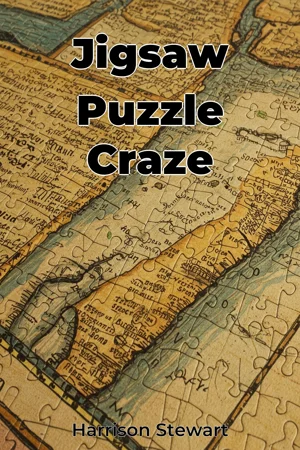
Did you know that jigsaw puzzles, now a ubiquitous pastime, began as a revolutionary educational tool? "Jigsaw Puzzle Craze" unveils the captivating evolution of this seemingly simple object, tracing its journey from a teaching aid to a global phenomenon and finally, a digitized form we encounter today. This book examines the multifaceted impact of jigsaw puzzles, primarily focusing on their historical development, educational applications, and digital transformation. These topics are important because they reveal how a simple invention can deeply influence learning methodologies, social trends, and technological adaptations. The historical context starts in the mid-1760s when John Spilsbury, a London mapmaker, mounted a map onto a sheet of wood and cut it into pieces, intending it as a geography learning tool. This book follows the puzzle's progression through the 19th century, when they were primarily used to teach history and literacy, charting their rise in popularity. The central argument of "Jigsaw Puzzle Craze" is that the jigsaw puzzle’s enduring appeal lies in its remarkable adaptability, reflecting and shaping societal values, educational practices, and technological advancements across centuries. This argument is important because it highlights the interconnectedness of seemingly disparate fields – education, recreation, and digital technology – through the lens of a single, familiar object. This book is structured chronologically and thematically. First, it introduces the origins of jigsaw puzzles and their initial role in education, detailing how they were used to teach geography, history, and other subjects. Second, it explores the puzzle's democratization in the late 19th and early 20th centuries, examining the impact of mass production, the rise of puzzle crazes, and their integration into popular culture as a form of entertainment. Third, the book analyzes the rise of digital jigsaw puzzles, assessing their impact on cognitive skills and social interaction. Finally, it discusses the implications of jigsaw puzzles in therapeutic and rehabilitative settings. The evidence presented is drawn from historical archives, advertisements, game catalogs, educational publications, and studies on cognitive psychology. Unique data sources include digitized collections of historical puzzle designs and user data from online puzzle platforms. This book connects to several disciplines. It touches on the history of education by illustrating a shift in teaching methodologies. It also intersects with social history by showing how leisure activities reflect broader cultural trends. Furthermore, it connects with cognitive psychology by exploring the cognitive benefits and challenges associated with puzzle-solving. Its unique perspective lies in tracing the complete lifespan of a common object to reveal its broader social and intellectual impact. The tone is informative and engaging, presenting factual information in an accessible manner. The target audience includes educators, history enthusiasts, puzzle aficionados, and anyone interested in the intersection of education, recreation, and technology. As a work of non-fiction, "Jigsaw Puzzle Craze" aims for accuracy and objectivity, providing a balanced and thoroughly researched account. The scope is broad, encompassing the entire history of jigsaw puzzles, but it is intentionally limited to puzzles used for educational and recreational purposes, excluding other types of puzzles (e.g., logic puzzles, riddles). The principles of puzzle design, problem-solving, and spatial reasoning discussed in the book can be applied to various fields, including education, cognitive training, and user interface design. While the positive impacts of jigsaw puzzles are emphasized, the book also explores potential downsides, such as the potential for addiction and the impact of digital puzzles on traditional social interactions.
Did you know that jigsaw puzzles, now a ubiquitous pastime, began as a revolutionary educational tool? "Jigsaw Puzzle Craze" unveils the captivating evolution of this seemingly simple object, tracing its journey from a teaching aid to a global phenomenon and finally, a digitized form we encounter today. This book examines the multifaceted impact of jigsaw puzzles, primarily focusing on their historical development, educational applications, and digital transformation. These topics are important because they reveal how a simple invention can deeply influence learning methodologies, social trends, and technological adaptations. The historical context starts in the mid-1760s when John Spilsbury, a London mapmaker, mounted a map onto a sheet of wood and cut it into pieces, intending it as a geography learning tool. This book follows the puzzle's progression through the 19th century, when they were primarily used to teach history and literacy, charting their rise in popularity. The central argument of "Jigsaw Puzzle Craze" is that the jigsaw puzzle’s enduring appeal lies in its remarkable adaptability, reflecting and shaping societal values, educational practices, and technological advancements across centuries. This argument is important because it highlights the interconnectedness of seemingly disparate fields – education, recreation, and digital technology – through the lens of a single, familiar object. This book is structured chronologically and thematically. First, it introduces the origins of jigsaw puzzles and their initial role in education, detailing how they were used to teach geography, history, and other subjects. Second, it explores the puzzle's democratization in the late 19th and early 20th centuries, examining the impact of mass production, the rise of puzzle crazes, and their integration into popular culture as a form of entertainment. Third, the book analyzes the rise of digital jigsaw puzzles, assessing their impact on cognitive skills and social interaction. Finally, it discusses the implications of jigsaw puzzles in therapeutic and rehabilitative settings. The evidence presented is drawn from historical archives, advertisements, game catalogs, educational publications, and studies on cognitive psychology. Unique data sources include digitized collections of historical puzzle designs and user data from online puzzle platforms. This book connects to several disciplines. It touches on the history of education by illustrating a shift in teaching methodologies. It also intersects with social history by showing how leisure activities reflect broader cultural trends. Furthermore, it connects with cognitive psychology by exploring the cognitive benefits and challenges associated with puzzle-solving. Its unique perspective lies in tracing the complete lifespan of a common object to reveal its broader social and intellectual impact. The tone is informative and engaging, presenting factual information in an accessible manner. The target audience includes educators, history enthusiasts, puzzle aficionados, and anyone interested in the intersection of education, recreation, and technology. As a work of non-fiction, "Jigsaw Puzzle Craze" aims for accuracy and objectivity, providing a balanced and thoroughly researched account. The scope is broad, encompassing the entire history of jigsaw puzzles, but it is intentionally limited to puzzles used for educational and recreational purposes, excluding other types of puzzles (e.g., logic puzzles, riddles). The principles of puzzle design, problem-solving, and spatial reasoning discussed in the book can be applied to various fields, including education, cognitive training, and user interface design. While the positive impacts of jigsaw puzzles are emphasized, the book also explores potential downsides, such as the potential for addiction and the impact of digital puzzles on traditional social interactions.
"Jigsaw Puzzle Craze" reveals the surprising story of jigsaw puzzles, from their beginnings as educational tools to their modern digital forms. Initially created in the 1760s by John Spilsbury, a London mapmaker, these "dissected maps" were designed to teach geography. The book explores how puzzles evolved from teaching history and literacy in the 19th century to becoming a popular pastime, reflecting changes in education and social trends. Examining their journey, the book highlights the puzzle's adaptability and lasting appeal. The book chronologically and thematically presents their origins and early educational uses, then moves to their democratization and integration into popular culture. It later analyzes the rise of digital jigsaw puzzles and their impact on cognitive skills and social interaction, also discussing their therapeutic applications. Through historical archives, advertisements, and studies in cognitive psychology, "Jigsaw Puzzle Craze" demonstrates how a seemingly simple object has shaped learning, recreation, and technology.
Book Details
ISBN
9788235242648
Publisher
Publifye AS
Your Licenses
You don't own any licenses for this book
Purchase a license below to unlock this book and download the EPUB.
Purchase License
Select a tier to unlock this book
Need bulk licensing?
Contact us for enterprise agreements.