
About This Book
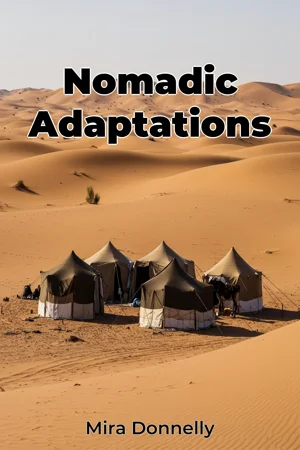
How did nomadic peoples not only survive but thrive across the globe, from the scorching deserts of the Sahara to the frozen expanses of the Arctic tundra? "Nomadic Adaptations" explores the remarkable ingenuity and resilience of indigenous nomadic groups worldwide, examining their diverse and often innovative strategies for survival in some of Earth's most challenging environments. This book is significant because it reveals the depth of human adaptability and offers crucial insights into sustainable living practices often overlooked in mainstream historical narratives. The central argument of "Nomadic Adaptations" is that the success of nomadic societies hinges not on a single, universal strategy, but on a complex interplay of environmental knowledge, social organization, and technological innovation tailored to specific ecological contexts. Understanding this adaptive capacity is crucial for appreciating the diverse tapestry of human cultures and for informing contemporary approaches to resource management and climate resilience. This book provides a detailed content overview, beginning with an introduction to the core concepts of nomadism, adaptation, and environmental determinism. It clarifies common misconceptions about nomadic life, portraying it not as a primitive existence, but as a sophisticated and dynamic response to environmental constraints and opportunities. The book develops its argument through three major sections. The first examines desert nomads, such as the Bedouin of the Arabian Peninsula and the Tuareg of the Sahara, focusing on their water management techniques, animal husbandry practices, and social structures that promote resource sharing and conflict resolution. The second section explores grassland nomads, including the Mongols of Central Asia and the Maasai of East Africa, analyzing their pastoral strategies, use of horses or other livestock for transportation and sustenance, and adaptations to seasonal migrations. The final section investigates tundra and arctic nomads, such as the Inuit of North America and the Nenets of Siberia, highlighting their hunting and fishing techniques, use of animal products for clothing and shelter, and intricate knowledge of ice and snow conditions. The culmination of the argument reveals how these diverse adaptations share common threads of environmental awareness, social cohesion, and technological inventiveness. It further presents implications for modern society, advocating a re-evaluation of sustainable living principles that challenge modern, sedentary societies. "Nomadic Adaptations" draws upon a wide range of evidence, including ethnographic studies, archaeological findings, and historical accounts. It integrates unique data sources such as oral histories passed down through generations of nomadic peoples, providing valuable perspectives often absent from written records. The book connects to other fields such as anthropology, ecology, and climate science. These connections enhance the book's argument by providing a more comprehensive understanding of the interactions between human societies and their environments. This book offers a unique perspective by moving beyond romanticized or dismissive portrayals of nomadic life to offer a nuanced and evidence-based analysis of their adaptive strategies. The overall tone is academic yet accessible, aiming to engage both scholars and general readers interested in history, anthropology, and environmental studies. The book is intended for students, researchers, and anyone seeking a deeper understanding of human adaptability and sustainable living practices. As a history book, it adheres to the genre's conventions of presenting factual information, citing sources meticulously, and offering balanced interpretations of historical events. The scope of "Nomadic Adaptations" is global, covering a wide range of nomadic groups across different continents and climates. However, it is limited to indigenous nomadic societies, excluding more recent or transient forms of nomadism driven by economic or political factors. The book also acknowledges the limitations of relying on secondary sources for information about certain cultures and emphasizes the importance of ongoing research and collaboration with indigenous communities. The information presented in "Nomadic Adaptations" has practical applications for contemporary society. By studying the sustainable living practices of nomadic peoples, we can gain valuable insights into how to manage resources more effectively, adapt to climate change, and promote cultural diversity. The book addresses ongoing debates about land rights, resource management, and the impact of globalization on indigenous cultures. It encourages readers to critically examine their own assumptions about nomadic life and to recognize the value of traditional knowledge in addressing contemporary challenges.
How did nomadic peoples not only survive but thrive across the globe, from the scorching deserts of the Sahara to the frozen expanses of the Arctic tundra? "Nomadic Adaptations" explores the remarkable ingenuity and resilience of indigenous nomadic groups worldwide, examining their diverse and often innovative strategies for survival in some of Earth's most challenging environments. This book is significant because it reveals the depth of human adaptability and offers crucial insights into sustainable living practices often overlooked in mainstream historical narratives. The central argument of "Nomadic Adaptations" is that the success of nomadic societies hinges not on a single, universal strategy, but on a complex interplay of environmental knowledge, social organization, and technological innovation tailored to specific ecological contexts. Understanding this adaptive capacity is crucial for appreciating the diverse tapestry of human cultures and for informing contemporary approaches to resource management and climate resilience. This book provides a detailed content overview, beginning with an introduction to the core concepts of nomadism, adaptation, and environmental determinism. It clarifies common misconceptions about nomadic life, portraying it not as a primitive existence, but as a sophisticated and dynamic response to environmental constraints and opportunities. The book develops its argument through three major sections. The first examines desert nomads, such as the Bedouin of the Arabian Peninsula and the Tuareg of the Sahara, focusing on their water management techniques, animal husbandry practices, and social structures that promote resource sharing and conflict resolution. The second section explores grassland nomads, including the Mongols of Central Asia and the Maasai of East Africa, analyzing their pastoral strategies, use of horses or other livestock for transportation and sustenance, and adaptations to seasonal migrations. The final section investigates tundra and arctic nomads, such as the Inuit of North America and the Nenets of Siberia, highlighting their hunting and fishing techniques, use of animal products for clothing and shelter, and intricate knowledge of ice and snow conditions. The culmination of the argument reveals how these diverse adaptations share common threads of environmental awareness, social cohesion, and technological inventiveness. It further presents implications for modern society, advocating a re-evaluation of sustainable living principles that challenge modern, sedentary societies. "Nomadic Adaptations" draws upon a wide range of evidence, including ethnographic studies, archaeological findings, and historical accounts. It integrates unique data sources such as oral histories passed down through generations of nomadic peoples, providing valuable perspectives often absent from written records. The book connects to other fields such as anthropology, ecology, and climate science. These connections enhance the book's argument by providing a more comprehensive understanding of the interactions between human societies and their environments. This book offers a unique perspective by moving beyond romanticized or dismissive portrayals of nomadic life to offer a nuanced and evidence-based analysis of their adaptive strategies. The overall tone is academic yet accessible, aiming to engage both scholars and general readers interested in history, anthropology, and environmental studies. The book is intended for students, researchers, and anyone seeking a deeper understanding of human adaptability and sustainable living practices. As a history book, it adheres to the genre's conventions of presenting factual information, citing sources meticulously, and offering balanced interpretations of historical events. The scope of "Nomadic Adaptations" is global, covering a wide range of nomadic groups across different continents and climates. However, it is limited to indigenous nomadic societies, excluding more recent or transient forms of nomadism driven by economic or political factors. The book also acknowledges the limitations of relying on secondary sources for information about certain cultures and emphasizes the importance of ongoing research and collaboration with indigenous communities. The information presented in "Nomadic Adaptations" has practical applications for contemporary society. By studying the sustainable living practices of nomadic peoples, we can gain valuable insights into how to manage resources more effectively, adapt to climate change, and promote cultural diversity. The book addresses ongoing debates about land rights, resource management, and the impact of globalization on indigenous cultures. It encourages readers to critically examine their own assumptions about nomadic life and to recognize the value of traditional knowledge in addressing contemporary challenges.
"Nomadic Adaptations" explores how nomadic peoples across the globe, from desert nomads to arctic nomads, have thrived in diverse and challenging environments. The book highlights their remarkable ingenuity and resilience, demonstrating that their success hinges on a complex interplay of environmental knowledge, social organization, and technological innovation. For instance, desert nomads developed sophisticated water management techniques, while grassland nomads mastered pastoral strategies using horses and livestock. The book progresses through chapters focusing on desert, grassland, and tundra/arctic nomads, revealing common threads of environmental awareness, social cohesion, and technological inventiveness. It challenges common misconceptions by portraying nomadic life not as primitive, but as a dynamic and sophisticated response to environmental constraints. In fact, tundra nomads skillfully use animal products for clothing and shelter. This study offers valuable insights into sustainable living practices, often overlooked in mainstream historical narratives, connecting to fields like anthropology, ecology, and climate science.
Book Details
ISBN
9788235242334
Publisher
Publifye AS
Your Licenses
You don't own any licenses for this book
Purchase a license below to unlock this book and download the EPUB.
Purchase License
Select a tier to unlock this book
Need bulk licensing?
Contact us for enterprise agreements.