
About This Book
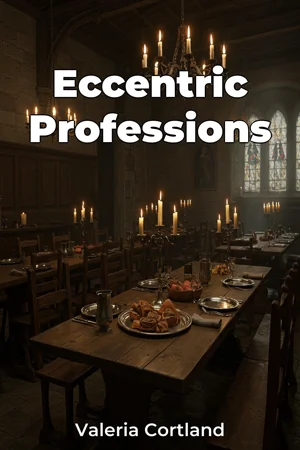
Have you ever wondered about the unusual ways people earned a living throughout history? *Eccentric Professions* delves into the captivating world of unconventional occupations, revealing the surprising roles individuals played in shaping societies across different eras. This book explores the historical context, societal significance, and practical implications of jobs ranging from the somber duties of professional mourners to the perilous roles of royal food tasters, offering a unique perspective on the evolution of work itself. This book's central argument is that seemingly strange or unusual professions often reflect the core values, beliefs, and necessities of the societies in which they existed. We examine how these jobs met specific social or economic needs, and how their existence sheds light on the priorities of past cultures. Understanding these eccentric professions is crucial because it offers lessons about adaptability, innovation, and the ever-changing nature of work, concepts that remain relevant in today’s rapidly evolving job market. *Eccentric Professions* is divided into three major sections. The first section introduces the concept of "eccentric professions" and establishes a framework for understanding their emergence and function within various historical contexts. We will analyze the social, economic, and cultural factors that led to the creation of these unusual roles. The second section presents case studies of specific professions, such as the sin-eater, leeches, knocker-uppers, and gong farmers, detailing their responsibilities, training (or lack thereof), and impact on their communities. Each case study will be supported by historical records, anecdotes, and expert analysis. The third section connects these historical examples to contemporary discussions about work, automation, and the gig economy, highlighting the enduring relevance of adaptability and creativity in the face of change. The evidence presented in *Eccentric Professions* draws from a variety of sources, including historical archives, period literature, anthropological studies, and economic analyses. We analyze primary source accounts of individuals who held these positions, as well as secondary scholarship on the social and economic conditions that gave rise to them. We will explore the interplay between economics, sociology, and cultural studies to provide a holistic understanding of these unique occupations. For example, the discussion of sin-eaters will draw on anthropological research on death rituals, while the analysis of knocker-uppers will be informed by studies of industrialization and labor practices. This book connects to several other fields, including sociology (studying social structures and norms), economics (analyzing labor markets and economic systems), and anthropology (examining cultural practices and beliefs). By integrating insights from these disciplines, we offer a well-rounded perspective on the multifaceted nature of work. *Eccentric Professions* adopts a narrative non-fiction approach, presenting information in an engaging and accessible manner. While grounded in rigorous research, the book aims to captivate readers with compelling stories and vivid descriptions of historical characters and their unusual jobs. The intended audience includes history enthusiasts, students of sociology and economics, career counselors, and anyone interested in the evolution of work. The book offers valuable insights into the adaptability of human labor and the ever-changing nature of job markets. The scope of *Eccentric Professions* is intentionally broad, encompassing a wide range of historical periods and geographical locations. However, it is limited to professions for which reliable historical documentation exists. We acknowledge that many other unusual jobs may have existed but remain unrecorded due to lack of evidence. The real-world applications of this book extend to career planning, innovation studies, and economic forecasting. By understanding how societies adapted to changing circumstances in the past, readers can gain valuable insights into navigating the challenges and opportunities of the modern workplace. Moreover, the book provides a novel lens through which to view contemporary debates surrounding automation, job displacement, and the future of work.
Have you ever wondered about the unusual ways people earned a living throughout history? *Eccentric Professions* delves into the captivating world of unconventional occupations, revealing the surprising roles individuals played in shaping societies across different eras. This book explores the historical context, societal significance, and practical implications of jobs ranging from the somber duties of professional mourners to the perilous roles of royal food tasters, offering a unique perspective on the evolution of work itself. This book's central argument is that seemingly strange or unusual professions often reflect the core values, beliefs, and necessities of the societies in which they existed. We examine how these jobs met specific social or economic needs, and how their existence sheds light on the priorities of past cultures. Understanding these eccentric professions is crucial because it offers lessons about adaptability, innovation, and the ever-changing nature of work, concepts that remain relevant in today’s rapidly evolving job market. *Eccentric Professions* is divided into three major sections. The first section introduces the concept of "eccentric professions" and establishes a framework for understanding their emergence and function within various historical contexts. We will analyze the social, economic, and cultural factors that led to the creation of these unusual roles. The second section presents case studies of specific professions, such as the sin-eater, leeches, knocker-uppers, and gong farmers, detailing their responsibilities, training (or lack thereof), and impact on their communities. Each case study will be supported by historical records, anecdotes, and expert analysis. The third section connects these historical examples to contemporary discussions about work, automation, and the gig economy, highlighting the enduring relevance of adaptability and creativity in the face of change. The evidence presented in *Eccentric Professions* draws from a variety of sources, including historical archives, period literature, anthropological studies, and economic analyses. We analyze primary source accounts of individuals who held these positions, as well as secondary scholarship on the social and economic conditions that gave rise to them. We will explore the interplay between economics, sociology, and cultural studies to provide a holistic understanding of these unique occupations. For example, the discussion of sin-eaters will draw on anthropological research on death rituals, while the analysis of knocker-uppers will be informed by studies of industrialization and labor practices. This book connects to several other fields, including sociology (studying social structures and norms), economics (analyzing labor markets and economic systems), and anthropology (examining cultural practices and beliefs). By integrating insights from these disciplines, we offer a well-rounded perspective on the multifaceted nature of work. *Eccentric Professions* adopts a narrative non-fiction approach, presenting information in an engaging and accessible manner. While grounded in rigorous research, the book aims to captivate readers with compelling stories and vivid descriptions of historical characters and their unusual jobs. The intended audience includes history enthusiasts, students of sociology and economics, career counselors, and anyone interested in the evolution of work. The book offers valuable insights into the adaptability of human labor and the ever-changing nature of job markets. The scope of *Eccentric Professions* is intentionally broad, encompassing a wide range of historical periods and geographical locations. However, it is limited to professions for which reliable historical documentation exists. We acknowledge that many other unusual jobs may have existed but remain unrecorded due to lack of evidence. The real-world applications of this book extend to career planning, innovation studies, and economic forecasting. By understanding how societies adapted to changing circumstances in the past, readers can gain valuable insights into navigating the challenges and opportunities of the modern workplace. Moreover, the book provides a novel lens through which to view contemporary debates surrounding automation, job displacement, and the future of work.
"Eccentric Professions" explores the fascinating history of unusual occupations, revealing how they reflect the core values and necessities of past societies. This book examines a variety of historical jobs, demonstrating how individuals adapted to meet specific social or economic needs. For example, royal food tasters risked their lives to ensure the monarch's safety, while professional mourners provided emotional and social support during times of grief. The book is structured in three sections. The first section sets the stage by introducing the concept of "eccentric professions," while the second presents detailed case studies of jobs like sin-eaters and knocker-uppers. The final section connects these historical examples to modern discussions about work. By drawing on historical archives, literature, and expert analysis, "Eccentric Professions" offers valuable insights into the evolution of work and the enduring relevance of adaptability in a rapidly changing job market.
Book Details
ISBN
9788235242303
Publisher
Publifye AS
Your Licenses
You don't own any licenses for this book
Purchase a license below to unlock this book and download the EPUB.
Purchase License
Select a tier to unlock this book
Need bulk licensing?
Contact us for enterprise agreements.