
About This Book
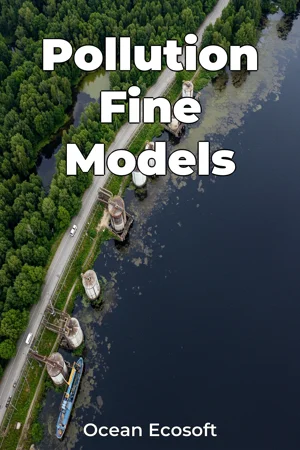
Can effective pollution deterrence truly be achieved through carefully structured fines and consistent enforcement? "Pollution Fine Models" delves into this crucial question, examining the intricate relationship between financial penalties, regulatory frameworks, and environmental compliance. This book navigates the complexities of designing and implementing pollution fines, assessing their effectiveness, and exploring the political and economic factors that influence their success. We address two primary areas of concern: the design of the fine structures themselves and the consistency of their enforcement. The ability of financial penalties to deter pollution hinges on their proportionality to the environmental damage caused, their impact on polluters' financial incentives, and the perception among potential offenders that infractions will be detected and penalized. Determining the appropriate fine level is often a balancing act, considering the economic viability of businesses, the social costs of pollution, and the political will to impose stringent regulations. The book examines the challenges of calculating these penalties, considering factors such as the severity of the pollution, the frequency of violations, and the polluter's ability to pay. The book argues that well-designed pollution fines, combined with consistent and impartial enforcement, are a powerful tool for environmental protection. We propose that inconsistency in enforcement severely undermines the deterrent effect of fines, potentially leading to a cycle of non-compliance and environmental degradation. The book is structured to provide a comprehensive analysis of pollution fine models. It begins with an introduction to the theoretical underpinnings of environmental economics and regulation, providing a foundation for understanding the role of fines in pollution control. We will explore the economic rationale behind different fine structures, such as fixed fines, variable fines, and performance-based penalties. Subsequent chapters will delve into the practical aspects of calculating pollution fines, examining various methodologies and data sources used to assess environmental damage and assign financial penalties. The book will also investigate the political and institutional factors that influence the enforcement of pollution regulations, including the role of government agencies, courts, and public advocacy groups. Finally, we will present case studies from different countries and industries. The research presented in this book relies on a combination of economic modeling, statistical analysis, and legal research. We will analyze data on pollution levels, enforcement actions, and corporate financial performance to assess the effectiveness of different pollution fine models. We will also draw on legal and policy documents to examine the regulatory frameworks that govern pollution control in various jurisdictions. This book connects to several related fields: economics (specifically environmental and behavioral economics), political science (regulatory policy and enforcement), and law (environmental law and criminal justice). This interdisciplinary approach provides a more complete understanding of the challenges and opportunities associated with using pollution fines to deter environmental harm. This book is intended for policymakers, environmental regulators, business leaders, legal professionals, environmental advocates, and academics interested in environmental economics and policy. It offers valuable insights and practical guidance for designing and implementing effective pollution fine programs. The scope of the book is limited to the analysis of pollution fine models as a tool for environmental regulation. While other regulatory mechanisms, such as emission standards and technology mandates, are discussed, the primary focus is on the design, implementation, and enforcement of pollution fines. The information presented in this book can be applied in several real-world contexts. Policymakers can use the insights from our analysis to design more effective pollution fine programs that are tailored to specific industries and environmental challenges. Environmental regulators can use the book as a guide for calculating appropriate fines and enforcing pollution regulations in a consistent and impartial manner. Business leaders can use the book to understand the potential financial risks associated with pollution violations and to implement strategies for improving environmental compliance. The book addresses some debates, such as the optimal level of pollution fines, the role of discretion in enforcement, and the balance between economic development and environmental protection. By providing a comprehensive analysis of the evidence and arguments on both sides of these debates, the book aims to foster a more informed and productive discussion about the future of environmental regulation.
Can effective pollution deterrence truly be achieved through carefully structured fines and consistent enforcement? "Pollution Fine Models" delves into this crucial question, examining the intricate relationship between financial penalties, regulatory frameworks, and environmental compliance. This book navigates the complexities of designing and implementing pollution fines, assessing their effectiveness, and exploring the political and economic factors that influence their success. We address two primary areas of concern: the design of the fine structures themselves and the consistency of their enforcement. The ability of financial penalties to deter pollution hinges on their proportionality to the environmental damage caused, their impact on polluters' financial incentives, and the perception among potential offenders that infractions will be detected and penalized. Determining the appropriate fine level is often a balancing act, considering the economic viability of businesses, the social costs of pollution, and the political will to impose stringent regulations. The book examines the challenges of calculating these penalties, considering factors such as the severity of the pollution, the frequency of violations, and the polluter's ability to pay. The book argues that well-designed pollution fines, combined with consistent and impartial enforcement, are a powerful tool for environmental protection. We propose that inconsistency in enforcement severely undermines the deterrent effect of fines, potentially leading to a cycle of non-compliance and environmental degradation. The book is structured to provide a comprehensive analysis of pollution fine models. It begins with an introduction to the theoretical underpinnings of environmental economics and regulation, providing a foundation for understanding the role of fines in pollution control. We will explore the economic rationale behind different fine structures, such as fixed fines, variable fines, and performance-based penalties. Subsequent chapters will delve into the practical aspects of calculating pollution fines, examining various methodologies and data sources used to assess environmental damage and assign financial penalties. The book will also investigate the political and institutional factors that influence the enforcement of pollution regulations, including the role of government agencies, courts, and public advocacy groups. Finally, we will present case studies from different countries and industries. The research presented in this book relies on a combination of economic modeling, statistical analysis, and legal research. We will analyze data on pollution levels, enforcement actions, and corporate financial performance to assess the effectiveness of different pollution fine models. We will also draw on legal and policy documents to examine the regulatory frameworks that govern pollution control in various jurisdictions. This book connects to several related fields: economics (specifically environmental and behavioral economics), political science (regulatory policy and enforcement), and law (environmental law and criminal justice). This interdisciplinary approach provides a more complete understanding of the challenges and opportunities associated with using pollution fines to deter environmental harm. This book is intended for policymakers, environmental regulators, business leaders, legal professionals, environmental advocates, and academics interested in environmental economics and policy. It offers valuable insights and practical guidance for designing and implementing effective pollution fine programs. The scope of the book is limited to the analysis of pollution fine models as a tool for environmental regulation. While other regulatory mechanisms, such as emission standards and technology mandates, are discussed, the primary focus is on the design, implementation, and enforcement of pollution fines. The information presented in this book can be applied in several real-world contexts. Policymakers can use the insights from our analysis to design more effective pollution fine programs that are tailored to specific industries and environmental challenges. Environmental regulators can use the book as a guide for calculating appropriate fines and enforcing pollution regulations in a consistent and impartial manner. Business leaders can use the book to understand the potential financial risks associated with pollution violations and to implement strategies for improving environmental compliance. The book addresses some debates, such as the optimal level of pollution fines, the role of discretion in enforcement, and the balance between economic development and environmental protection. By providing a comprehensive analysis of the evidence and arguments on both sides of these debates, the book aims to foster a more informed and productive discussion about the future of environmental regulation.
"Pollution Fine Models" explores how financial penalties can effectively deter pollution, focusing on the design and enforcement of these fines within environmental regulation and policy. The book investigates the critical balance between setting fines high enough to deter polluters and considering the economic impacts on businesses. It highlights that inconsistent enforcement undermines the deterrent effect, potentially leading to continuous environmental degradation. The book begins with the theoretical foundations of environmental economics, progressing to practical methods for calculating fines based on environmental damage. It examines political and institutional influences on enforcement, including government agencies and public advocacy groups. Case studies from various countries and industries illustrate real-world applications. This book is unique because it combines insights from environmental economics, political science, and law, providing a complete picture of the challenges and opportunities in using pollution fines. It addresses debates over optimal fine levels and the balance between economic growth and environmental protection, offering valuable guidance for policymakers, regulators, and business leaders.
Book Details
ISBN
9788235242167
Publisher
Publifye AS
Your Licenses
You don't own any licenses for this book
Purchase a license below to unlock this book and download the EPUB.
Purchase License
Select a tier to unlock this book
Need bulk licensing?
Contact us for enterprise agreements.