
About This Book
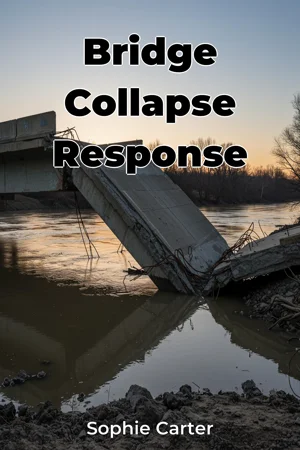
What happens in the critical hours following a catastrophic bridge collapse? This book, "Bridge Collapse Response," examines the multifaceted challenges faced by response teams in the immediate aftermath, focusing on the intricate coordination required to save lives and mitigate further damage. The book delves into three core areas: understanding the causes of load failure in bridges, implementing effective crowd management strategies near collapse sites, and executing efficient debris access plans for search and rescue operations. These topics are of paramount importance because bridge collapses, while relatively infrequent, represent high-consequence events that demand rapid and well-coordinated responses to minimize casualties and disruption. We explore the historical context of bridge failures, analyzing notable collapses throughout history and the evolution of engineering standards and safety protocols. The book also provides a basic understanding of bridge design principles and common failure modes, such as structural fatigue, material defects, and external impacts. While specialized knowledge is not required, familiarity with basic physics concepts will enhance the reader's understanding. Our central argument is that a proactive, integrated approach to bridge collapse response, encompassing pre-incident planning, real-time monitoring, and post-incident analysis, is crucial for improving outcomes and preventing future disasters. This requires collaboration between engineers, emergency responders, government agencies, and the public. "Bridge Collapse Response" is structured to provide a comprehensive overview of the subject. First, we introduce the fundamental principles of bridge engineering and the common causes of collapse. Second, we examine the critical elements of emergency response, including crowd control techniques to manage bystanders and prevent further injury; strategies for rapidly assessing the structural stability of remaining bridge sections; and methodologies for safely accessing debris fields to locate and rescue victims. Third, the book analyzes case studies of past bridge collapses, highlighting both successes and failures in response efforts, and extracting valuable lessons learned. Finally, we explore the implications of emerging technologies, such as drone surveillance and advanced sensor systems, for improving future response capabilities. The evidence presented in this book is drawn from a variety of sources, including government reports, engineering analyses, eyewitness accounts, and academic research. We utilize structural engineering reports, emergency response protocols, and data from past incidents to support our arguments. This book connects to several interdisciplinary fields. Civil engineering provides the foundational knowledge of bridge design and structural integrity. Emergency management informs the strategies for coordinating response efforts and allocating resources. Sociology offers insights into crowd behavior and the psychological impact of disasters on affected communities. These connections enrich our understanding of the complex factors that influence bridge collapse response. Our unique approach lies in its holistic perspective, integrating engineering principles with emergency management practices and social considerations. We offer a framework for understanding the entire lifecycle of a bridge collapse event, from prevention to recovery. The tone of this book is professional and informative, aiming to provide a clear and accessible explanation of complex technical concepts. The writing style maintains a neutral and objective perspective, presenting factual information and evidence-based analysis. The primary audience for this book includes civil engineers, emergency managers, first responders, government officials, and students in related fields. Furthermore, this book will be valuable to anyone interested in infrastructure safety and disaster preparedness. As a work in the genres of History and Technology, “Bridge Collapse Response” adheres to the conventions of rigorous research, accurate data presentation, and clear, concise writing. The book is grounded in documented facts and evidence-based analysis. The scope of this book is limited to the immediate response phase following bridge collapses. While we touch on the investigation and reconstruction processes, our primary focus is on the initial hours and days after the event. The information presented in this book can be applied practically by engineers to improve bridge design and maintenance practices. Emergency managers can utilize our framework to develop more effective response plans and training programs. First responders can use the techniques outlined in the book to improve their safety and efficiency in rescue operations. Finally, the book addresses ongoing debates in the field, such as the optimal balance between preventative maintenance and emergency response funding, and the role of technology in mitigating the risks of bridge collapses.
What happens in the critical hours following a catastrophic bridge collapse? This book, "Bridge Collapse Response," examines the multifaceted challenges faced by response teams in the immediate aftermath, focusing on the intricate coordination required to save lives and mitigate further damage. The book delves into three core areas: understanding the causes of load failure in bridges, implementing effective crowd management strategies near collapse sites, and executing efficient debris access plans for search and rescue operations. These topics are of paramount importance because bridge collapses, while relatively infrequent, represent high-consequence events that demand rapid and well-coordinated responses to minimize casualties and disruption. We explore the historical context of bridge failures, analyzing notable collapses throughout history and the evolution of engineering standards and safety protocols. The book also provides a basic understanding of bridge design principles and common failure modes, such as structural fatigue, material defects, and external impacts. While specialized knowledge is not required, familiarity with basic physics concepts will enhance the reader's understanding. Our central argument is that a proactive, integrated approach to bridge collapse response, encompassing pre-incident planning, real-time monitoring, and post-incident analysis, is crucial for improving outcomes and preventing future disasters. This requires collaboration between engineers, emergency responders, government agencies, and the public. "Bridge Collapse Response" is structured to provide a comprehensive overview of the subject. First, we introduce the fundamental principles of bridge engineering and the common causes of collapse. Second, we examine the critical elements of emergency response, including crowd control techniques to manage bystanders and prevent further injury; strategies for rapidly assessing the structural stability of remaining bridge sections; and methodologies for safely accessing debris fields to locate and rescue victims. Third, the book analyzes case studies of past bridge collapses, highlighting both successes and failures in response efforts, and extracting valuable lessons learned. Finally, we explore the implications of emerging technologies, such as drone surveillance and advanced sensor systems, for improving future response capabilities. The evidence presented in this book is drawn from a variety of sources, including government reports, engineering analyses, eyewitness accounts, and academic research. We utilize structural engineering reports, emergency response protocols, and data from past incidents to support our arguments. This book connects to several interdisciplinary fields. Civil engineering provides the foundational knowledge of bridge design and structural integrity. Emergency management informs the strategies for coordinating response efforts and allocating resources. Sociology offers insights into crowd behavior and the psychological impact of disasters on affected communities. These connections enrich our understanding of the complex factors that influence bridge collapse response. Our unique approach lies in its holistic perspective, integrating engineering principles with emergency management practices and social considerations. We offer a framework for understanding the entire lifecycle of a bridge collapse event, from prevention to recovery. The tone of this book is professional and informative, aiming to provide a clear and accessible explanation of complex technical concepts. The writing style maintains a neutral and objective perspective, presenting factual information and evidence-based analysis. The primary audience for this book includes civil engineers, emergency managers, first responders, government officials, and students in related fields. Furthermore, this book will be valuable to anyone interested in infrastructure safety and disaster preparedness. As a work in the genres of History and Technology, “Bridge Collapse Response” adheres to the conventions of rigorous research, accurate data presentation, and clear, concise writing. The book is grounded in documented facts and evidence-based analysis. The scope of this book is limited to the immediate response phase following bridge collapses. While we touch on the investigation and reconstruction processes, our primary focus is on the initial hours and days after the event. The information presented in this book can be applied practically by engineers to improve bridge design and maintenance practices. Emergency managers can utilize our framework to develop more effective response plans and training programs. First responders can use the techniques outlined in the book to improve their safety and efficiency in rescue operations. Finally, the book addresses ongoing debates in the field, such as the optimal balance between preventative maintenance and emergency response funding, and the role of technology in mitigating the risks of bridge collapses.
"Bridge Collapse Response" offers a comprehensive exploration of the critical actions and coordination needed immediately after a bridge failure. It highlights the complex challenges faced by emergency teams, focusing on understanding failure causes, managing crowds, and executing search and rescue through debris. Bridge collapses, though rare, are high-impact events demanding swift, coordinated responses. Did you know that bridge failures have shaped the evolution of engineering standards, with lessons learned from past disasters influencing current protocols? The book uniquely integrates engineering with emergency management, providing a holistic view from prevention to recovery. It progresses from foundational bridge engineering principles and common collapse causes to examining emergency response elements, including assessing structural stability and rescue methodologies. Case studies of past bridge collapses are analyzed, showcasing successes and failures in response efforts. The text also considers emerging technologies like drone surveillance to improve future response capabilities.
Book Details
ISBN
9788235242051
Publisher
Publifye AS
Your Licenses
You don't own any licenses for this book
Purchase a license below to unlock this book and download the EPUB.
Purchase License
Select a tier to unlock this book
Need bulk licensing?
Contact us for enterprise agreements.